


Role of D-dimer and Fibrinogen in the Diagnosis of Periprosthetic Joint Infection: A Systematic Review and Meta-Analysis
- PMID: 33682337
- PMCID: PMC8126916
- DOI: 10.1111/os.12969
Role of D-dimer and Fibrinogen in the Diagnosis of Periprosthetic Joint Infection: A Systematic Review and Meta-Analysis
Abstract
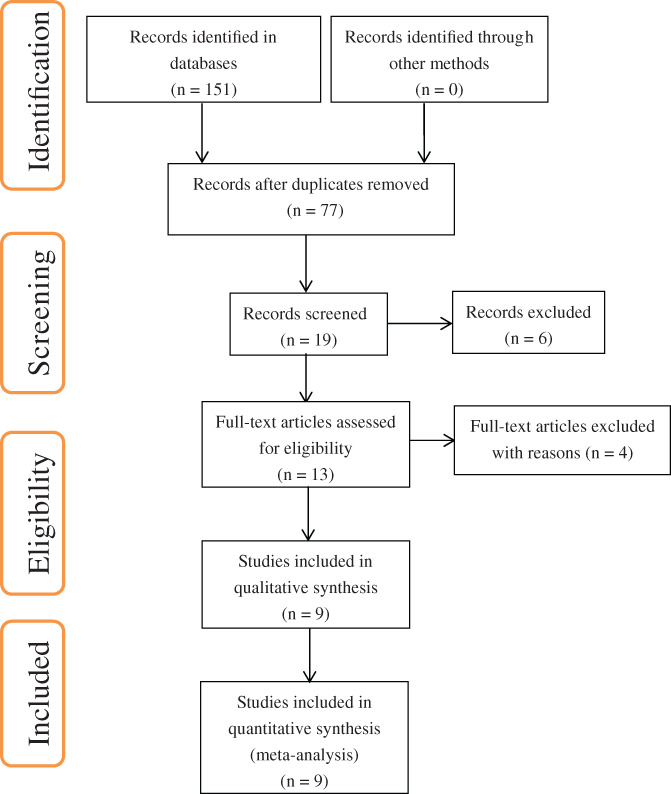
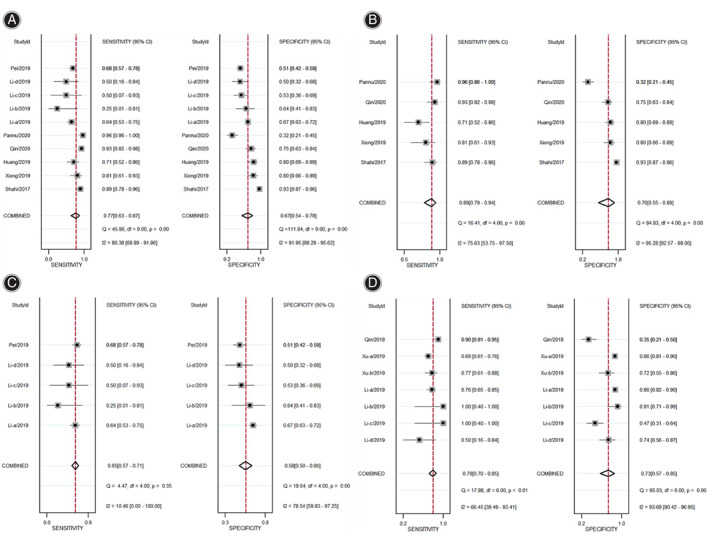
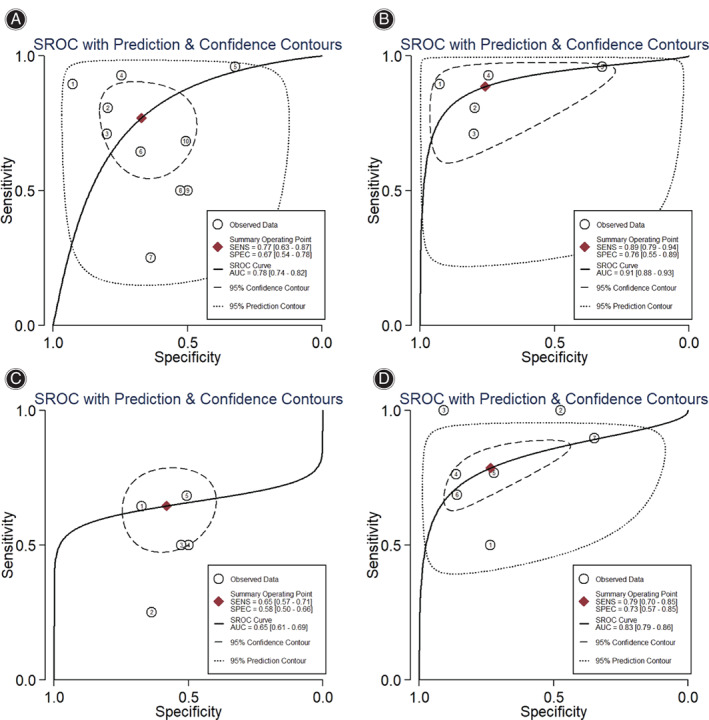
The diagnostic potential of D-dimer and fibrinogen to detect periprosthetic joint infection (PJI) of the hip and knee is not well-understood. The aim of this study was to determine whether D-Dimer and fibrinogen can be used as effective biomarkers to screen PJI. A systematic review of the literature indexed in Web of Science, PubMed, Cochrane Library, Embase, and Google Scholar databases was performed. All studies using D-dimer levels in serum or plasma, or fibrinogen levels in plasma, for the diagnosis of PJI were included. Meta-analysis estimates, including sensitivity, specificity, diagnostic odds ratios (DOR), and the area under the summary receiver operating characteristic curve (AUSROC), were calculated using a random-effects model, and used to assess the diagnostic accuracy of these biomarkers. A total of nine studies were analyzed, and their quality was considered to be acceptable. D-dimer gave a limited diagnostic value if serum and plasma combined: sensitivity (0.77, 95% confidence interval [CI] [0.63 to 0.87]), specificity (0.67, 95% CI [0.54 to 0.78]), DOR (6.81, 95% CI [2.67 to 17.37]), and AUSROC (0.78, 95% CI [0.74 to 0.82]). Plasma D-dimer levels were associated with less satisfactory sensitivity (0.65, 95% CI 0.57 to 0.71), specificity (0.58, 95% CI 0.50 to 0.66), DOR (2.52, 95% CI 1.64 to 3.90), and AUSROC (0.65, 95% CI 0.61 to 0.69). Serum D-dimer levels showed higher corresponding values of 0.89 (95% CI 0.79 to 0.94), 0.76 (95% CI 0.55 to 0.89), 24.24 (95% CI 10.07 to 58.32), and 0.91 (95% CI 0.88 to 0.93). Plasma fibrinogen showed acceptable corresponding values of 0.79 (95% CI 0.70 to 0.85), 0.73 (95% CI 0.57 to 0.85), 10.14 (95% CI 6.16 to 16.70), and 0.83 (95% CI 0.79 to 0.86). Serum D-dimer may be an effective marker for the diagnosis of PJI in hip and knee arthroplasty patients, and it may show higher diagnostic potential than plasma fibrinogen. Plasma D-dimer may have limited diagnostic potential.
Keywords: D-dimer; Fibrinogen; Meta-analysis; Periprosthetic joint infection; Plasma; Serum.
© 2021 The Authors. Orthopaedic Surgery published by Chinese Orthopaedic Association and John Wiley & Sons Australia, Ltd.
Figures
References
-
- Pivec R, Johnson AJ, Mears SC, Mont MA. Hip arthroplasty. Lancet, 2012, 380: 1768–1777. - PubMed
-
- Alipour M, Tabari M, Keramati M, Zarmehri AM, Makhmalbaf H. Effectiveness of oral tranexamic acid administration on blood loss after knee artroplasty: a randomized clinical trial. Transfus Apher Sci, 2013, 49: 574–577. - PubMed
-
- Parvizi J, Shohat N, Gehrke T. Prevention of periprosthetic joint infection: new guidelines. Bone Joint J, 2017, 99: 3–10. - PubMed
-
- Cozzi Lepri A, del Prete A, Soderi S, et al. The identification of pathogens associated with periprosthetic joint infection in two‐stage revision. Eur Rev Med Pharmacol Sci, 2019, 23: 101–116. - PubMed
-
- Saleh A, Ramanathan D, Siqueira MBP, Klika AK, Barsoum WK, Rueda CAH. The diagnostic utility of synovial fluid markers in periprosthetic joint infection: a systematic review and meta‐analysis. J Am Acad Orthop Surg, 2017, 25: 763–772. - PubMed
Publication types
MeSH terms
Substances
LinkOut - more resources
Full Text Sources
Other Literature Sources
Medical
