


Estimating the Prevalence of Transparency and Reproducibility-Related Research Practices in Psychology (2014-2017)
- PMID: 33682488
- PMCID: PMC8785283
- DOI: 10.1177/1745691620979806
Estimating the Prevalence of Transparency and Reproducibility-Related Research Practices in Psychology (2014-2017)
Abstract
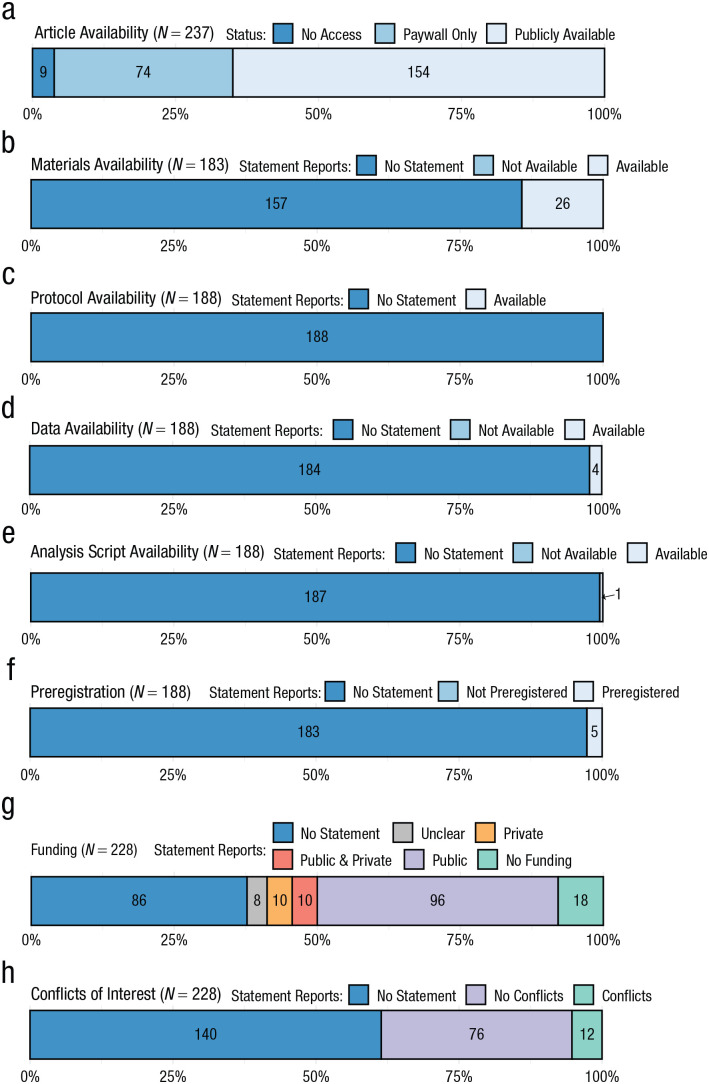
Psychologists are navigating an unprecedented period of introspection about the credibility and utility of their discipline. Reform initiatives emphasize the benefits of transparency and reproducibility-related research practices; however, adoption across the psychology literature is unknown. Estimating the prevalence of such practices will help to gauge the collective impact of reform initiatives, track progress over time, and calibrate future efforts. To this end, we manually examined a random sample of 250 psychology articles published between 2014 and 2017. Over half of the articles were publicly available (154/237, 65%, 95% confidence interval [CI] = [59%, 71%]); however, sharing of research materials (26/183; 14%, 95% CI = [10%, 19%]), study protocols (0/188; 0%, 95% CI = [0%, 1%]), raw data (4/188; 2%, 95% CI = [1%, 4%]), and analysis scripts (1/188; 1%, 95% CI = [0%, 1%]) was rare. Preregistration was also uncommon (5/188; 3%, 95% CI = [1%, 5%]). Many articles included a funding disclosure statement (142/228; 62%, 95% CI = [56%, 69%]), but conflict-of-interest statements were less common (88/228; 39%, 95% CI = [32%, 45%]). Replication studies were rare (10/188; 5%, 95% CI = [3%, 8%]), and few studies were included in systematic reviews (21/183; 11%, 95% CI = [8%, 16%]) or meta-analyses (12/183; 7%, 95% CI = [4%, 10%]). Overall, the results suggest that transparency and reproducibility-related research practices were far from routine. These findings establish baseline prevalence estimates against which future progress toward increasing the credibility and utility of psychology research can be compared.
Keywords: meta-research; open science; psychology; reproducibility; transparency.
Conflict of interest statement
Figures
References
Publication types
MeSH terms
Grants and funding
LinkOut - more resources
Full Text Sources
Other Literature Sources
