


An intriguing characteristic of enhancer-promoter interactions
- PMID: 33685407
- PMCID: PMC7938488
- DOI: 10.1186/s12864-021-07440-5
An intriguing characteristic of enhancer-promoter interactions
Abstract
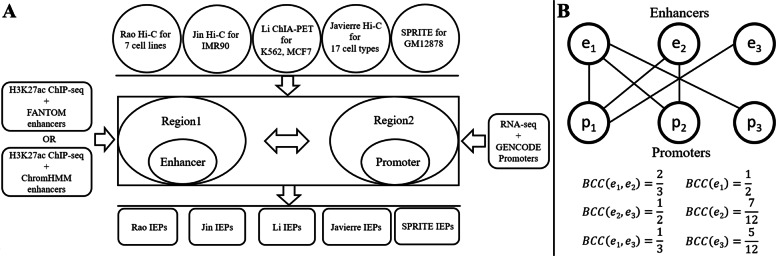
Background: It is still challenging to predict interacting enhancer-promoter pairs (IEPs), partially because of our limited understanding of their characteristics. To understand IEPs better, here we studied the IEPs in nine cell lines and nine primary cell types.
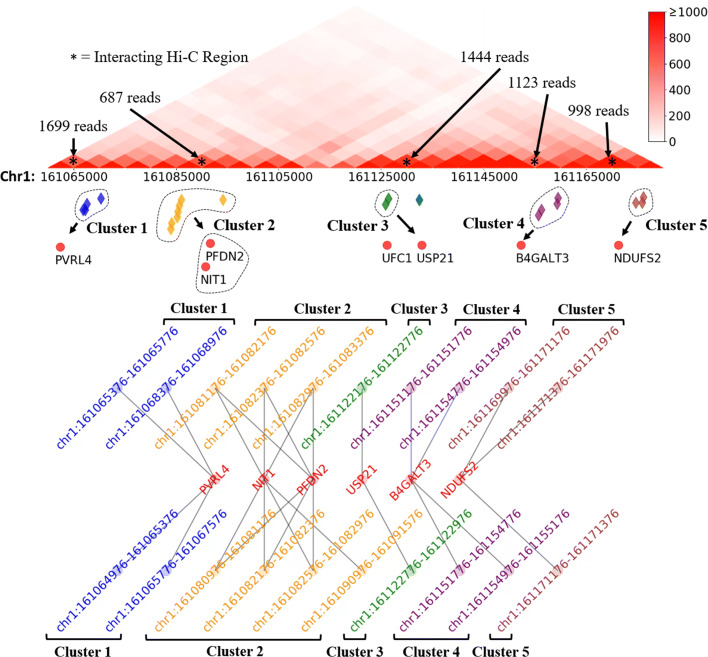
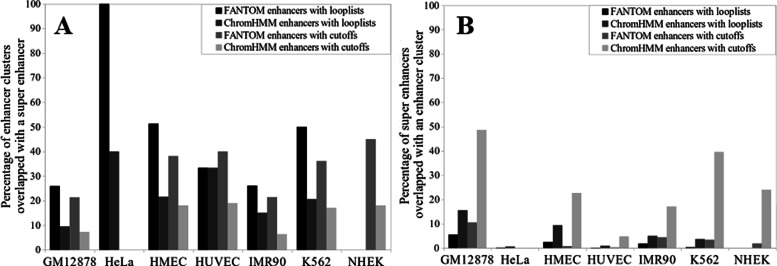
Results: By measuring the bipartite clustering coefficient of the graphs constructed from these experimentally supported IEPs, we observed that one enhancer is likely to interact with either none or all of the target genes of another enhancer. This observation implies that enhancers form clusters, and every enhancer in the same cluster synchronously interact with almost every member of a set of genes and only this set of genes. We perceived that an enhancer can be up to two megabase pairs away from other enhancers in the same cluster. We also noticed that although a fraction of these clusters of enhancers do overlap with super-enhancers, the majority of the enhancer clusters are different from the known super-enhancers.
Conclusions: Our study showed a new characteristic of IEPs, which may shed new light on distal gene regulation and the identification of IEPs.
Keywords: Enhancer clusters; Enhancers; Promoters; Super-enhancers.
Conflict of interest statement
The authors declare that they have no competing interests.
Figures

References
MeSH terms
Grants and funding
LinkOut - more resources
Full Text Sources
Other Literature Sources
