


Incidence and predictors of surgical site infection after distal femur fractures treated by open reduction and internal fixation: a prospective single-center study
- PMID: 33685429
- PMCID: PMC7941723
- DOI: 10.1186/s12891-021-04132-9
Incidence and predictors of surgical site infection after distal femur fractures treated by open reduction and internal fixation: a prospective single-center study
Abstract
Background: There remain limited data on the epidemiological characteristics and related predictors of surgical site infection (SSI) after open reduction and internal fixation (ORIF) for distal femur fractures (DFFs). We designed this single-centre prospective study to explore and forecast these clinical problems.
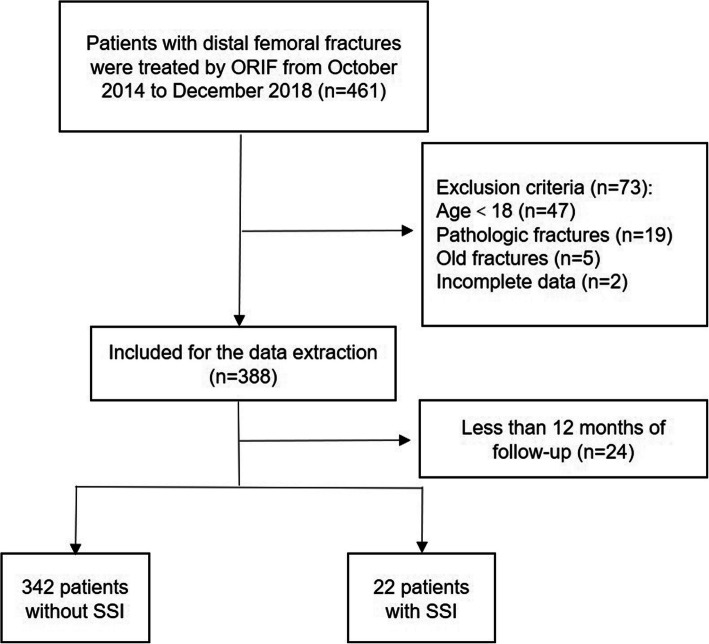
Methods: From October 2014 to December 2018, 364 patients with DFFs were treated with ORIF and followed for complete data within one year. Receiver operating characteristic (ROC) analyses, univariate Chi-square analyses, and multiple logistic regression analyses were used to screen the adjusted predictors of SSI.
Results: The incidence of SSI was 6.0 % (22/364): 2.4 % (9/364) for superficial SSIs and 3.6 % (13/364) for deep SSIs. Staphylococcus aureus (methicillin-resistant S. aureus in 2 cases) was the most common pathogenic bacteria (36.8 %,7/19). In multivariate analysis, parameters independently associated with SSI were: Open fracture (OR: 7.3, p = 0.003), drain use (OR: 4.1, p = 0.037), and incision cleanliness (OR: 3.5, p = 0.002). An albumin/globulin (A/G) level ≥ 1.35 (OR: 0.2, p = 0.042) was an adjusted protective factor for SSI.
Conclusions: The SSI after ORIF affected approximately one in 15 patients with DFFs. The open fracture, drain use, high grade of intraoperative incision cleanliness, and preoperative A/G levels lower than 1.35 were significantly related to increasing the risk of post-operative SSI after DFFs. We recommended that more attentions should be paid to these risk factors during hospitalization.
Trial registration: NO 2014-015-1, October /15/2014, prospectively registered. We registered our trial prospectively in October 15, 2014 before the first participant was enrolled. This study protocol was conducted according to the Declaration of Helsinki and approved by the Institutional Review Board. The ethics committee approved the Surgical Site Infection in Orthopaedic Surgery (NO 2014-015-1). Data used in this study were obtained from the patients who underwent orthopaedic surgeries between October 2014 to December 2018.
Keywords: Distal femoral fracture; Internal fixation surgery; Predictor; Surgical site infection.
Conflict of interest statement
The authors declare that they have no competing interests.
Figures

References
-
- Zhang Y. Clinical Epidemiology of Orthopedic Trauma. 2. Stuttgart: Thieme; 2016. pp. 193–5.
MeSH terms
Grants and funding
LinkOut - more resources
Full Text Sources
Other Literature Sources
Medical
