


Exploiting the Capabilities of Bayesian Networks for Engineering Risk Assessment: Causal Reasoning through Interventions
- PMID: 33687077
- PMCID: PMC9290605
- DOI: 10.1111/risa.13711
Exploiting the Capabilities of Bayesian Networks for Engineering Risk Assessment: Causal Reasoning through Interventions
Abstract
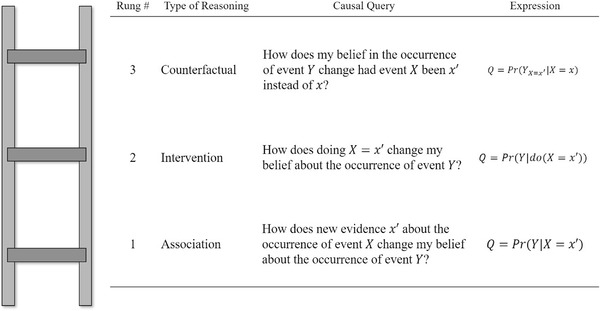
In the last decade, Bayesian networks (BNs) have been widely used in engineering risk assessment due to the benefits that they provide over other methods. Among these, the most significant is the ability to model systems, causal factors, and their dependencies in a probabilistic manner. This capability has enabled the community to do causal reasoning through associations, which answers questions such as: "How does new evidence about the occurrence of event change my belief about the occurrence of event ?" Associative reasoning has helped risk analysts to identify relevant risk-contributing factors and perform scenario analysis by evidence propagation. However, engineering risk assessment has yet to explore other features of BNs, such as the ability to reason through interventions, which enables the BN model to support answering questions of the form "How does doing change my belief about the occurrence of event ?" In this article, we propose to expand the scope of use of BN models in engineering risk assessment to support intervention reasoning. This will provide more robust risk-informed decision support by enabling the modeling of policies and actions before being implemented. To do this, we provide the formal mathematical background and tools to model interventions in BNs and propose a framework that enables its use in engineering risk assessment. This is demonstrated in an illustrative case study on third-party damage of natural gas pipelines, showing how BNs can be used to inform decision-makers about the effect that new actions/policies can have on a system.
Keywords: Bayesian Network; Causality; Decision Support; Engineering Risk Assessment; Intervention Reasoning.
© 2021 The Authors. Risk Analysis published by Wiley Periodicals LLC on behalf of Society for Risk Analysis.
Figures

References
-
- Ayele, Y. Z. , Barabady, J. , & Droguett, E. L. (2016). Dynamic Bayesian network‐based risk assessment for arctic offshore drilling waste handling practices. Journal of Offshore Mechanics and Arctic Engineering, 138(5), 051302‐1–051302‐12.
-
- Blyth, C. R. (1972). On Simpson's paradox and the sure‐thing principle. Journal of the American Statistical Association, 67(338), 364–366. - PubMed
-
- Brito, M. , & Griffiths, G. (2016). A Bayesian approach for predicting risk of autonomous underwater vehicle loss during their missions. Reliability Engineering & System Safety, 146, 55–67.
-
- Broniatowski, D. A. , & Tucker, C. (2017). Assessing causal claims about complex engineered systems with quantitative data: Internal, external, and construct validity. Systems Engineering, 20(6), 483–496.
-
- CGA . (2019). Data‐informed insights and recommendations for more effective excavator outreach. CGA White Paper, Common Ground Alliance, Alexandria, VA.
MeSH terms
LinkOut - more resources
Full Text Sources
Other Literature Sources
