


Epidemiology of Supernumerary Teeth in 5000 Radiography Films: Investigation of Patients Referring to the Clinics of Ardabil in 2015-2020
- PMID: 33688347
- PMCID: PMC7925020
- DOI: 10.1155/2021/6669436
Epidemiology of Supernumerary Teeth in 5000 Radiography Films: Investigation of Patients Referring to the Clinics of Ardabil in 2015-2020
Abstract
Background: Supernumerary tooth is defined as any extra tooth or odontogenic structure that is formed on normal dentition. Supernumerary teeth cause such problems as deficiency in tooth growth, ectopic growth, displacement, crowding, diastema, odontogenic cyst formation, decay of the adjacent tooth, malocclusion, and esthetic problems. This study was conducted aiming at determining epidemiology of supernumerary teeth in Ardabil city in 2020. Materials & Methods. In this retrospective descriptive analytical study, 5000 panoramic radiographs of patients referring to Rad and Baser Oral and Maxillofacial Radiology Centers were selected through multistage sampling method during 2015-2020. The data were collected by checklist and analyzed with using SPSS-21 and chi-squared, Fisher, and one-way ANOVA tests with a significance level less than 5%.
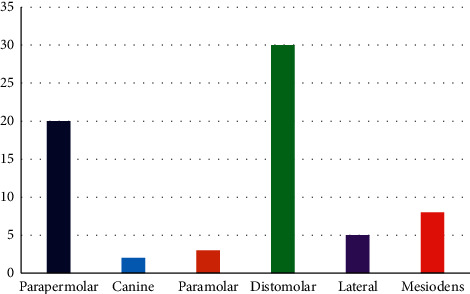
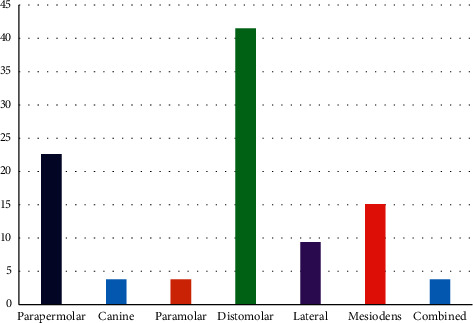
Results: The prevalence of supernumerary teeth was estimated as 1.06% (n = 53), and no significant difference between the males and females was seen. Most supernumerary teeth were found in the distomolar (44.1%) and parapremolar (29.4%) locations. The majority of supernumerary teeth were present in the maxilla (73.5%) and were impacted (77.9%) and unilateral (71.7%). The number of supernumerary teeth was 68 cases and majority of patients (86.8%) had one supernumerary tooth.
Conclusion: Supernumerary tooth in this study had a high prevalence compared to similar studies, and unlike most previous studies, the most common type of supernumerary tooth was distomolar. Early diagnosis and proper medical planning are essential for managing supernumerary teeth.
Copyright © 2021 Emran Hajmohammadi et al.
Conflict of interest statement
The authors declare that they have no conflicts of interest.
Figures
References
-
- Ferrés-Padró E., Prats-Armengol J., Ferrés-Amat E. A descriptive study of 113 unerupted supernumerary teeth in 79 pediatric patients in Barcelona. Medicina Oral, Patología Oral y Cirugía Bucal. 2009;14:E146–E152. - PubMed
-
- Omer R. S., Anthonappa R. P., King N. M. Determination of the optimum time for surgical removal of unerupted anterior supernumerary teeth. Pediatric Dentistry. 2010;32(1):14–20. - PubMed
LinkOut - more resources
Full Text Sources
Other Literature Sources
