


Effect of Hydroxychloroquine and Azithromycin on QT Interval Prolongation and Other Cardiac Arrhythmias in COVID-19 Confirmed Patients
- PMID: 33688374
- PMCID: PMC7924072
- DOI: 10.1155/2021/6683098
Effect of Hydroxychloroquine and Azithromycin on QT Interval Prolongation and Other Cardiac Arrhythmias in COVID-19 Confirmed Patients
Abstract
Background: Hydroxychloroquine with or without azithromycin was one of the common therapies at the beginning of the COVID-19 pandemic. They can prolong QT interval, cause torsade de pointes, and lead to sudden cardiac death. We aimed to assess QT interval prolongation and its risk factors in patients who received hydroxychloroquine with or without azithromycin.
Methods: This study was a retrospective cohort study. One hundred seventy-two confirmed COVID-19 patients were included in this study, hospitalized at Babol University of Medical Sciences hospitals between March 5, 2020, and April 3, 2020. Patients were divided into two groups: hydroxychloroquine alone and hydroxychloroquine with azithromycin. Electrocardiograms were used for outcome assessment.
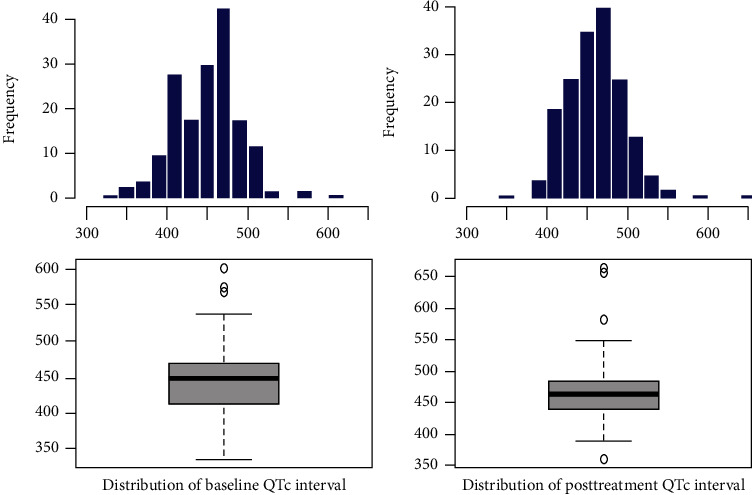
Results: 83.1% of patients received hydroxychloroquine plus azithromycin vs. 16.9% of patients who received only hydroxychloroquine. The mean age of patients was 59.2 ± 15.4.The mean of posttreatment QTc interval in the monotherapy group was shorter than the mean of posttreatment QTc interval in the combination therapy group, but it had no significant statistical difference (462.5 ± 43.1 milliseconds vs. 464.3 ± 59.1 milliseconds; p = 0.488). Generally, 22.1% of patients had a prolonged QTc interval after treatment. Male gender, or baseline QTc ≥ 450 milliseconds, or high-risk Tisdale score increased the likelihood of prolonged QTc interval. Due to QTc prolongation, fourteen patients did not continue therapy after four days.
Conclusions: Hospitalized patients treated by hydroxychloroquine with or without azithromycin had no significant difference in prolongation of QT interval and outcome. The numbers of patients with prolonged QT intervals in this study emphasize careful cardiac monitoring during therapy, especially in high-risk patients.
Copyright © 2021 Seyed Parsa Eftekhar et al.
Conflict of interest statement
The authors declare no competing financial interest.
Figures
References
-
- World Health Organization. WHO coronavirus disease (COVID-19) dashboard. August 2020, https://covid19.who.int/
MeSH terms
Substances
LinkOut - more resources
Full Text Sources
Other Literature Sources
Medical
Miscellaneous
