


Addressing the impact of COVID-19 lockdown on energy use in municipal buildings: A case study in Florianópolis, Brazil
- PMID: 33688463
- PMCID: PMC7931682
- DOI: 10.1016/j.scs.2021.102823
Addressing the impact of COVID-19 lockdown on energy use in municipal buildings: A case study in Florianópolis, Brazil
Abstract
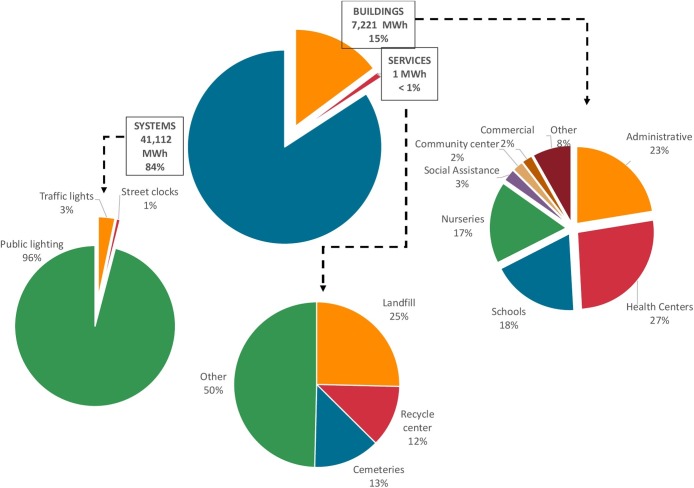
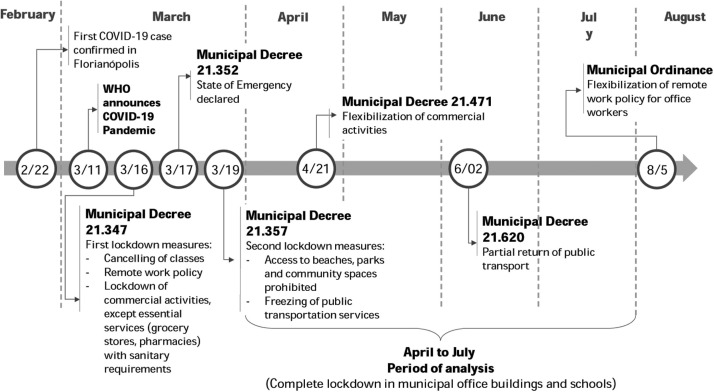
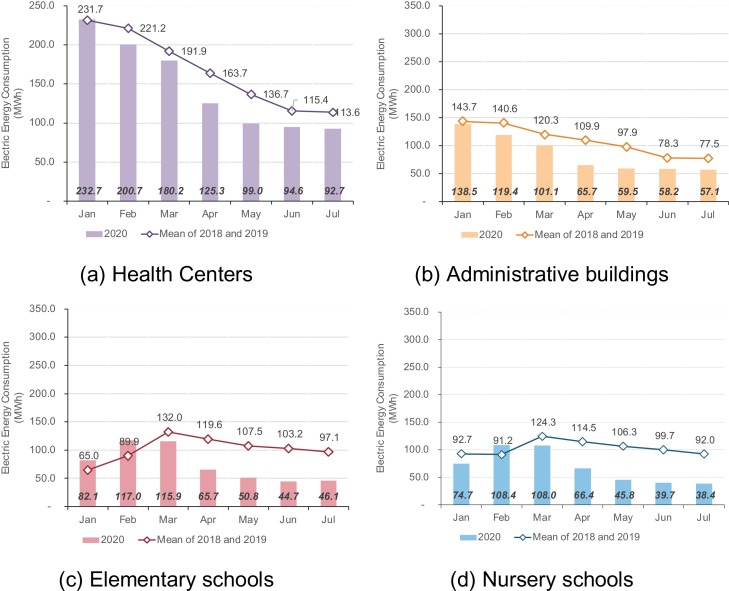
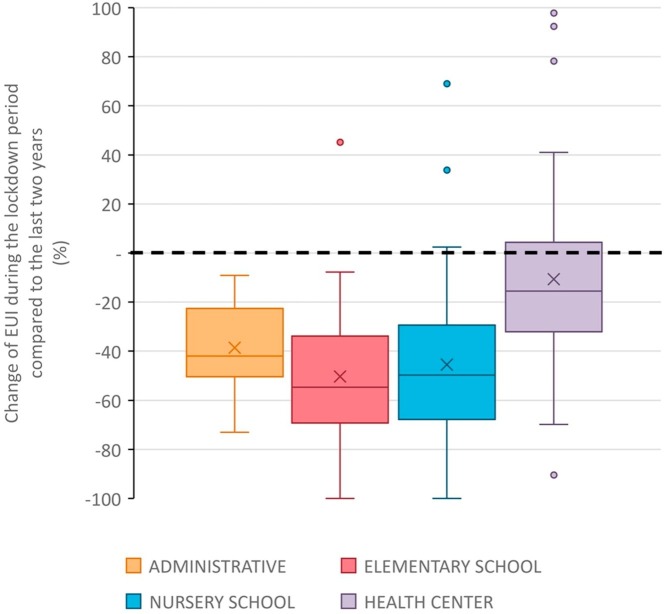
COVID-19 has spread quickly to several countries following the initial outbreak of the disease. As a consequence, several measures have been taken to mitigate the virus spread worldwide. In the city of Florianópolis, in southern Brazil, a strict lockdown was implemented on 16 March 2020. Although commercial activities were allowed to resume 21 April, a complete lockdown of municipal public buildings (e.g., administrative buildings and schools) lasted up to 5 August 2020. Reports in the literature emphasize the influence of occupant presence and actions on energy use in buildings. Therefore, the objective of this study was to assess the impact of the COVID-19 lockdown on the electric energy use of municipal buildings in Florianópolis. A large database with monthly electric energy use data was provided by the City Hall and analyzed. Firstly, the consumer units were grouped into three categories: systems, services and buildings. This revealed that buildings were directly affected by the lockdown measures, but systems and services were not. Therefore, an in-depth evaluation of health centers, administrative buildings, elementary schools and nursery schools was conducted and mean electric energy reductions of 11.1 %, 38.6 %, 50.3 %, and 50.4 %, respectively, were observed. Although it may initially seem unexpected, municipal health centers had a small electric energy use reduction, because they were not directly responsible for COVID-19 treatment, as patients were forwarded to specific facilities. Walkthroughs and energy audits were performed in an administrative building, an elementary school, and a nursery school, to gain a deeper understanding of the consumption trends. It was observed that municipal buildings present a basal energy use intensity even when the buildings are unoccupied. Energy audits verified that stand-by loads and vital loads, such as lighting for safety and computer servers, play a key role in this share of energy use.
Keywords: Building performance analysis; COVID-19 pandemic; Electric energy consumption; Occupant behavior; Public buildings.
© 2021 Elsevier Ltd. All rights reserved.
Conflict of interest statement
The authors report no declarations of interest.
Figures
References
-
- Al-mumin A., Khattab O., Sridhar G. Occupants’ behavior and activity patterns influencing the energy consumption in the Kuwaiti residences. Energy and Buildings. 2003;35:549–559. doi: 10.1016/S0378-7788(02)00167-6. - DOI
-
- ASHRAE . 2011. Procedures for commercial building energy audits.
-
- ASHRAE . Vol. 8400. 2013. Climatic data for building design standards. (ANSI/ASHRAE Stand. 169-2013).
-
- Balezentis T. Shrinking ageing population and other drivers of energy consumption and CO2 emission in the residential sector: A case from Eastern Europe. Energy Policy. 2020;140 doi: 10.1016/j.enpol.2020.111433. - DOI
LinkOut - more resources
Full Text Sources
Other Literature Sources
Research Materials
Miscellaneous