


Influence of the Model of Care on the Outcomes of Diabetes Self-Management Education Program: A Scoping Review
- PMID: 33688505
- PMCID: PMC7914106
- DOI: 10.1155/2021/2969243
Influence of the Model of Care on the Outcomes of Diabetes Self-Management Education Program: A Scoping Review
Abstract
Background: Type 2 diabetes mellitus (T2DM) accounts for approximately 95% of all diabetes cases, making the disease a global public health concern. The increasing prevalence of T2DM has highlighted the importance of evidence-based guidelines for effective prevention, management, and treatment. Diabetes self-management education (DSME) can produce positive effects on patient behaviors and health status. Study objective. We synthesized findings from the existing studies to find out whether or not the impact of DSME on patient health behaviors and outcomes differ by the different models of diabetes care. That is, we determined whether there are differences in DSME outcomes when patient's care provider is a general practitioner, a specialist, a nurse, or a combination of these health professionals.
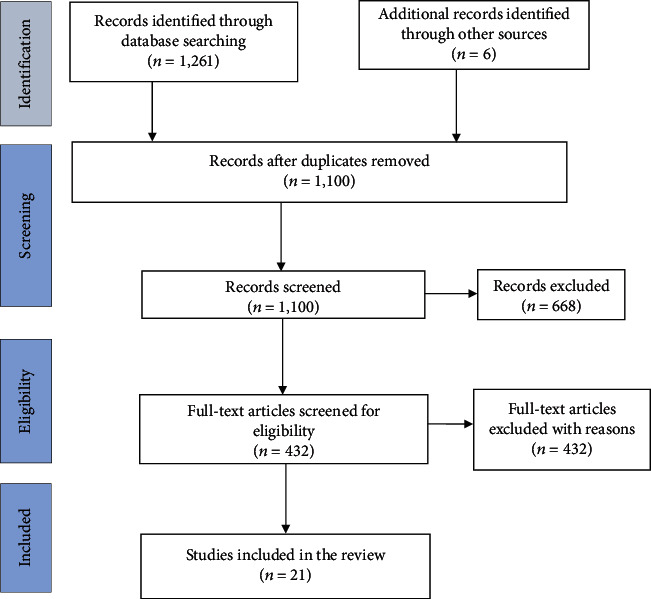
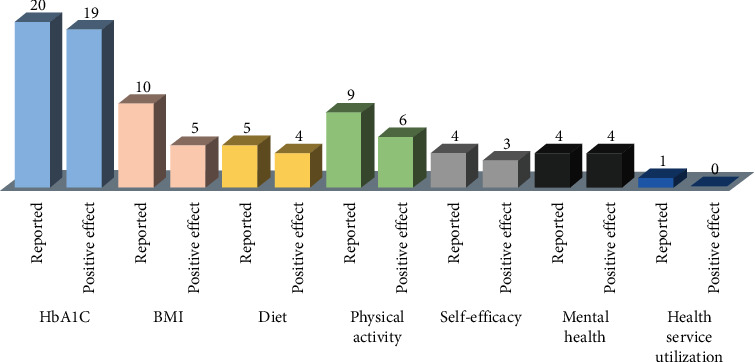
Methods: Searches were made of six electronic databases to identify relevant English language publications on DSME from 2000 through 2019. Titles and abstracts of the search results were screened to select eligible papers for full-text screening. All eligible papers were retrieved, and full-text screening was done by three independent reviewers to select studies for inclusion in the final analysis. Twenty-one studies were included in the final analysis. The main outcome measures assessed were glycated hemoglobin (HbA1c), body mass index (BMI), diet, and physical activity.
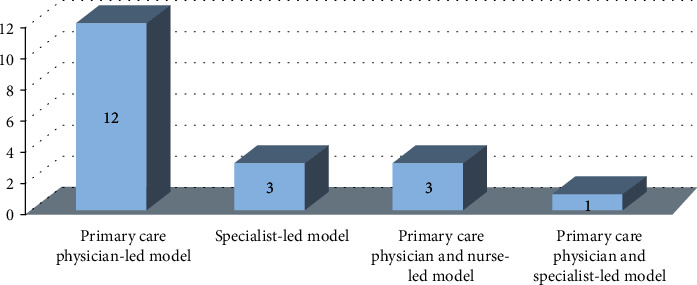
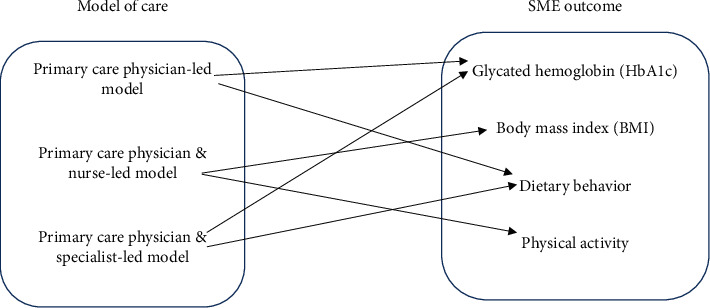
Results: The majority of the patients with diabetes were seen by primary care physicians. In general, the studies reported significant improvements in patient health behaviors and outcomes. Some differences in outcomes between the different models of care were observed.
Conclusion: Our findings suggest that the effects of DSME on patients' health behaviors and outcomes could differ by the different models of diabetes care. However, considering the limited sample of publications reviewed, and because none of the reviewed studies directly measured the impact of the DSME program on patient behaviors and outcomes, significant conclusions could not be reached.
Copyright © 2021 Emmanuel Kumah et al.
Conflict of interest statement
The authors declare that there is no conflict of interest regarding the publication of this paper.
Figures
References
-
- Saeedi P., Petersohn I., Salpea P., et al. Global and regional diabetes prevalence estimates for 2019 and projections for 2030 and 2045: Results from the International Diabetes Federation Diabetes Atlas, 9th edition. Diabetes Research and Clinical Practice. 2019;157:p. 107843. doi: 10.1016/j.diabres.2019.107843. - DOI - PubMed
-
- Saxe-Custack A., Weatherspoon L. A patient-centered approach using community-based paraprofessionals to improve self-management of type 2 diabetes. American Journal of Health Education. 2013;44(4):213–220. doi: 10.1080/19325037.2013.798213. - DOI
-
- Bloom D. E., Cafiero E. T., Jané-Llopi E., et al. The Global Economic Burden of Noncommunicable Diseases. Geneva: World Economic Forum; 2011.
Publication types
MeSH terms
Substances
LinkOut - more resources
Full Text Sources
Other Literature Sources
Medical
