This is a preprint.
More Than 50 Long-Term Effects of COVID-19: A Systematic Review and Meta-Analysis
- PMID: 33688642
- PMCID: PMC7941645
- DOI: 10.21203/rs.3.rs-266574/v1
More Than 50 Long-Term Effects of COVID-19: A Systematic Review and Meta-Analysis
Update in
-
More than 50 long-term effects of COVID-19: a systematic review and meta-analysis.Sci Rep. 2021 Aug 9;11(1):16144. doi: 10.1038/s41598-021-95565-8. Sci Rep. 2021. PMID: 34373540 Free PMC article.
Abstract
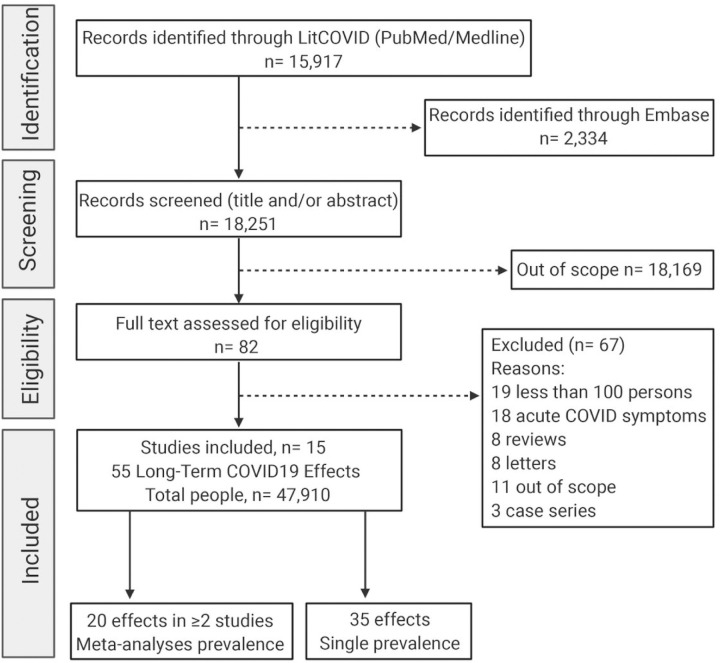
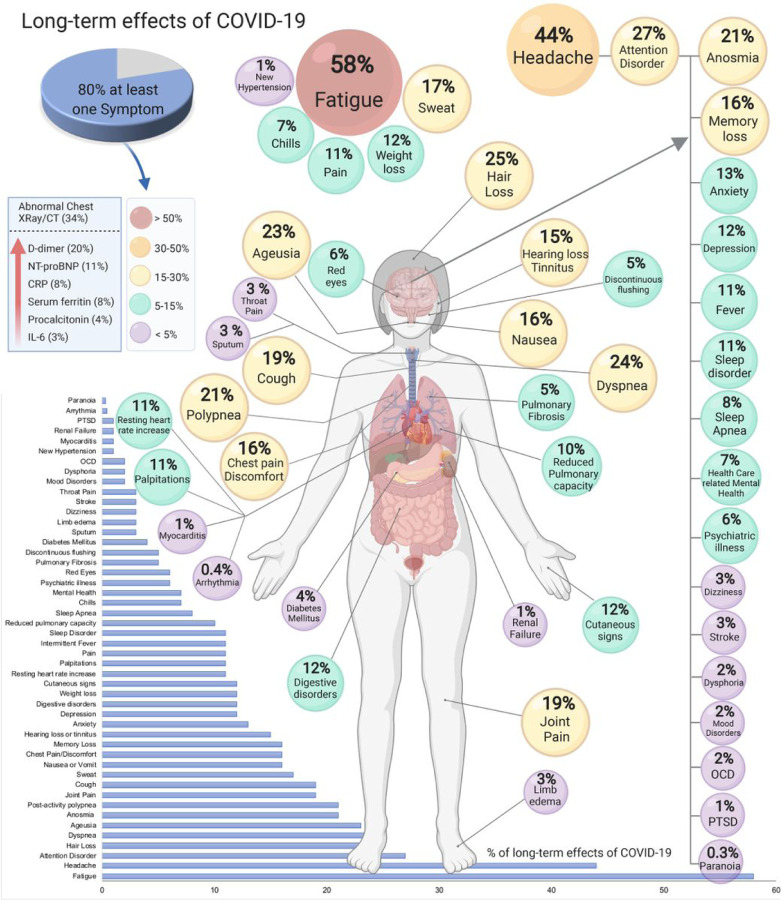
Background. COVID-19, caused by SARS-CoV-2, can involve sequelae and other medical complications that last weeks to months after initial recovery, which has come to be called Long-COVID or COVID long-haulers. This systematic review and meta-analysis aims to identify studies assessing long-term effects of COVID-19 and estimates the prevalence of each symptom, sign, or laboratory parameter of patients at a post-COVID-19 stage. Methods . LitCOVID (PubMed and Medline) and Embase were searched by two independent researchers. All articles with original data for detecting long-term COVID-19 published before 1 st of January 2021 and with a minimum of 100 patients were included. For effects reported in two or more studies, meta-analyses using a random-effects model were performed using the MetaXL software to estimate the pooled prevalence with 95% CI. Heterogeneity was assessed using I 2 statistics. This systematic review followed Preferred Reporting Items for Systematic Reviewers and Meta-analysis (PRISMA) guidelines, although the study protocol was not registered. Results. A total of 18,251 publications were identified, of which 15 met the inclusion criteria. The prevalence of 55 long-term effects was estimated, 21 meta-analyses were performed, and 47,910 patients were included. The follow-up time ranged from 14 to 110 days post-viral infection. The age of the study participants ranged between 17 and 87 years. It was estimated that 80% (95% CI 65-92) of the patients that were infected with SARS-CoV-2 developed one or more long-term symptoms. The five most common symptoms were fatigue (58%), headache (44%), attention disorder (27%), hair loss (25%), and dyspnea (24%). All meta-analyses showed medium (n=2) to high heterogeneity (n=13). Conclusions . In order to have a better understanding, future studies need to stratify by sex, age, previous comorbidities, the severity of COVID-19 (ranging from asymptomatic to severe), and duration of each symptom. From the clinical perspective, multi-disciplinary teams are crucial to developing preventive measures, rehabilitation techniques, and clinical management strategies with whole-patient perspectives designed to address long COVID-19 care.
Conflict of interest statement
Figures
References
-
- Tenforde MW, Kim SS, Lindsell CJ, Billig Rose E, Shapiro NI, Files DC, et al. Symptom Duration and Risk Factors for Delayed Return to Usual Health Among Outpatients with COVID-19 in a Multistate Health Care Systems Network - United States, March-June 2020. MMWR Morb Mortal Wkly Rep. 2020;69(30):993–8. - PMC - PubMed
-
- Greenhalgh T, Knight M, A’Court C, Buxton M, Husain L. Management of post-acute covid-19 in primary care. BMJ. 2020;370:m3026. - PubMed
Publication types
Grants and funding
LinkOut - more resources
Full Text Sources
Other Literature Sources
Miscellaneous