


The Benefits and Harms of Early Mobilization and Supervised Exercise Therapy after Non-surgically Treated Proximal Humerus or Distal Radius fracture: A systematic Review and Meta-analysis
- PMID: 33689149
- PMCID: PMC7990986
- DOI: 10.1007/s12178-021-09697-5
The Benefits and Harms of Early Mobilization and Supervised Exercise Therapy after Non-surgically Treated Proximal Humerus or Distal Radius fracture: A systematic Review and Meta-analysis
Abstract
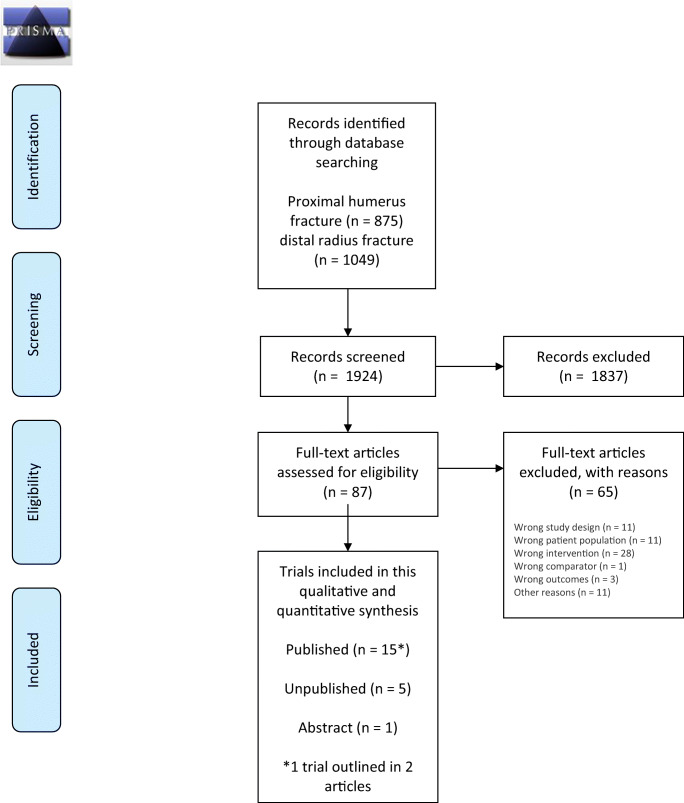
Purpose of review: Fractures of the proximal humerus (PHF) and distal radius (DRF) are among the most common upper extremity fractures in the elderly. Recent randomized controlled trials support non-surgical treatment. Evidence behind the best non-surgical treatment strategy has been sparse and raises questions as to when and how to initiate exercises. The purpose of this systematic review and meta-analysis was to assess the benefits and harms of early mobilization versus late mobilization and supervised versus non-supervised exercises therapy after PHF and DRF.
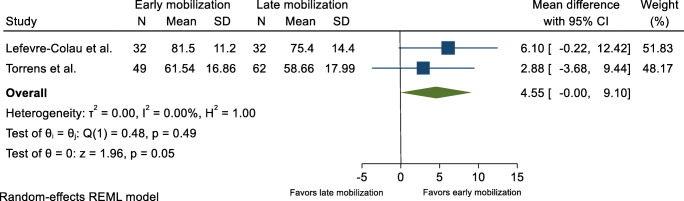
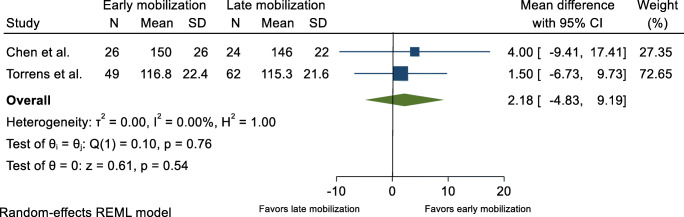
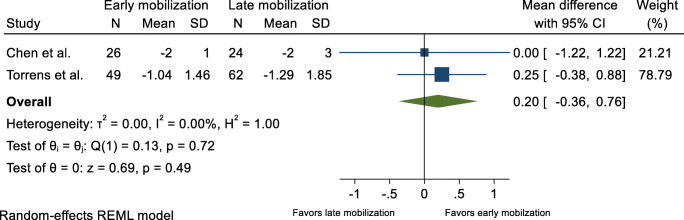
Recent findings: 15 published and 5 unpublished trials were included. Early mobilization after PHF resulted in better function with a mean difference (MD) of 4.55 (95% CI 0.00-9.10) on the Constant Shoulder Score. However, the MD was not found to be clinically relevant. No clear evidence showed that early mobilization after PHF had a positive effect on range of motion or pain. Neither did it lead to more complications. Furthermore, no eligible evidence was found supporting early mobilization to be superior to late mobilization after DRF, or that supervised exercise therapy was superior to non-supervised exercise therapy after PHF and DRF. The quality of evidence on all outcomes was found to be low or very low. Early mobilization after PHF may have a beneficial effect on function. Due to the lack of clear evidence, there is an urgent need for future studies to determine the effect of early mobilization and supervised exercise therapy after PHF and DRF. Prospero ID number: CRD42020167656, date of registration 28.04.2020.
Keywords: Distal radius fracture; Early mobilization; Non-surgical treatment; Proximal humerus fracture; supervised exercise therapy.
Conflict of interest statement
H.K.Ø., I.M.,, A.P.L., M.T.V., V.M.M., and V.T.P. declare that they have no conflicts of interest.
Figures

References
-
- Rundgren J, Bojan A, Mellstrand Navarro C, Enocson A. Epidemiology, classification, treatment and mortality of distal radius fractures in adults: an observational study of 23,394 fractures from the national Swedish fracture register. BMC Musculoskelet Disord. 2020;21(1):88. doi: 10.1186/s12891-020-3097-8. - DOI - PMC - PubMed
Publication types
LinkOut - more resources
Full Text Sources
Other Literature Sources
Research Materials
