Review
. 2021 Apr 15;81(8):1640-1650.
doi: 10.1016/j.molcel.2021.02.020. Epub 2021 Mar 8.

Pioneering the developmental frontier

Affiliations
Review

Pioneering the developmental frontier

Elizabeth D Larson et al. Mol Cell. .

Abstract

Coordinated changes in gene expression allow a single fertilized oocyte to develop into a complex multi-cellular organism. These changes in expression are controlled by transcription factors that gain access to discrete cis-regulatory elements in the genome, allowing them to activate gene expression. Although nucleosomes present barriers to transcription factor occupancy, pioneer transcription factors have unique properties that allow them to bind DNA in the context of nucleosomes, define cis-regulatory elements, and facilitate the subsequent binding of additional factors that determine gene expression. In this capacity, pioneer factors act at the top of gene-regulatory networks to control developmental transitions. Developmental context also influences pioneer factor binding and activity. Here we discuss the interplay between pioneer factors and development, their role in driving developmental transitions, and the influence of the cellular environment on pioneer factor binding and activity.


Conflict of interest statement

Declaration of interests The authors declare no competing interests.

Figures
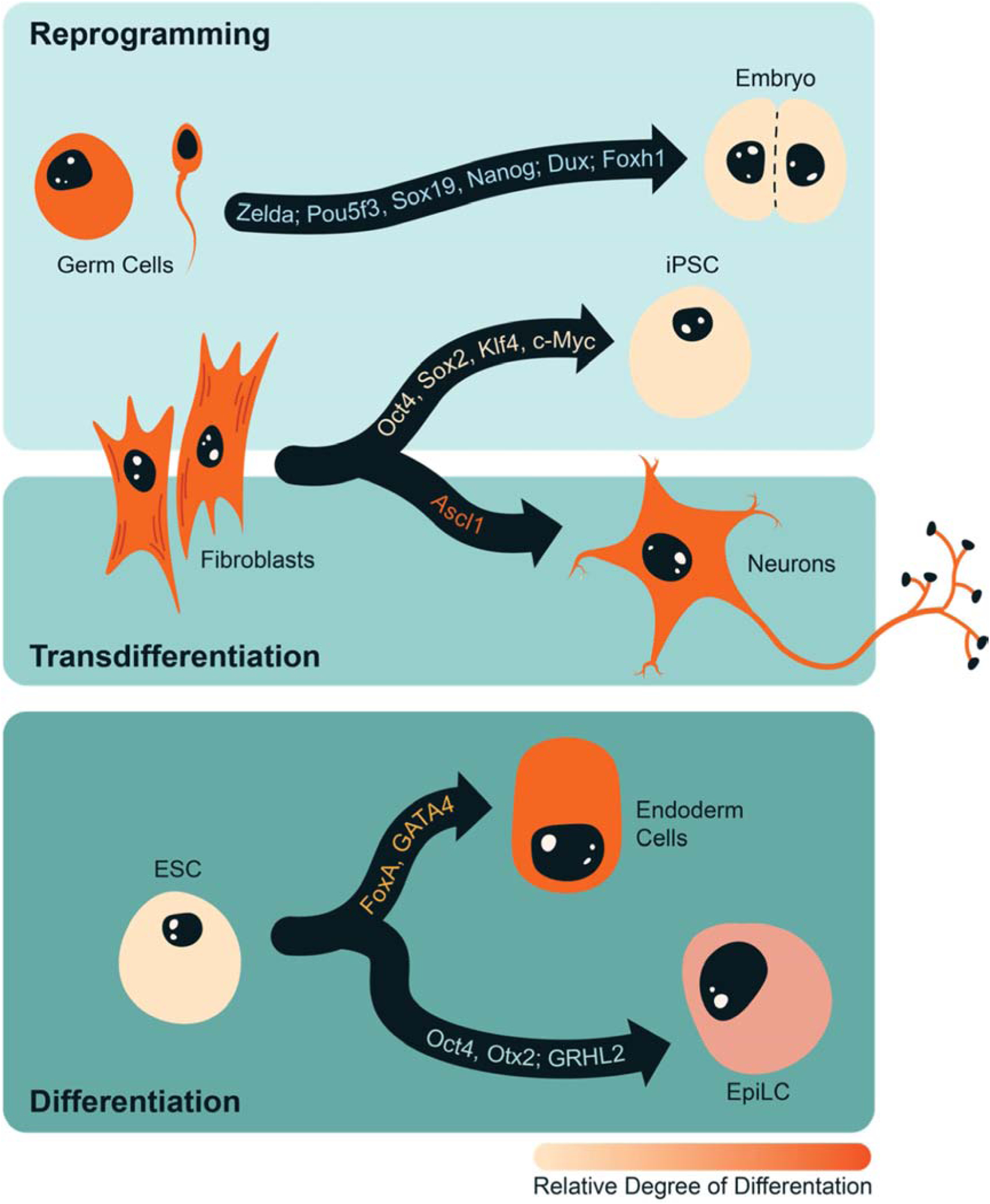
Figure 1:
Figure 1:. Pioneer factors drive developmental transitions.
Pioneer factors reprogram specialized cell types (germ cells, fibroblasts) to pluripotency (iPSC, early embryonic cells). Expression of other pioneer factors can transdifferentiate fibroblasts to additional cell types, such as neurons and can also drive differentiation from naïve (ESC) to more specialized cell types (endoderm, EpiLC). A subset of pioneer factors involved in each conversion are listed along the arrows, which indicate the direction of the conversion events. The color of the cell represents the relative degree of differentiation with dark orange being the most differentiated.
Figure 2:
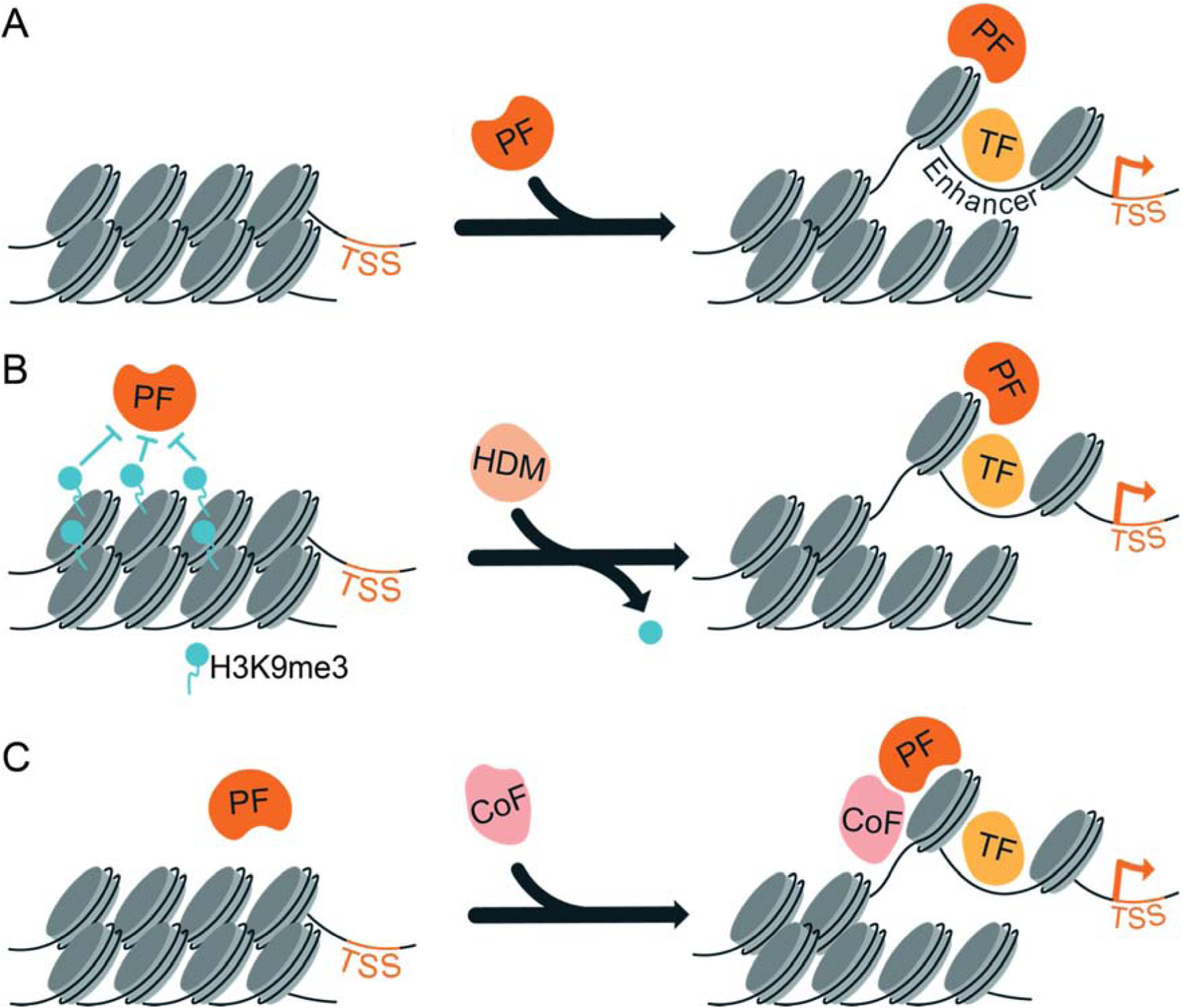
Figure 2:. Chromatin and cofactor expression modulate pioneer-factor occupancy and activity.
A. Pioneer factors (PF) bind unmarked, silent chromatin and establish regions of accessible chromatin at enhancers to allow for the subsequent binding of lineage-specific transcription factors (TF) that drive gene expression. B. Specific chromatin modifications (such as histone methylation) act as a barrier to pioneer-factor binding. Expression of enzymes that remove these marks, such as histone demethylases (HDM), enable pioneer factors to overcome this barrier, drive accessibility at enhancers and promote gene expression. C. The expression of cofactors (CoF) can stabilize pioneer-factor binding and promote genomic occupancy. TSS, transcription start site.
Figure 3:
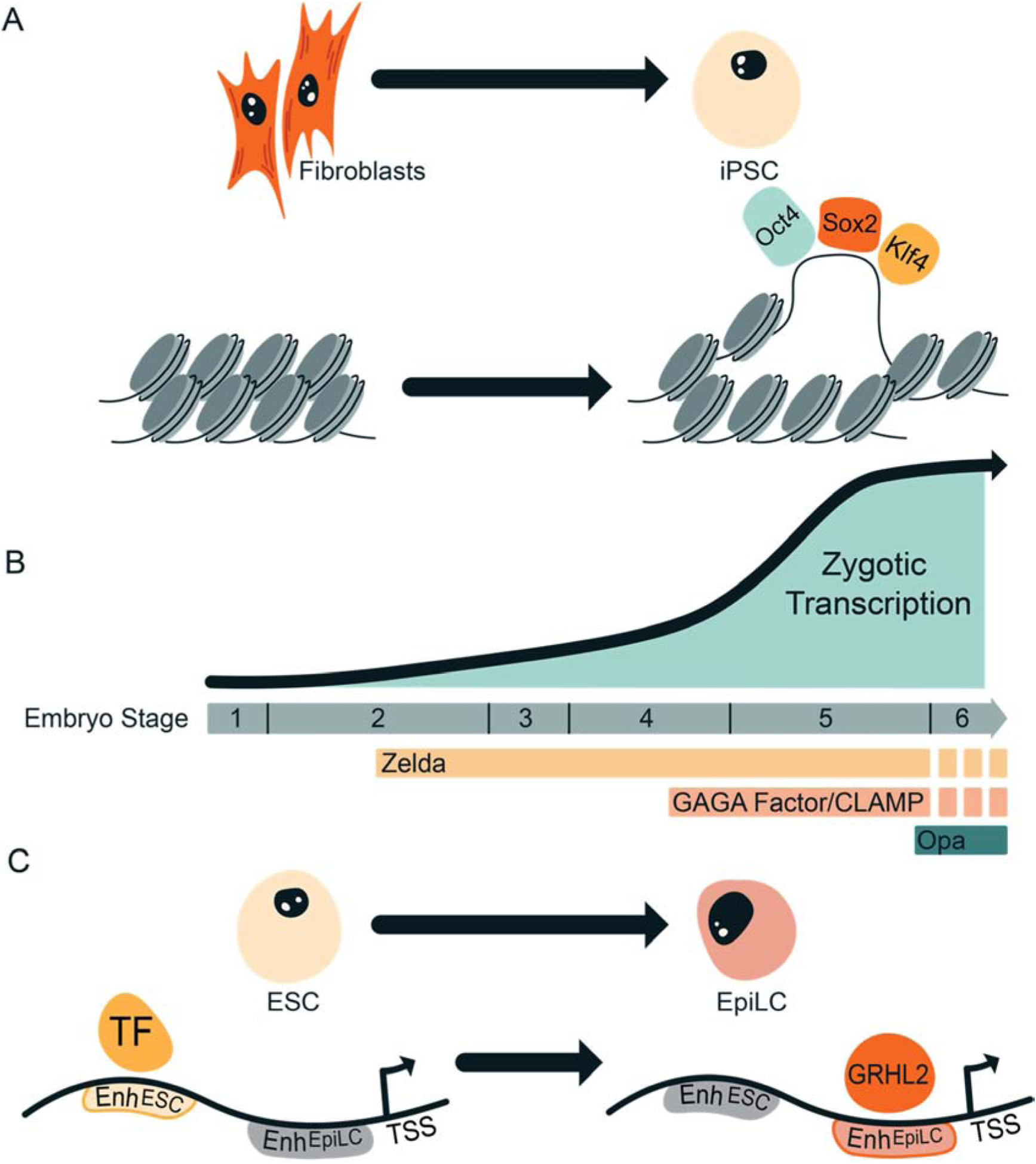
Figure 3:. Cooperation amongst pioneer factors during development.
A. Simultaneous binding of multiple pioneer factors may be necessary for the formation of accessible chromatin at cis-regulatory elements. For example, during reprogramming of fibroblasts to iPSCs, Oct4, Sox2, and Klf4 are required to function together to define a subset of enhancers. B. Multiple pioneer factors (Zelda, GAGA factor, CLAMP, and Odd-paired (Opa)) function sequentially to regulate early embryonic development in Drosophila. C. Sequential action of pioneer factors can define cell-type specific enhancers that maintain gene expression during differentiation. As ESCs exit naïve pluripotency and become primed EpiLCs, GRHL2 defines novel enhancers to maintain expression of a gene regulatory network necessary for defining EpiLCs.

References

    1. Adams EJ, Karthaus WR, Hoover E, Liu D, Gruet A, Zhang Z, Cho H, DiLoreto R, Chhangawala S, Liu Y, et al. (2019). FOXA1 mutations alter pioneering activity, differentiation and prostate cancer phenotypes. Nature 571, 408–412. - PMC - PubMed
    1. Ben-Porath I, Thomson MW, Carey VJ, Ge R, Bell GW, Regev A, and Weinberg RA (2008). An embryonic stem cell-like gene expression signature in poorly differentiated aggressive human tumors. Nat. Genet 40, 499–507. - PMC - PubMed
    1. Bhat KM, Farkas G, Karch F, Gyurkovics H, Gausz J, and Schedl P (1996). The GAGA factor is required in the early Drosophila embryo not only for transcriptional regulation but also for nuclear division. Development 122, 1113–1124. - PubMed
    1. Budry L, Balsalobre A, Gauthier Y, Khetchoumian K, L’Honoré A, Vallette S, Brue T, Figarella-Branger D, Meij B, and Drouin J (2012). The selector gene Pax7 dictates alternate pituitary cell fates through its pioneer action on chromatin remodeling. Genes Dev. 26, 2299–2310. - PMC - PubMed
    1. Buecker C, Srinivasan R, Wu Z, Calo E, Acampora D, Faial T, Simeone A, Tan M, Swigut T, and Wysocka J (2014). Reorganization of enhancer patterns in transition from naive to primed pluripotency. Cell Stem Cell 14, 838–853. - PMC - PubMed

Publication types

MeSH terms

LinkOut - more resources