


Ventilator-associated pneumonia among ICU patients in WHO Southeast Asian region: A systematic review
- PMID: 33690663
- PMCID: PMC7942996
- DOI: 10.1371/journal.pone.0247832
Ventilator-associated pneumonia among ICU patients in WHO Southeast Asian region: A systematic review
Abstract
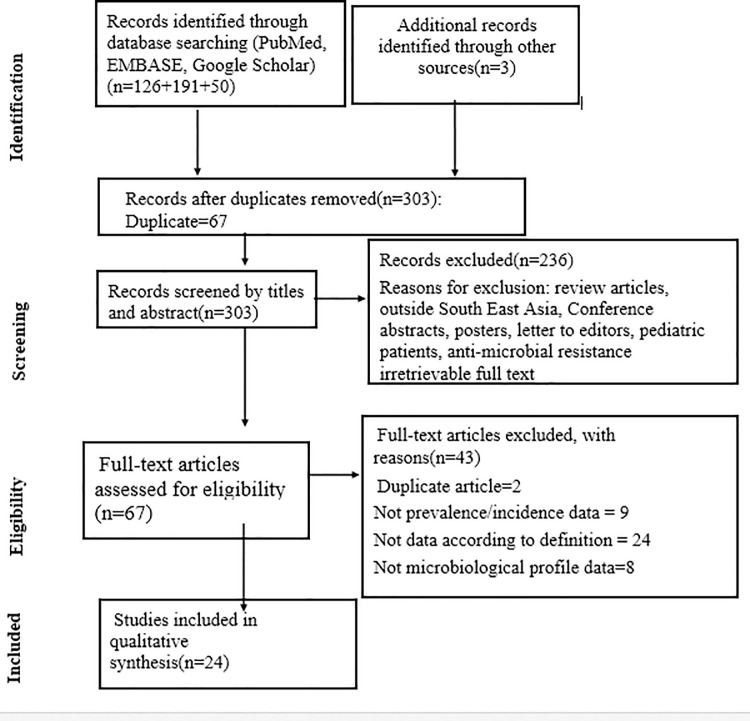
Ventilator-associated pneumonia (VAP) is one of the most frequent ICU-acquired infections and a leading cause of death among patients in Intensive Care Unit (ICU). The South East Asian Region is a part of the world with limited health resources where infectious diseases are still underestimated. We aimed to review the literature in this part of the world to describe incidence, mortality and microbiological evidence of VAP and explore preventive and control strategies. We selected 24 peer-reviewed articles published from January 1, 2000 to September 1, 2020 from electronic databases and manual searching for observational studies among adult patients diagnosed with VAP expressed per thousand days admitted in ICU. The VAP rates ranged from 2.13 to 116 per thousand days, varying among different countries of this region. A significant rate of mortality was observed in 13 studies ranging from 16.2% to 74.1%. Gram negative organisms like Acinetobacter spp., Pseudomonas aeruginosa and Klebsiella pneumoniae and Gram-positive organisms like Staphylococcus aureus and Enterococcus species were frequently found. Our findings suggest an alarming situation of VAP among patients of most of the countries of this region with increasing incidence, mortality and antibiotic resistance. Thus, there is an urgent need for cost effective control and preventive measures like interventional studies and educational programs on staff training, hand hygiene, awareness on antibiotic resistance, implementation of antibiotic stewardship programs and appropriate use of ventilator bundle approach.
Conflict of interest statement
The authors have declared that no competing interests exist.
Figures
References
-
- Kollef MH, Chastre J, Fagon J-Y, François B, Niederman MS, Rello J, et al.. Global Prospective Epidemiologic and Surveillance Study of VentilatorAssociated Pneumonia due to Pseudomonas aeruginosa*. Vol. 42, Critical Care Medicine. 2014. p. 2178–87. Available from: 10.1097/CCM.0000000000000510 - DOI - PubMed
Publication types
MeSH terms
LinkOut - more resources
Full Text Sources
Other Literature Sources
Medical
Miscellaneous
