


Spatial scale in analysis of the dental plaque microbiome
- PMID: 33690940
- PMCID: PMC8972407
- DOI: 10.1111/prd.12364
Spatial scale in analysis of the dental plaque microbiome
Abstract
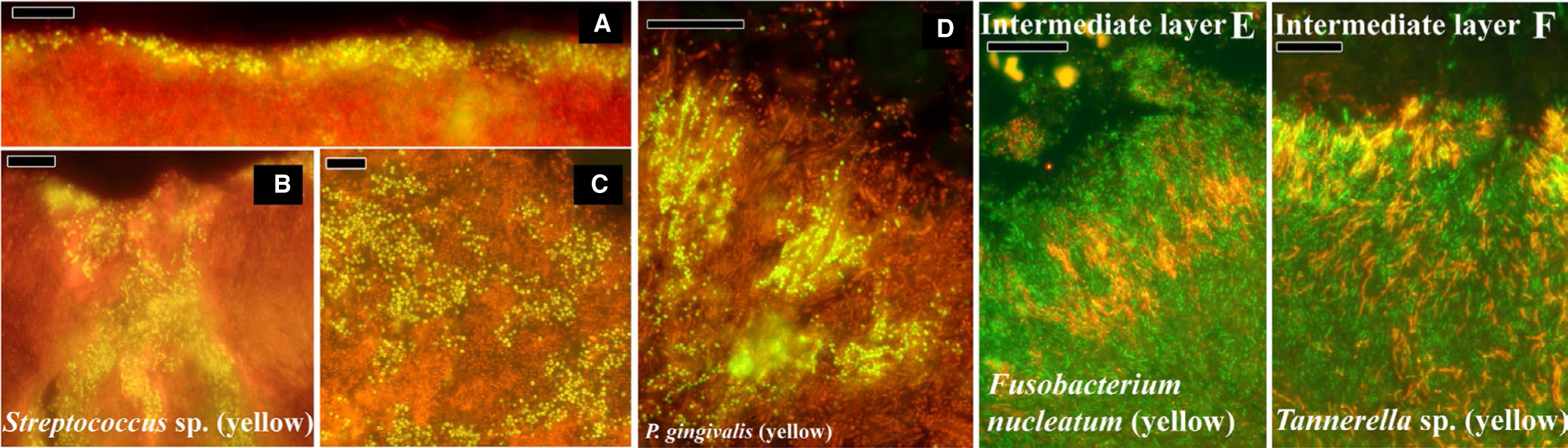
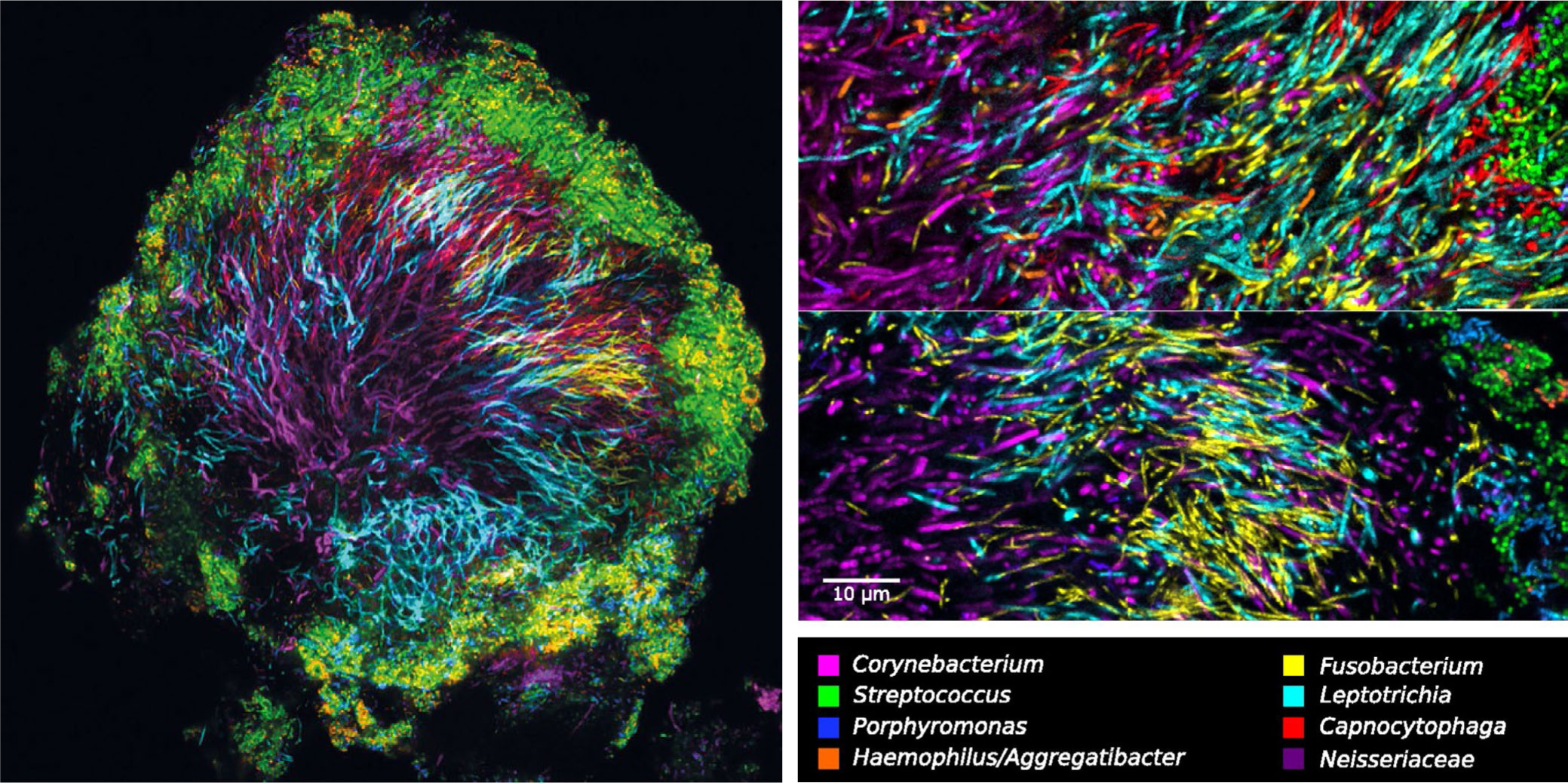
Ecologists have long recognized the importance of spatial scale in understanding structure-function relationships among communities of organisms within their environment. Here, we review historical and contemporary studies of dental plaque community structure in the context of three distinct scales: the micro (1-10 µm), meso (10-100 µm) and macroscale (100 µm to ≥1 cm). Within this framework, we analyze the compositional nature of dental plaque at the macroscale, the molecular interactions of microbes at the microscale, and the emergent properties of dental plaque biofilms at the mesoscale. Throughout our analysis of dental plaque across spatial scales, we draw attention to disease and health-associated structure-function relationships and include a discussion of host immune involvement in the mesoscale structure of periodontal disease-associated biofilms. We end with a discussion of two filamentous organisms, Fusobacterium nucleatum and Corynebacterium matruchotii, and their relevant contributions in structuring dental plaque biofilms.
Keywords: Fusobacterium nucleatum; CLASI-FISH; biofilm; dental plaque; oral microbiome.
© 2021 John Wiley & Sons A/S. Published by John Wiley & Sons Ltd.
Figures



References
-
- Flintrop CM, Rogge A, Miksch S, Thiele S, Waite AM, Iversen MH. Embedding and slicing of intact in situ collected marine snow. Limnol Oceanogr Methods. 2018;16(6):339–355.
-
- Nunan N, Wu K, Young IM, Crawford JW, Ritz K. Spatial distribution of bacterial communities and their relationships with the micro-architecture of soil. FEMS Microbiol Ecol. 2003;44(2):203–215. - PubMed
-
- Wiens JA. Spatial scaling in ecology. Funct Ecol. 1989;3(4):385–397.
Publication types
MeSH terms
Supplementary concepts
Grants and funding
LinkOut - more resources
Full Text Sources
Other Literature Sources
