


Regional and socioeconomic predictors of perceived ability to access coronavirus testing in the United States: results from a nationwide online COVID-19 survey
- PMID: 33691088
- PMCID: PMC7937327
- DOI: 10.1016/j.annepidem.2021.03.001
Regional and socioeconomic predictors of perceived ability to access coronavirus testing in the United States: results from a nationwide online COVID-19 survey
Abstract
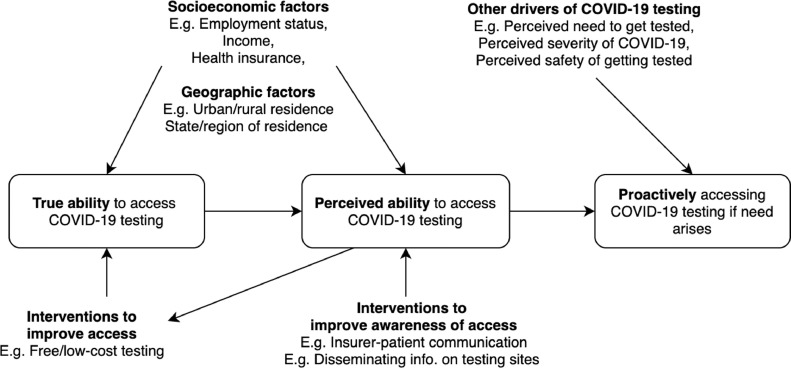
Purpose: Access to COVID-19 testing remained a salient issue during the early months of the pandemic, therefore this study aimed to identify 1) regional and 2) socioeconomic predictors of perceived ability to access Coronavirus testing.
Methods: An online survey using social media-based advertising was conducted among U.S. adults in April 2020. Participants were asked whether they thought they could acquire a COVID-19 test, along with basic demographic, socioeconomic and geographic information.
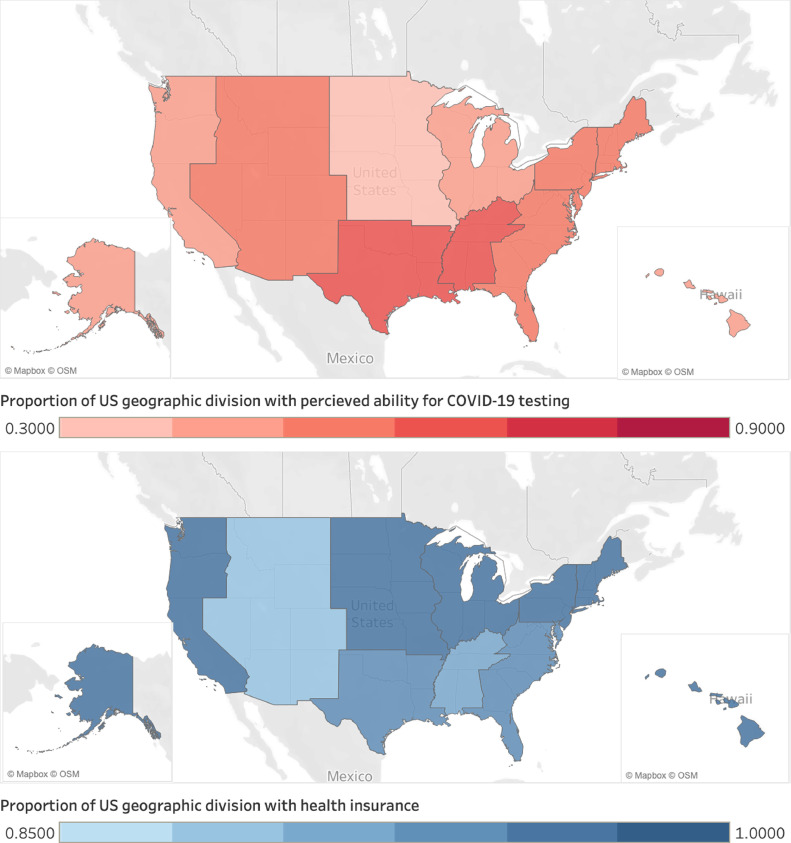
Results: A total of 6,378 participants provided data on perceived access to COVID-19 testing. In adjusted analyses, we found higher income and possession of health insurance to be associated with perceived ability to access Coronavirus testing. Geographically, perceived access was highest (68%) in East South Central division and lowest (39%) in West North Central. Disparities in health insurance coverage did not directly correspond to disparities in perceived access to COVID-19 testing.
Conclusions: Sex, geographic location, income, and insurance status were associated with perceived access to COVID-19 testing; interventions aimed at improving either access or awareness of measures taken to improve access are warranted. These findings from the pandemic's early months shed light on the importance of disaggregating perceived and true access to screening during such crises.
Keywords: COVID-19; Socio-economic; Testing; coronavirus; disparities; geographic.
Copyright © 2021 Elsevier Inc. All rights reserved.
Figures
References
-
- Sanchez E. American Heart Association Web site; 2020. COVID-19 science: why testing is so important. https://www.heart.org/en/news/2020/04/02/covid-19-science-why-testing-is..., Accessed June 6, 2020.
-
- Centers for Disease Control and Prevention. United states laboratory testing. https://www.cdc.gov/covid-data-tracker/index.html. Published 2020. Accessed February 7, 2021.
-
- Kaiser Family Foundation. COVID-19 testing. https://www.kff.org/other/state-indicator/covid-19-testing/?currentTimef.... Published 2020. Accessed February 7, 2021.
MeSH terms
LinkOut - more resources
Full Text Sources
Other Literature Sources
Medical
Miscellaneous
