Revisiting maternal and child undernutrition in low-income and middle-income countries: variable progress towards an unfinished agenda
- PMID: 33691094
- PMCID: PMC7613170
- DOI: 10.1016/S0140-6736(21)00394-9
Revisiting maternal and child undernutrition in low-income and middle-income countries: variable progress towards an unfinished agenda
Abstract
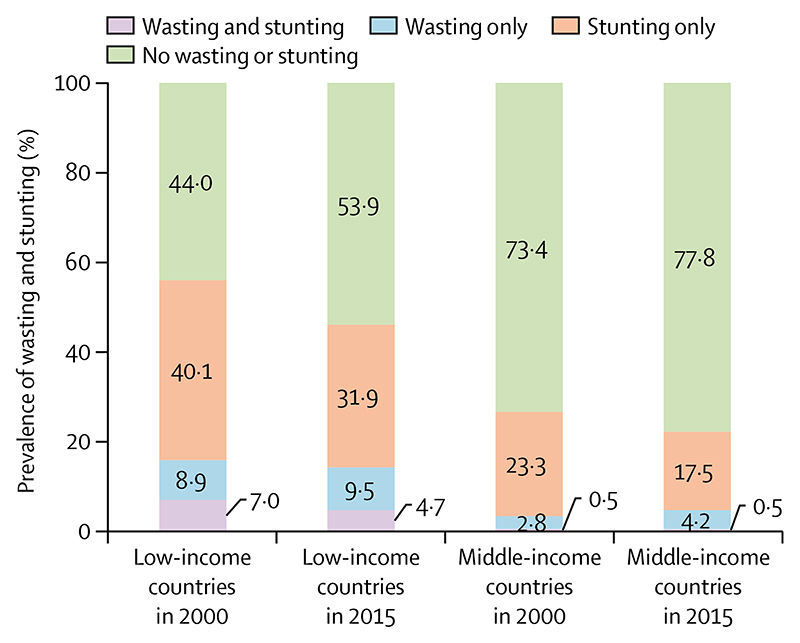
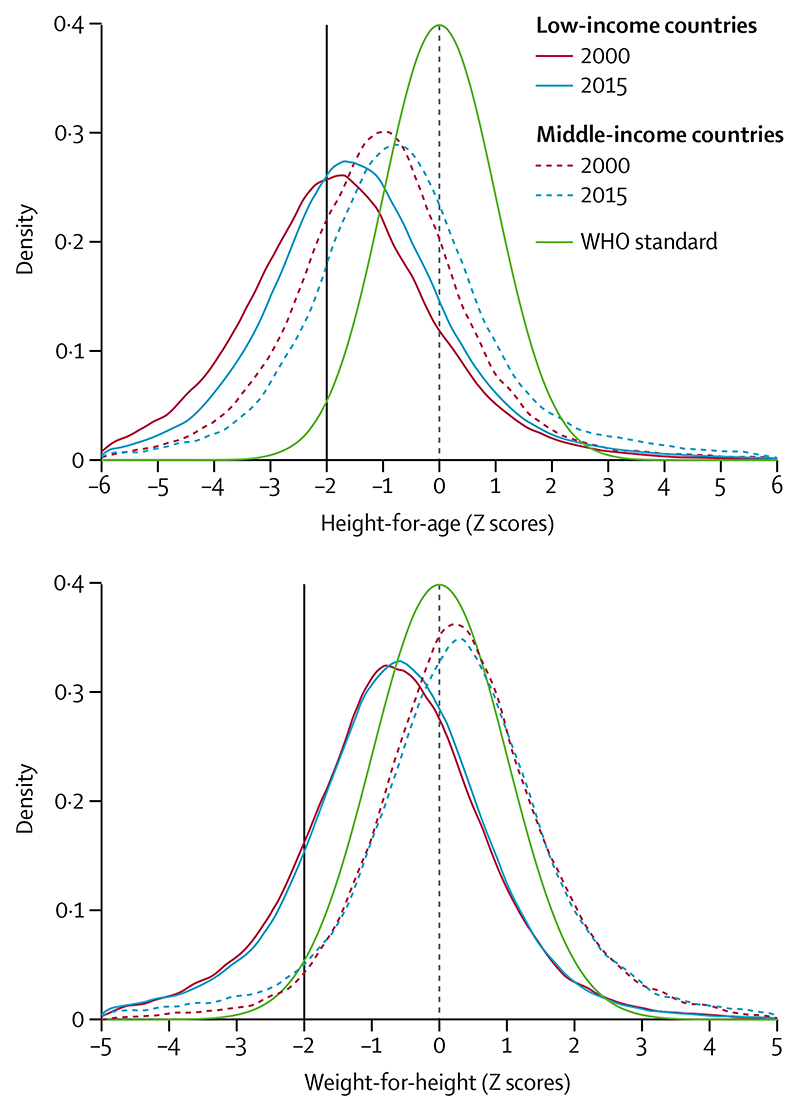
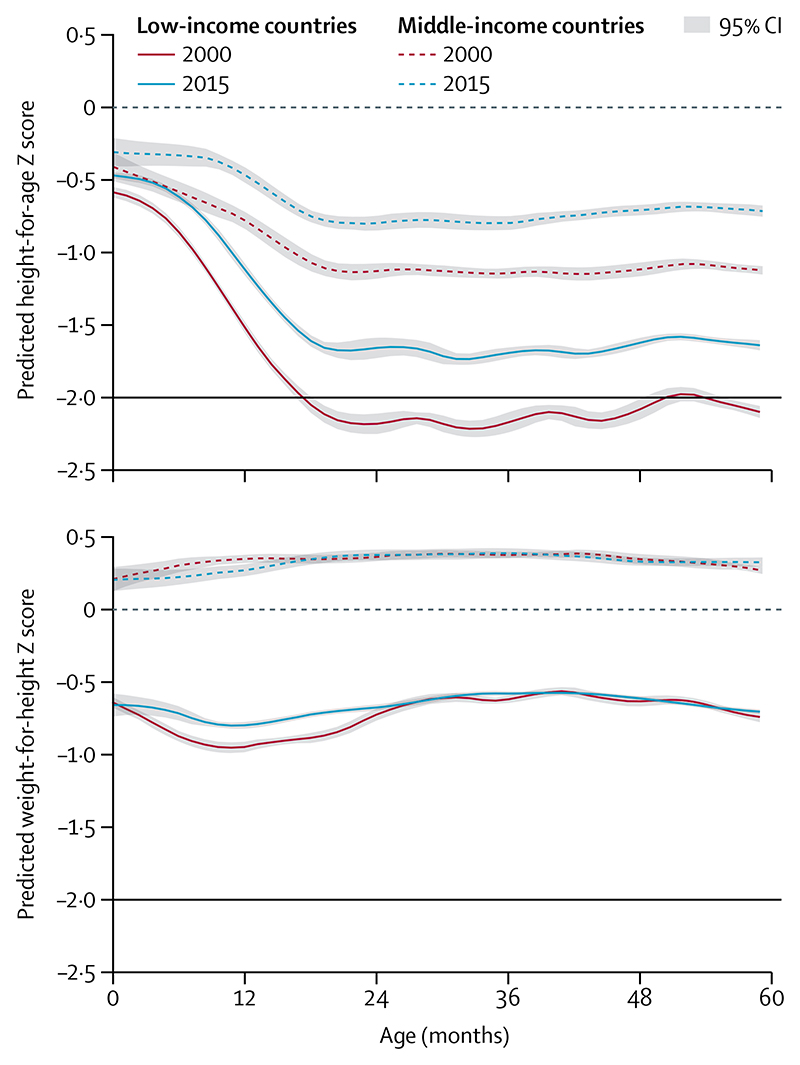
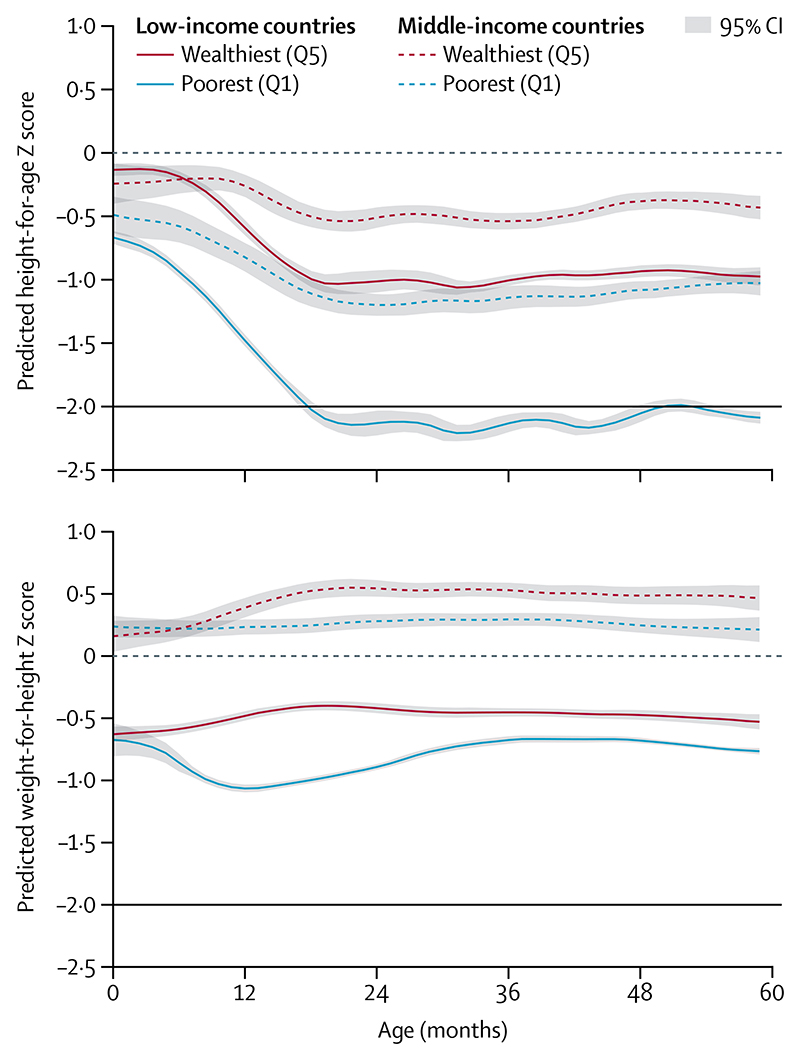
13 years after the first Lancet Series on maternal and child undernutrition, we reviewed the progress achieved on the basis of global estimates and new analyses of 50 low-income and middle-income countries with national surveys from around 2000 and 2015. The prevalence of childhood stunting has fallen, and linear growth faltering in early life has become less pronounced over time, markedly in middle-income countries but less so in low-income countries. Stunting and wasting remain public health problems in low-income countries, where 4·7% of children are simultaneously affected by both, a condition associated with a 4·8-times increase in mortality. New evidence shows that stunting and wasting might already be present at birth, and that the incidence of both conditions peaks in the first 6 months of life. Global low birthweight prevalence declined slowly at about 1·0% a year. Knowledge has accumulated on the short-term and long-term consequences of child undernutrition and on its adverse effect on adult human capital. Existing data on vitamin A deficiency among children suggest persisting high prevalence in Africa and south Asia. Zinc deficiency affects close to half of all children in the few countries with data. New evidence on the causes of poor growth points towards subclinical inflammation and environmental enteric dysfunction. Among women of reproductive age, the prevalence of low body-mass index has been reduced by half in middle-income countries, but trends in short stature prevalence are less evident. Both conditions are associated with poor outcomes for mothers and their children, whereas data on gestational weight gain are scarce. Data on the micronutrient status of women are conspicuously scarce, which constitutes an unacceptable data gap. Prevalence of anaemia in women remains high and unabated in many countries. Social inequalities are evident for many forms of undernutrition in women and children, suggesting a key role for poverty and low education, and reinforcing the need for multisectoral actions to accelerate progress. Despite little progress in some areas, maternal and child undernutrition remains a major global health concern, particularly as improvements since 2000 might be offset by the COVID-19 pandemic.
Copyright © 2021 Elsevier Ltd. All rights reserved.
Conflict of interest statement
Declaration of interests
REB reports a grant from the Bill & Melinda Gates Foundation/Improving Measurement and Program Design (Improve) Project, during the conduct of the study. All other authors declare no competing interests.
Figures
Comment in
-
Maternal and child undernutrition: progress hinges on supporting women and more implementation research.Lancet. 2021 Apr 10;397(10282):1329-1331. doi: 10.1016/S0140-6736(21)00577-8. Epub 2021 Mar 7. Lancet. 2021. PMID: 33691093 No abstract available.
References
-
- Black RE, Allen LH, Bhutta ZA, et al. Maternal and child undernutrition: global and regional exposures and health consequences. Lancet. 2008;371:243–60. - PubMed
-
- Black RE, Victora CG, Walker SP, et al. Maternal and child undernutrition and overweight in low-income and middle-income countries. Lancet. 2013;382:427–51. - PubMed
-
- UNICEF. The State of the World’s Children 2019 Children, food and nutrition: growing well in a changing world. UNICEF; New York, NY: 2019.
-
- Bhutta ZA, Das JK, Rizvi A, et al. Evidence-based interventions for improvement of maternal and child nutrition: what can be done and at what cost? Lancet. 2013;382:452–77. - PubMed
-
- Morris SS, Cogill B, Uauy R. Effective international action against undernutrition: why has it proven so difficult and what can be done to accelerate progress? Lancet. 2008;371:608–21. - PubMed
Publication types
MeSH terms
Grants and funding
LinkOut - more resources
Full Text Sources
Other Literature Sources
Medical
Miscellaneous