Pathogenesis of Gram-Negative Bacteremia
- PMID: 33692149
- PMCID: PMC8549824
- DOI: 10.1128/CMR.00234-20
Pathogenesis of Gram-Negative Bacteremia
Abstract
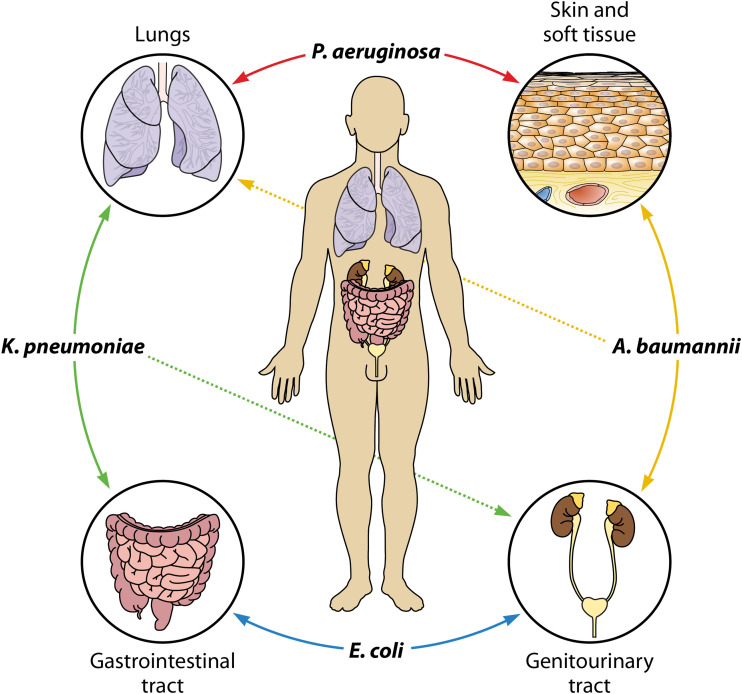
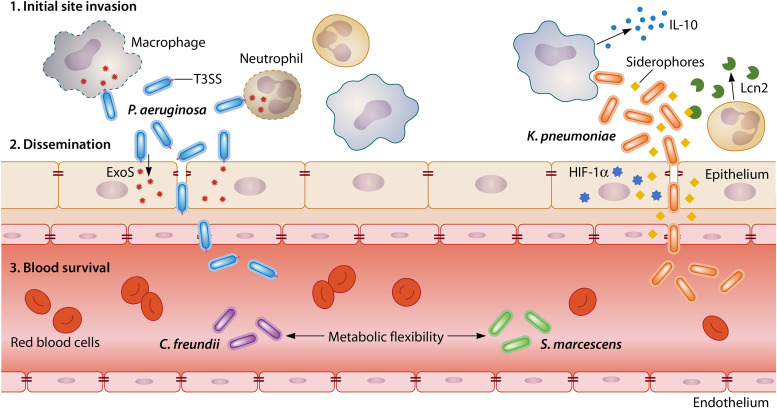
Gram-negative bacteremia is a devastating public health threat, with high mortality in vulnerable populations and significant costs to the global economy. Concerningly, rates of both Gram-negative bacteremia and antimicrobial resistance in the causative species are increasing. Gram-negative bacteremia develops in three phases. First, bacteria invade or colonize initial sites of infection. Second, bacteria overcome host barriers, such as immune responses, and disseminate from initial body sites to the bloodstream. Third, bacteria adapt to survive in the blood and blood-filtering organs. To develop new therapies, it is critical to define species-specific and multispecies fitness factors required for bacteremia in model systems that are relevant to human infection. A small subset of species is responsible for the majority of Gram-negative bacteremia cases, including Escherichia coli, Klebsiella pneumoniae, Pseudomonas aeruginosa, and Acinetobacter baumannii The few bacteremia fitness factors identified in these prominent Gram-negative species demonstrate shared and unique pathogenic mechanisms at each phase of bacteremia progression. Capsule production, adhesins, and metabolic flexibility are common mediators, whereas only some species utilize toxins. This review provides an overview of Gram-negative bacteremia, compares animal models for bacteremia, and discusses prevalent Gram-negative bacteremia species.
Keywords: Acinetobacter; Escherichia coli; Gram-negative bacteria; Klebsiella; Pseudomonas aeruginosa; bacteremia; bloodstream infections; pathogenesis; sepsis.
Copyright © 2021 American Society for Microbiology.
Figures
References
-
- Hall MJ, Williams SN, DeFrances CJ, Golosinskiy A. 2011. Inpatient care for septicemia or sepsis: a challenge for patients and hospitals. NCHS Data Brief 2011:1–8. - PubMed
-
- Torio CM, Moore BJ. 2016. National inpatient hospital costs: the most expensive conditions by payer, 2013. Healthcare Cost and Utilization Project (HCUP) Statistical Briefs no. 204. - PubMed
-
- Singer M, Deutschman CS, Seymour CW, Shankar-Hari M, Annane D, Bauer M, Bellomo R, Bernard GR, Chiche JD, Coopersmith CM, Hotchkiss RS, Levy MM, Marshall JC, Martin GS, Opal SM, Rubenfeld GD, van der Poll T, Vincent JL, Angus DC. 2016. The third international consensus definitions for sepsis and septic shock (sepsis-3). JAMA 315:801–810. 10.1001/jama.2016.0287. - DOI - PMC - PubMed
Publication types
MeSH terms
Substances
Grants and funding
LinkOut - more resources
Full Text Sources
Other Literature Sources