


Mutation spectrum of NOD2 reveals recessive inheritance as a main driver of Early Onset Crohn's Disease
- PMID: 33692434
- PMCID: PMC7946957
- DOI: 10.1038/s41598-021-84938-8
Mutation spectrum of NOD2 reveals recessive inheritance as a main driver of Early Onset Crohn's Disease
Abstract
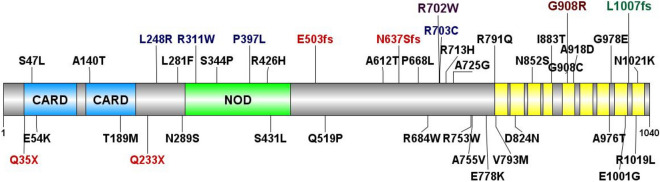
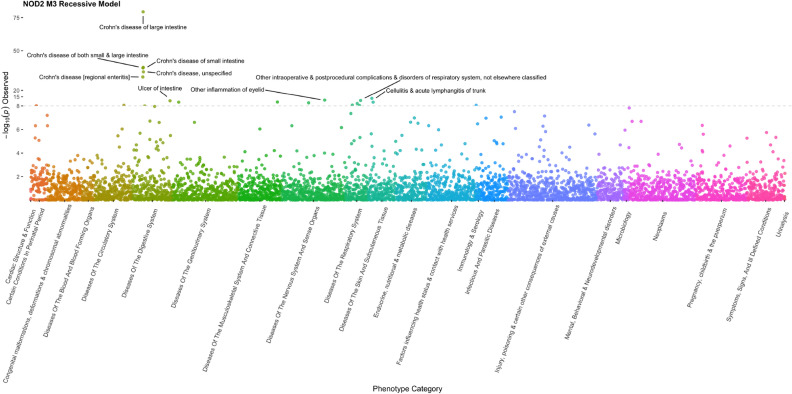
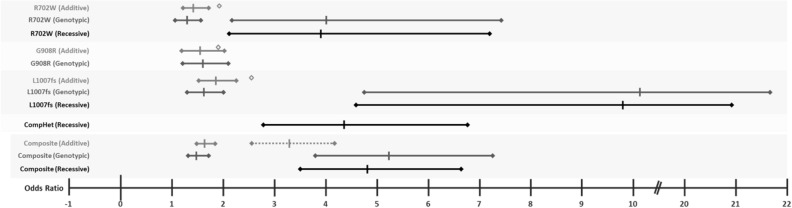
Inflammatory bowel disease (IBD), clinically defined as Crohn's disease (CD), ulcerative colitis (UC), or IBD-unclassified, results in chronic inflammation of the gastrointestinal tract in genetically susceptible hosts. Pediatric onset IBD represents ≥ 25% of all IBD diagnoses and often presents with intestinal stricturing, perianal disease, and failed response to conventional treatments. NOD2 was the first and is the most replicated locus associated with adult IBD, to date. However, its role in pediatric onset IBD is not well understood. We performed whole-exome sequencing on a cohort of 1,183 patients with pediatric onset IBD (ages 0-18.5 years). We identified 92 probands with biallelic rare and low frequency NOD2 variants accounting for approximately 8% of our cohort, suggesting a Mendelian inheritance pattern of disease. Additionally, we investigated the contribution of recessive inheritance of NOD2 alleles in adult IBD patients from a large clinical population cohort. We found that recessive inheritance of NOD2 variants explains ~ 7% of cases in this adult IBD cohort, including ~ 10% of CD cases, confirming the observations from our pediatric IBD cohort. Exploration of EHR data showed that several of these adult IBD patients obtained their initial IBD diagnosis before 18 years of age, consistent with early onset disease. While it has been previously reported that carriers of more than one NOD2 risk alleles have increased susceptibility to Crohn's Disease (CD), our data formally demonstrate that recessive inheritance of NOD2 alleles is a mechanistic driver of early onset IBD, specifically CD, likely due to loss of NOD2 protein function. Collectively, our findings show that recessive inheritance of rare and low frequency deleterious NOD2 variants account for 7-10% of CD cases and implicate NOD2 as a Mendelian disease gene for early onset Crohn's Disease.
Conflict of interest statement
J.E.H., J.S., C.V.H., A.K.K., J.G.R., J.D.O., A.R.S., A.B., and C.G-J are full-time employees of the Regeneron Genetics Center from Regeneron Pharmaceuticals, Inc. and receive stock options as part of compensation. All other authors have no conflicts to disclose.
Figures
References
Publication types
MeSH terms
Substances
Grants and funding
LinkOut - more resources
Full Text Sources
Other Literature Sources
Medical
