


Chinese American children's temperamental shyness and responses to peer victimization as moderated by maternal praise
- PMID: 33705180
- PMCID: PMC8439116
- DOI: 10.1037/fam0000831
Chinese American children's temperamental shyness and responses to peer victimization as moderated by maternal praise
Abstract
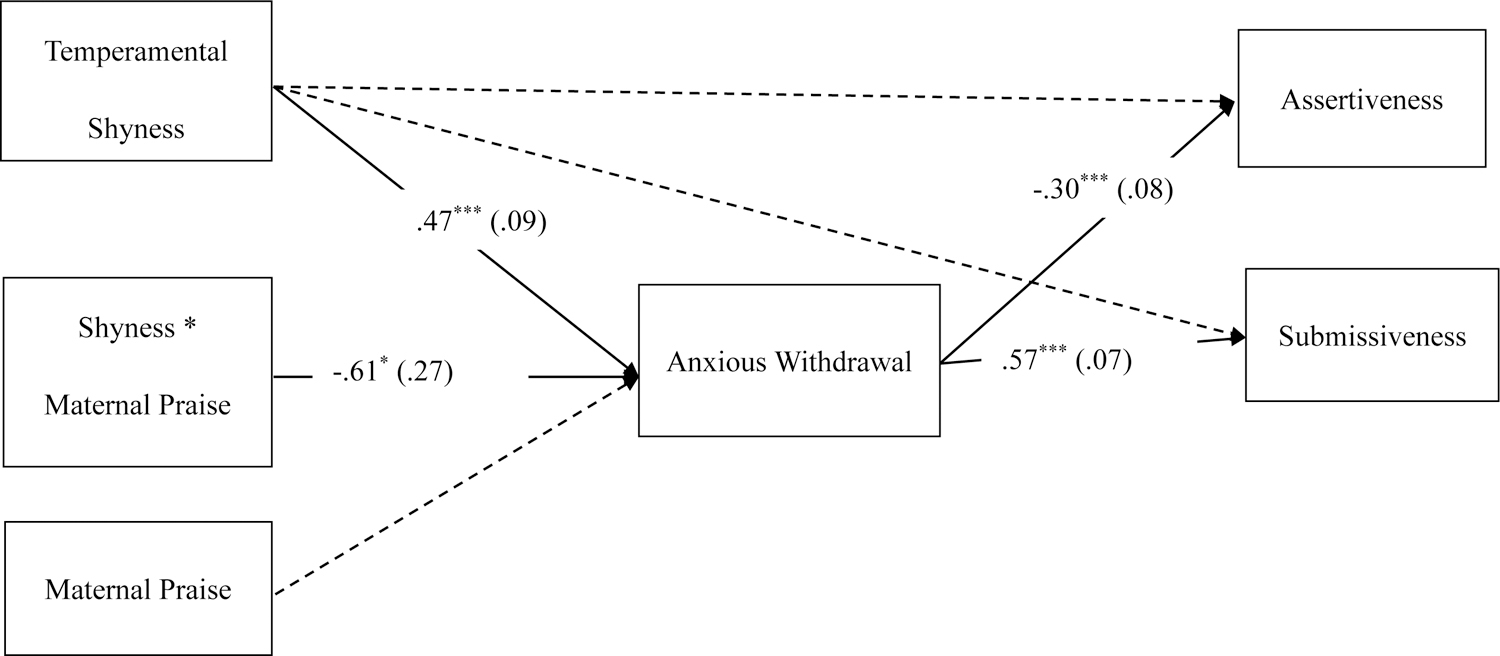
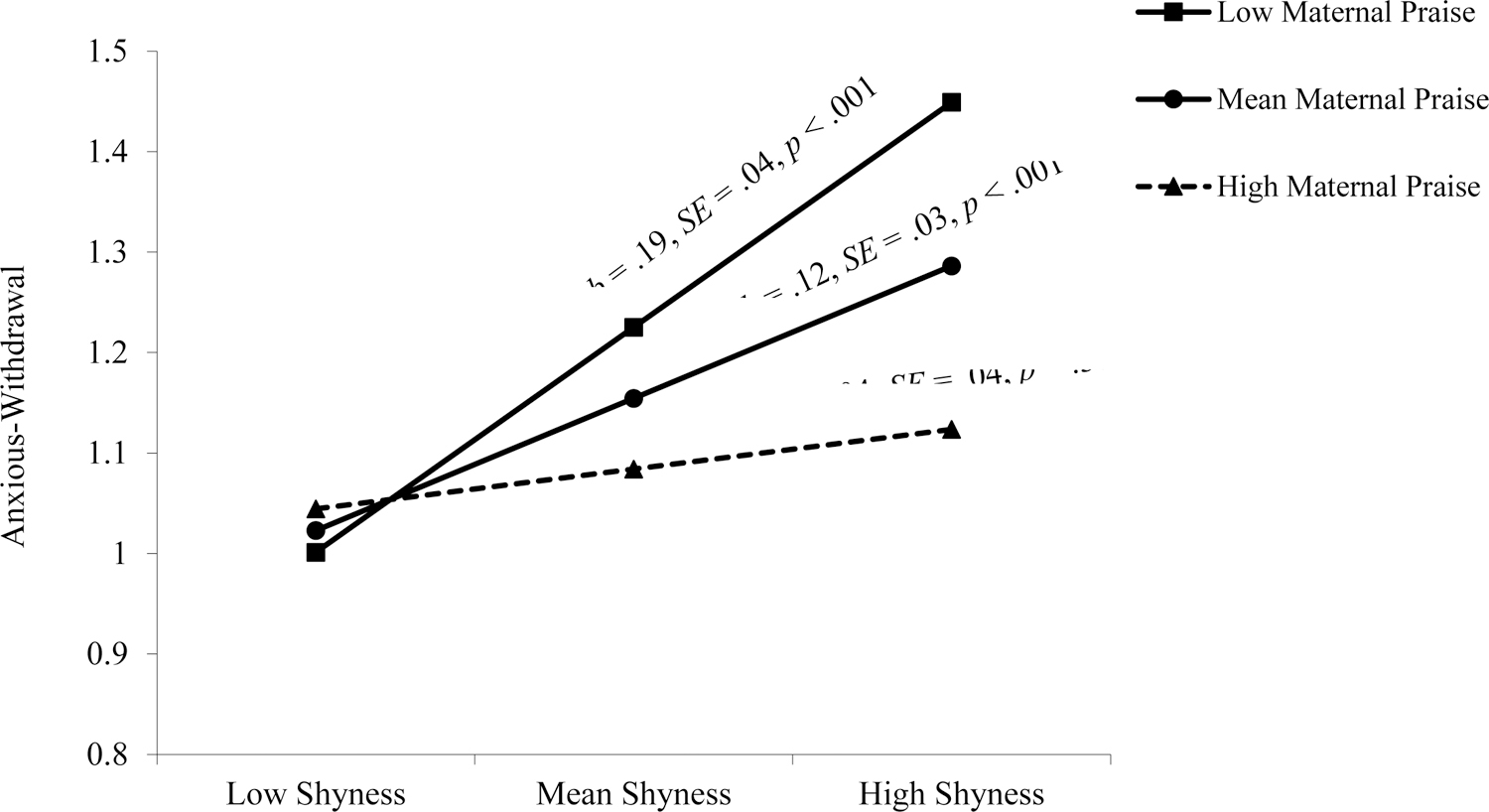
This study examined the relations between Chinese American children's temperamental shyness and their assertive and submissive responses to peer victimization. The mediating role of children's anxious-withdrawn behavior in the association between their temperamental shyness and responses to peer victimization in school settings was assessed, as well as the moderating effect of observed maternal praise. Mothers of 153 Chinese American children (46.4% boys; Mage = 4.40 years, SDage = 0.79 years) reported on their children's temperamental shyness, and teachers rated children's display of anxious-withdrawn behavior and responses to peer victimization. Mothers' use of praise during their interactions with children in a free-play session was observed. Results showed that children's display of anxious-withdrawn behavior played a mediating role in the associations between their temperamental shyness and responses to peer victimization. Moreover, maternal praise moderated the relation between children's temperamental shyness and anxious-withdrawn behavior, such that more temperamentally shy children with mothers who used to praise more frequently displayed less anxious-withdrawn behavior, which, in turn, was associated with more assertiveness and less submissiveness in response to peer victimization. These findings highlight the importance of maternal praise in reducing children's display of anxious-withdrawn behavior, which in turn facilitates their capacity to cope with peer victimization. (PsycInfo Database Record (c) 2021 APA, all rights reserved).
Figures
References
-
- Acar IH, Rudasill KM, Molfese V, Torquati J, & Prokasky A (2015). Temperament and preschool children’s peer interactions. Early Education and Development, 26, 479–495. 10.1080/10409289.2015.1000718 - DOI
-
- Alsaker FD, & Valkanover S (2002). Early diagnosis and prevention of victimization in kindergarten. In Juvonen J, & Graham S (Eds.), Peer harassment in school: the plight of the vulnerable and victimized (pp. 175–95). New York, NY: Guilford Press.
-
- Balkaya M, Cheah CSL, Yu J, Hart CH, & Sun S (2018). Maternal encouragement of modest behavior, temperamental shyness, and anxious withdrawal linkages to Chinese American children’s social adjustment: A moderated mediation analysis. Social Development, 27, 876–890. 10.1111/sode.12295 - DOI - PMC - PubMed
-
- Boket EG, Bahrami M, Kolyaie L, & Hosseini SA (2016). The effect of assertiveness skills training on reduction of verbal victimization of high school students. International Journal of Humanities and Cultural Studies, 3, 2356–5926. 10.3126/ijls.v9i4.12679 - DOI
MeSH terms
Grants and funding
LinkOut - more resources
Full Text Sources
Other Literature Sources
