. 2021 Mar 11;16(3):e0247990.
doi: 10.1371/journal.pone.0247990. eCollection 2021.

Prophylactic efficacy against Mycobacterium tuberculosis using ID93 and lipid-based adjuvant formulations in the mouse model

Affiliations

Prophylactic efficacy against Mycobacterium tuberculosis using ID93 and lipid-based adjuvant formulations in the mouse model

Susan L Baldwin et al. PLoS One. .

Abstract

An estimated 10 million people developed tuberculosis (TB) disease in 2019 which underscores the need for a vaccine that prevents disease and reduces transmission. The aim of our current studies is to characterize and test a prophylactic tuberculosis vaccine comprised of ID93, a polyprotein fusion antigen, and a liposomal formulation [including a synthetic TLR4 agonist (glucopyranosyl lipid adjuvant, GLA) and QS-21] in a preclinical mouse model of TB disease. Comparisons of the ID93+GLA-LSQ vaccines are also made to the highly characterized ID93+GLA-SE oil-in-water emulsion adjuvant, which are also included these studies. The recent success of vaccine candidate M72 combined with adjuvant AS01E (GlaxoSmithKline Biologicals) in reducing progression to active disease is promising and has renewed excitement for experimental vaccines currently in the TB vaccine pipeline. The AS01E adjuvant contains monophosphoryl lipid A (MPL) and QS-21 (a saponin) in a liposomal formulation. While AS01E has demonstrated potent adjuvant activity as a component of both approved and experimental vaccines, developing alternatives to this adjuvant system will become important to fill the high demand envisioned for future vaccine needs. Furthermore, replacement sources of potent adjuvants will help to supply the demand of a TB vaccine [almost one-quarter of the world's population are estimated to have latent Mycobacterium tuberculosis (Mtb) according to the WHO 2019 global TB report], addressing (a) cost of goods, (b) supply of goods, and (c) improved efficacy of subunit vaccines against Mtb. We show that both ID93+GLA-SE (containing an emulsion adjuvant) and ID93+GLA-LSQ (containing a liposomal adjuvant) induce ID93-specific TH1 cellular immunity including CD4+CD44+ T cells expressing IFNγ, TNF, and IL-2 (using flow cytometry and intracellular cytokine staining) and vaccine-specific IgG2 antibody responses (using an ELISA). In addition, both ID93+GLA-SE and ID93+GLA-LSQ effectively decrease the bacterial load within the lungs of mice infected with Mtb. Formulations based on this liposomal adjuvant formulation may provide an alternative to AS01 adjuvant systems.


Conflict of interest statement

The authors have read the journal’s policy and the authors of this manuscript have the following competing interests: EB is a paid employee of Umoja Biopharma, MTO is a paid employee of Bristol-Myers Squibb Co., and SGR is a paid employee of HDT Bio Corp. These authors were not employed by the listed organizations at the time the study was conducted. CBF is an inventor on patent applications involving QS-21 purification, GLA-LSQ, and GLA-SE (US 2017/032756; US 2018/049832), CBF, SGR, and SB are inventors on improved adjuvant formulations comprising TLR4 agonists and methods (EP2811981A1), SGR and RNC are inventors on patent applications involving ID93 (US 2017/9822152 and 2013/8486414), and SGR is on patents involving synthetic glucopyranosyl lipid adjuvants (US 2017/9814772). All other authors have declared that no competing interests exist. Shared material may require a MTA or license from the Infectious Disease Research Institute. This does not alter our adherence to PLOS ONE policies on sharing data and materials.

Figures
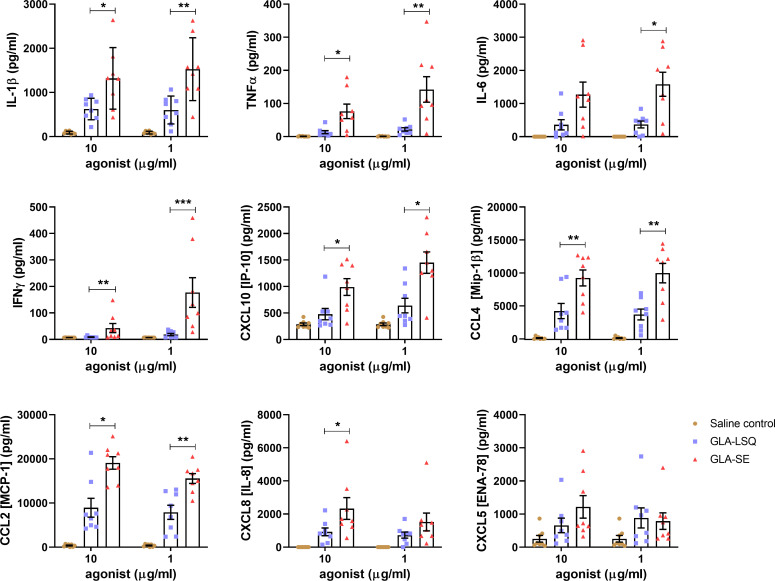
Fig 1
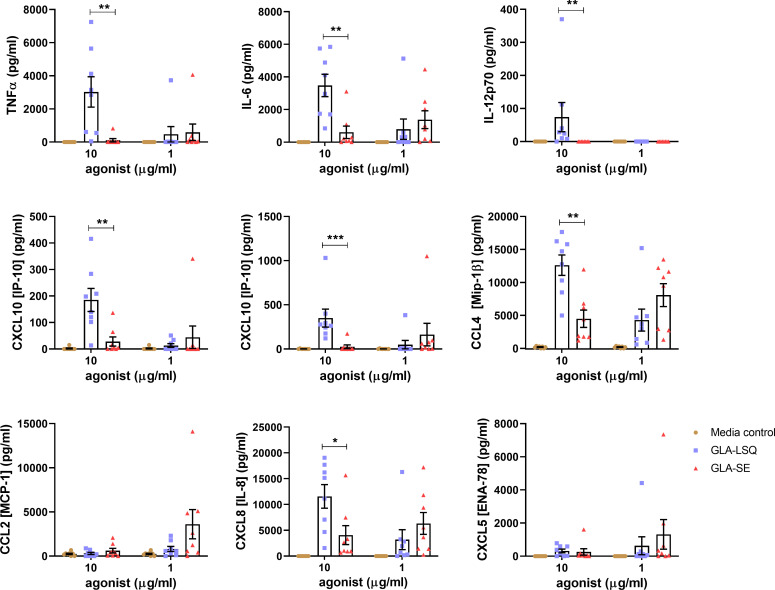
Fig 1. Stimulation of human whole blood with different formulations of GLA.
Whole blood from 8 healthy donors was stimulated in duplicate with either 10 or 1 μg/mL of GLA-LSQ, GLA-SE, or saline. Protein levels were measured from the supernatants after 24 hours of stimulation using an ELISA. Duplicates for each donor and condition were averaged for a single value. Data shown are the mean ± SD of those single values for the 8 donors. Statistical significance was determined by the Mann-Whitney test comparing formulations at each concentration, *p<0.05, **p<0.01, ***p<0.001.
Fig 2
Fig 2. Innate stimulation of human DC with different formulations of GLA.
DC prepared from whole blood of 8 human donors were stimulated in duplicate with either 10 or 1 μg/mL of GLA-LSQ, GLA-SE, or media. Protein levels were measured from the supernatants after 24 hours of stimulation using an ELISA. Duplicates for each donor and condition were averaged for a single value. Data shown are the mean ± SD of those single values for the 8 donors. Statistical significance was determined by the Mann-Whitney test comparing formulations at each concentration, *p<0.05, **p<0.01, ***p<0.001.
Fig 3
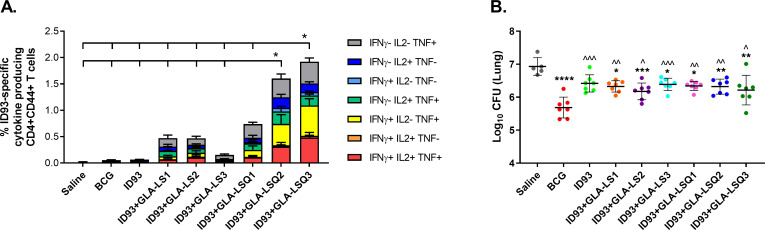
Fig 3. Enhanced protection against Mtb HN878 in CB6F1 mice with liposomal formulations.
(A) Increased polyfunctional ID93-specific CD4+CD44+ T cells from the spleens of immunized CB6F1 mice four weeks after the final immunization. The data are represented as the percentage of CD4+CD44+CD154+ T cells producing one or more cytokines following ex-vivo stimulation with ID93; cytokine producing subsets are shown as stacked bars, with mean + SD of each subset. Comparisons of total cytokine producing cells between groups were performed using one-way ANOVA with Bonferroni’s multiple comparison test. Down-inflected lines indicate *p<0.05 versus ID93+GLA-LSQ2 or ID93+GLA-LSQ3. (B) Four weeks after LDA infection with Mtb HN878, lungs were taken, and bacterial burden was determined. Bacterial load within the lung is represented as Log10 colony forming units (CFU), with individual mice and mean +/- SD shown. Comparisons among groups were performed using one-way ANOVA with Bonferroni’s multiple comparison test, *p<0.05, **p<0.01, ***p<0.001, ****p<0.0001 versus Saline; ^p<0.05, ^^p<0.01, ^^^p<0.001 versus BCG.
Fig 4
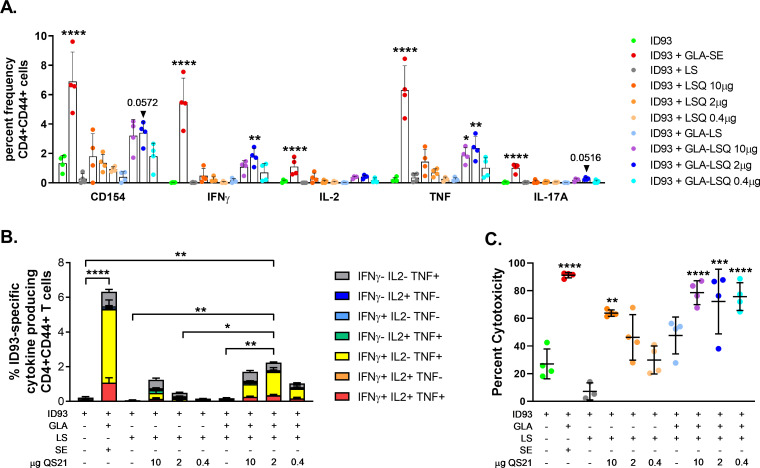
Fig 4. Immunogenicity of C57BL/6 mice four weeks after the final immunization with ID93+GLA-LSQ.
Mice were immunized with ID93 combined with GLA-LS containing different QS-21 doses (10, 2 or 0.4 μg). (A) The percent frequency of single-cytokine producing ID93-specific CD4+ T cells. Bars represent the mean of the group, with vertical lines indicating SD. Groups were compared for each cytokine using one-way ANOVA with Bonferroni’s multiple comparison test, with *p<0.05, **p<0.01, ****p<0.0001 versus ID93 alone, an exact p value is shown for values near significance; (B) percent of polyfunctional ID93-specific CD4+CD44+CD154+ T cells producing one or more cytokines. The data are represented as the percentage of CD4+CD44+CD154+ T cells producing one or more cytokines following ex-vivo stimulation with ID93; cytokine producing subsets are shown as stacked bars, with mean + SD of each subset. Comparisons of total cytokine producing cells between groups were performed using one-way ANOVA with Bonferroni’s multiple comparison test, *p<0.05, **p<0.01, ****p<0.0001; (C) percent CD4+ T cell cytotoxicity. Mean and SD, with individual mice, are shown. Comparisons between the groups were performed using one-way ANOVA with Bonferroni’s multiple comparison test; **p<0.01, ***p<0.001, ****p<0.0001 versus ID93 alone.
Fig 5
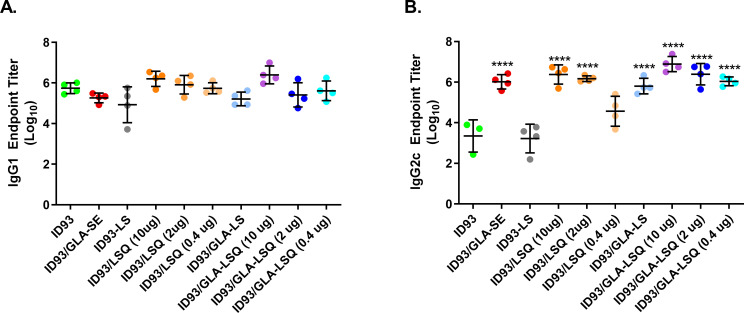
Fig 5. Enhanced ID93-specific IgG2c antibody responses in C57BL/6 mice with ID93+GLA-LSQ.
Anti-ID93 IgG1 and IgG2c antibody titers were measured from the sera four weeks after the final immunization using an endpoint antibody ELISA. Results are shown as individual values of 4 mice per group, with mean and SD, and data is representative of two separate experiments. One-way ANOVA with Bonferroni’s multiple comparisons test was used to determine statistical significance of the groups compared to ID93; ****p<0.0001.
Fig 6
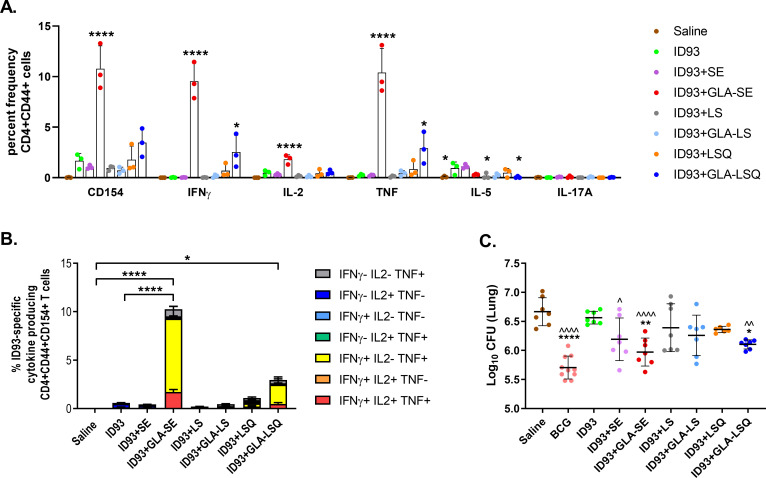
Fig 6. Prophylactic protection with ID93+GLA-SE and ID93+GLA-LSQ in C57BL/6 mice.
Mice were immunized with ID93 combined with different adjuvant formulations including SE, LS (liposomes), LSQ (liposomes+QS21), GLA-LS, GLA-LSQ, or GLA-SE. (A) The percent frequency of single-cytokine producing ID93-specific CD4+CD44+ T cells. Bars represent the mean of the group, with vertical line indicating SD. Groups were compared for each cytokine using one-way ANOVA with Bonferroni’s multiple comparison test, with *p<0.05, ****p<0.0001 versus ID93 alone; (B) percent of polyfunctional ID93-specific CD4+CD44+CD154+ T cells producing one or more cytokines; cytokine producing subsets are shown as stacked bars, with mean + SD of each subset. Comparisons between groups were performed using one-way ANOVA with Bonferroni’s multiple comparison test, *p<0.05, ****p<0.0001; (C) bacterial burden in the lung is represented as Log10 colony forming units (CFU) 3 weeks after challenge with Mtb H37Rv, with individual mice and mean +/- SD shown. Comparisons between groups were performed using one-way ANOVA with Bonferroni’s multiple comparison test, *p<0.05, **p<0.01, ****p<0.0001 versus Saline; ^p<0.05, ^^p<0.01, ^^^^p<0.0001 versus ID93.
Fig 7
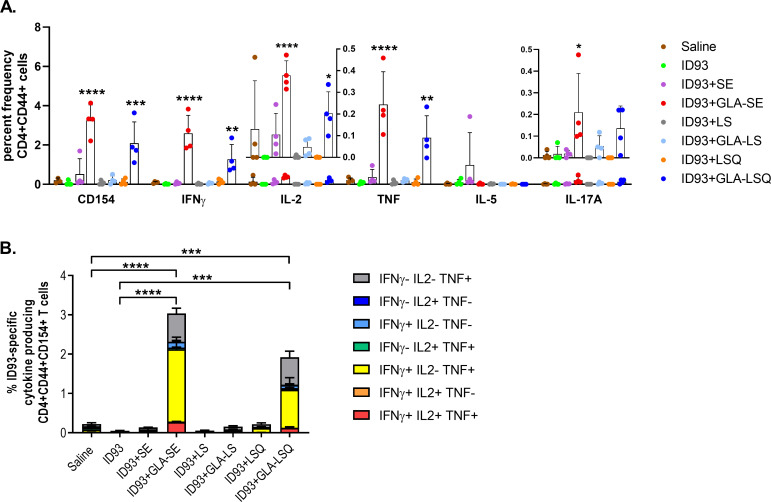
Fig 7. Enhanced TH1 immune responses following infection with Mtb H37Rv within the lungs of C57BL/6 mice immunized with ID93+GLA-SE and ID93+GLA-LSQ.
Mice were immunized with ID93 combined with different adjuvant formulations including SE, LS (liposomes), LSQ (liposomes+QS21), GLA-LS, GLA-LSQ, or GLA-SE. Four weeks after the last immunization mice were challenged with a low dose aerosol of Mtb H37Rv. Three weeks after challenge mice were euthanized and lungs collected to assess the immune response. (A) The percent frequency of single-cytokine producing ID93-specific CD4+CD44+ T cells within the lung. Bars represent the mean of the group, with vertical line indicating SD. Groups were compared using one-way ANOVA with Bonferroni’s multiple comparison test, *p<0.05, **p<0.01, ***p<0.001, ****p<0.0001 versus ID93 alone; (B) percent of polyfunctional ID93-specific CD4+CD44+CD154+ T cells within the lung producing one or more cytokines; cytokine producing subsets are shown as stacked bars, with mean + SD of each subset. Comparisons between groups were performed using one-way ANOVA with Bonferroni’s multiple comparison test, ***p<0.001, ****p<0.0001.

References

    1. Abubakar I, Pimpin L, Ariti C, Beynon R, Mangtani P, Sterne JA, et al. Systematic review and meta-analysis of the current evidence on the duration of protection by bacillus Calmette-Guerin vaccination against tuberculosis. Health Technol Assess. 2013;17(37):1–372, v-vi. 10.3310/hta17370 - DOI - PMC - PubMed
    1. Hesseling AC, Johnson LF, Jaspan H, Cotton MF, Whitelaw A, Schaaf HS, et al. Disseminated bacille Calmette-Guerin disease in HIV-infected South African infants. Bull World Health Organ. 2009;87(7):505–11. 10.2471/blt.08.055657 - DOI - PMC - PubMed
    1. Talbot EA, Perkins MD, Silva SF, Frothingham R. Disseminated bacille Calmette-Guerin disease after vaccination: case report and review. Clin Infect Dis. 1997;24(6):1139–46. 10.1086/513642 - DOI - PubMed
    1. Van Der Meeren O, Hatherill M, Nduba V, Wilkinson RJ, Muyoyeta M, Van Brakel E, et al. Phase 2b Controlled Trial of M72/AS01E Vaccine to Prevent Tuberculosis. N Engl J Med. 2018;379(17):1621–34. 10.1056/NEJMoa1803484 - DOI - PMC - PubMed
    1. Tait DR, Hatherill M, Van Der Meeren O, Ginsberg AM, Van Brakel E, Salaun B, et al. Final Analysis of a Trial of M72/AS01E Vaccine to Prevent Tuberculosis. N Engl J Med. 2019;381(25):2429–39. 10.1056/NEJMoa1909953 - DOI - PubMed

Publication types

MeSH terms