


Predicting fear and perceived health during the COVID-19 pandemic using machine learning: A cross-national longitudinal study
- PMID: 33705439
- PMCID: PMC7951840
- DOI: 10.1371/journal.pone.0247997
Predicting fear and perceived health during the COVID-19 pandemic using machine learning: A cross-national longitudinal study
Abstract
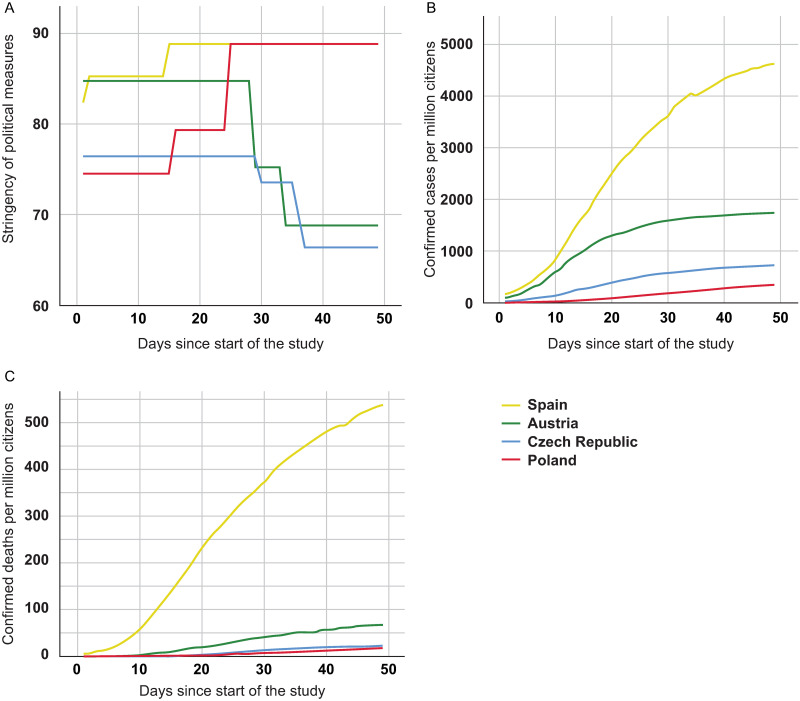
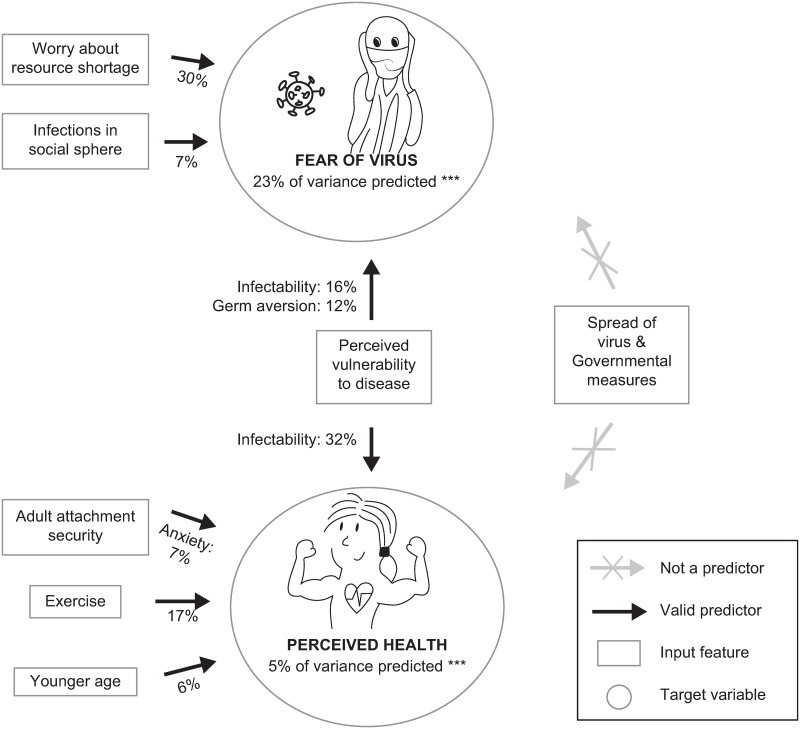
During medical pandemics, protective behaviors need to be motivated by effective communication, where finding predictors of fear and perceived health is of critical importance. The varying trajectories of the COVID-19 pandemic in different countries afford the opportunity to assess the unique influence of 'macro-level' environmental factors and 'micro-level' psychological variables on both fear and perceived health. Here, we investigate predictors of fear and perceived health using machine learning as lockdown restrictions in response to the COVID-19 pandemic were introduced in Austria, Spain, Poland and Czech Republic. Over a seven-week period, 533 participants completed weekly self-report surveys which measured the target variables subjective fear of the virus and perceived health, in addition to potential predictive variables related to psychological factors, social factors, perceived vulnerability to disease (PVD), and economic circumstances. Viral spread, mortality and governmental responses were further included in the analysis as potential environmental predictors. Results revealed that our models could accurately predict fear of the virus (accounting for approximately 23% of the variance) using predictive factors such as worrying about shortages in food supplies and perceived vulnerability to disease (PVD), where interestingly, environmental factors such as spread of the virus and governmental restrictions did not contribute to this prediction. Furthermore, our results revealed that perceived health could be predicted using PVD, physical exercise, attachment anxiety and age as input features, albeit with smaller effect sizes. Taken together, our results emphasize the importance of 'micro-level' psychological factors, as opposed to 'macro-level' environmental factors, when predicting fear and perceived health, and offer a starting point for more extensive research on the influences of pathogen threat and governmental restrictions on the psychology of fear and health.
Conflict of interest statement
The authors have declared that no competing interests exist.
Figures
References
-
- Jamison J, Bundy D, Jamison D, Spitz J, Verguet S. Comparing the impact on COVID-19 mortality of self-imposed behavior change and of government regulations across 13 countries. medRxiv. [Preprint]. 2020 [cited 2020 August 4]. www.medrxiv.org/content/10.1101/2020.08.02.20166793v1 - DOI - PMC - PubMed
-
- Morman MT. The influence of fear appeals, message design, and masculinity on men’s motivation to perform the testicular self‐exam. Journal of Applied Communication Research. 2000; 28(2), 91–116. 10.1080/00909880009365558 - DOI
Publication types
MeSH terms
LinkOut - more resources
Full Text Sources
Other Literature Sources
Medical
