Review
. 2021 May 19;109(10):1600-1620.
doi: 10.1016/j.neuron.2021.02.012. Epub 2021 Mar 10.

Neural circuits of social behaviors: Innate yet flexible

Affiliations
Review

Neural circuits of social behaviors: Innate yet flexible

Dongyu Wei et al. Neuron. .

Abstract

Social behaviors, such as mating, fighting, and parenting, are fundamental for survival of any vertebrate species. All members of a species express social behaviors in a stereotypical and species-specific way without training because of developmentally hardwired neural circuits dedicated to these behaviors. Despite being innate, social behaviors are flexible. The readiness to interact with a social target or engage in specific social acts can vary widely based on reproductive state, social experience, and many other internal and external factors. Such high flexibility gives vertebrates the ability to release the relevant behavior at the right moment and toward the right target. This maximizes reproductive success while minimizing the cost and risk associated with behavioral expression. Decades of research have revealed the basic neural circuits underlying each innate social behavior. The neural mechanisms that support behavioral plasticity have also started to emerge. Here we provide an overview of these social behaviors and their underlying neural circuits and then discuss in detail recent findings regarding the neural processes that support the flexibility of innate social behaviors.


Figures

Figure 1.
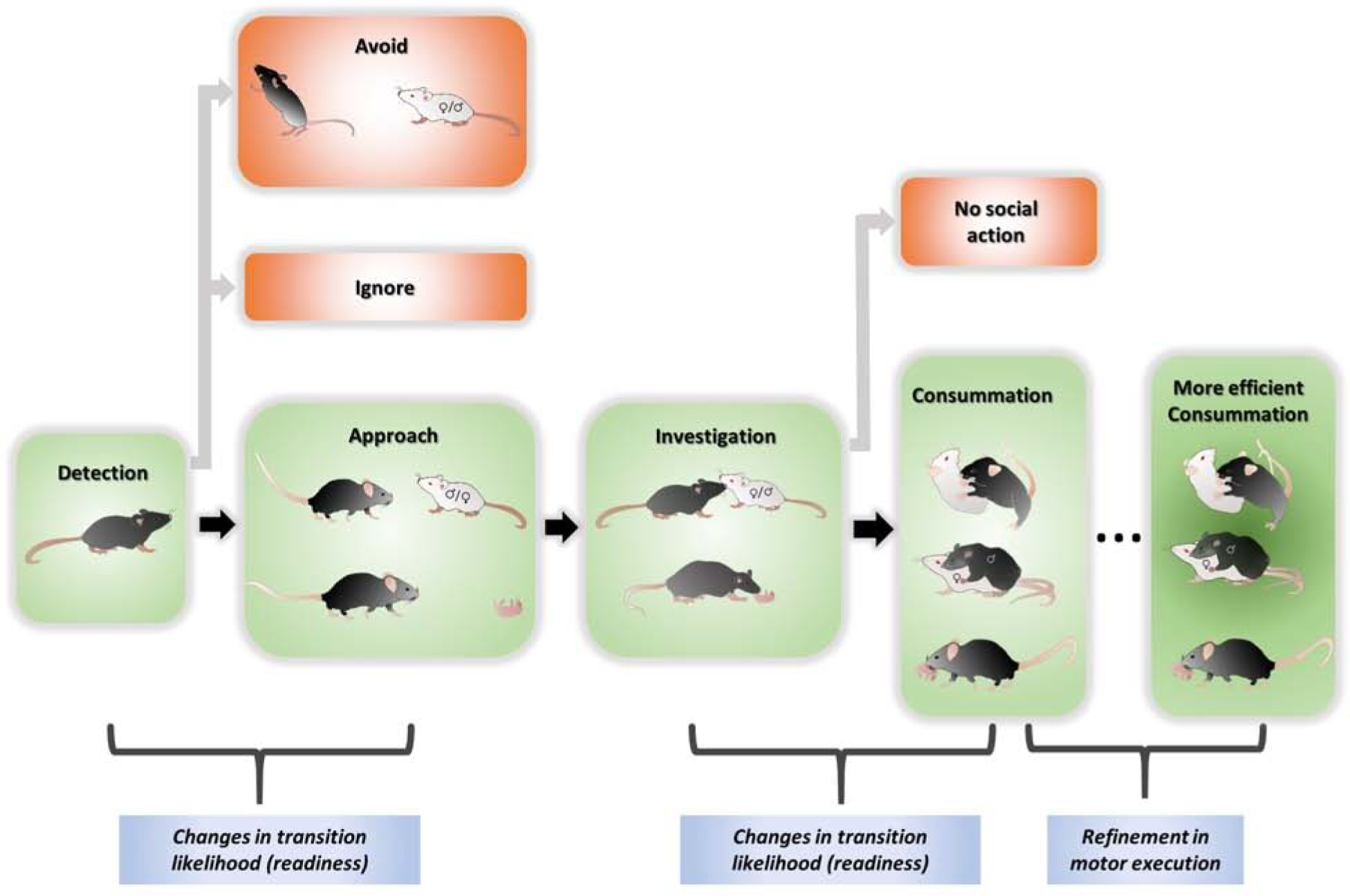
Figure 1.. The four proposed phases of innate social behaviors.
The four phases, including detection, approach, investigation and consummation, are illustrated in green. The readiness to transition from detection to approach and from investigation to consummation is subject to change based on the animal’s experience, internal state and external factors. The motor execution of the consummatory phase can also be refined with experience.
Figure 2.
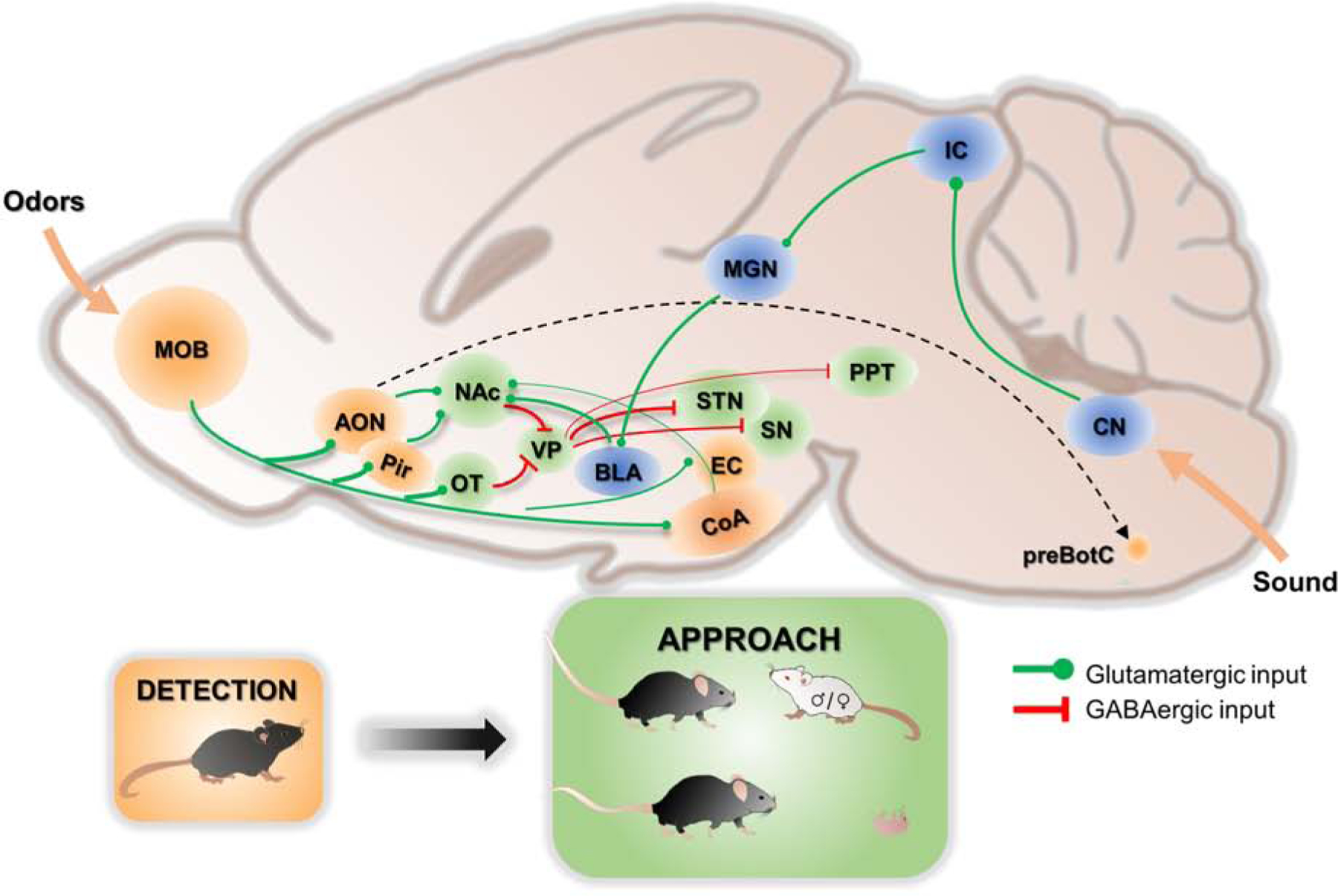
Figure 2.. The circuitry underlying detection of olfactory and auditory cues and approach.
Schematics showing the brain regions involved in detecting olfactory (orange) and auditory (blue) social cues and approaching toward the cues (green) and the relevant connections. The dotted line represents a putative connection that could be indirect. The width of the lines indicates the connection strength. AON: anterior olfactory nucleus; BLA: basolateral amygdala; CN: cochlear nucleus; CoA: cortical amygdala; EC: entorhinal cortex; IC: inferior colliculus; MGN: medial geniculate nucleus; MOB: main olfactory bulb; NAc: nucleus accumbens; OT: olfactory tubercle; Pir: piriform cortex; PPT: pedunculopontine nucleus; preBotC: pre-Botzinger complex; SN: substantia nigra; STN: subthalamic nucleus; VP: ventral pallidum.
Figure 3.
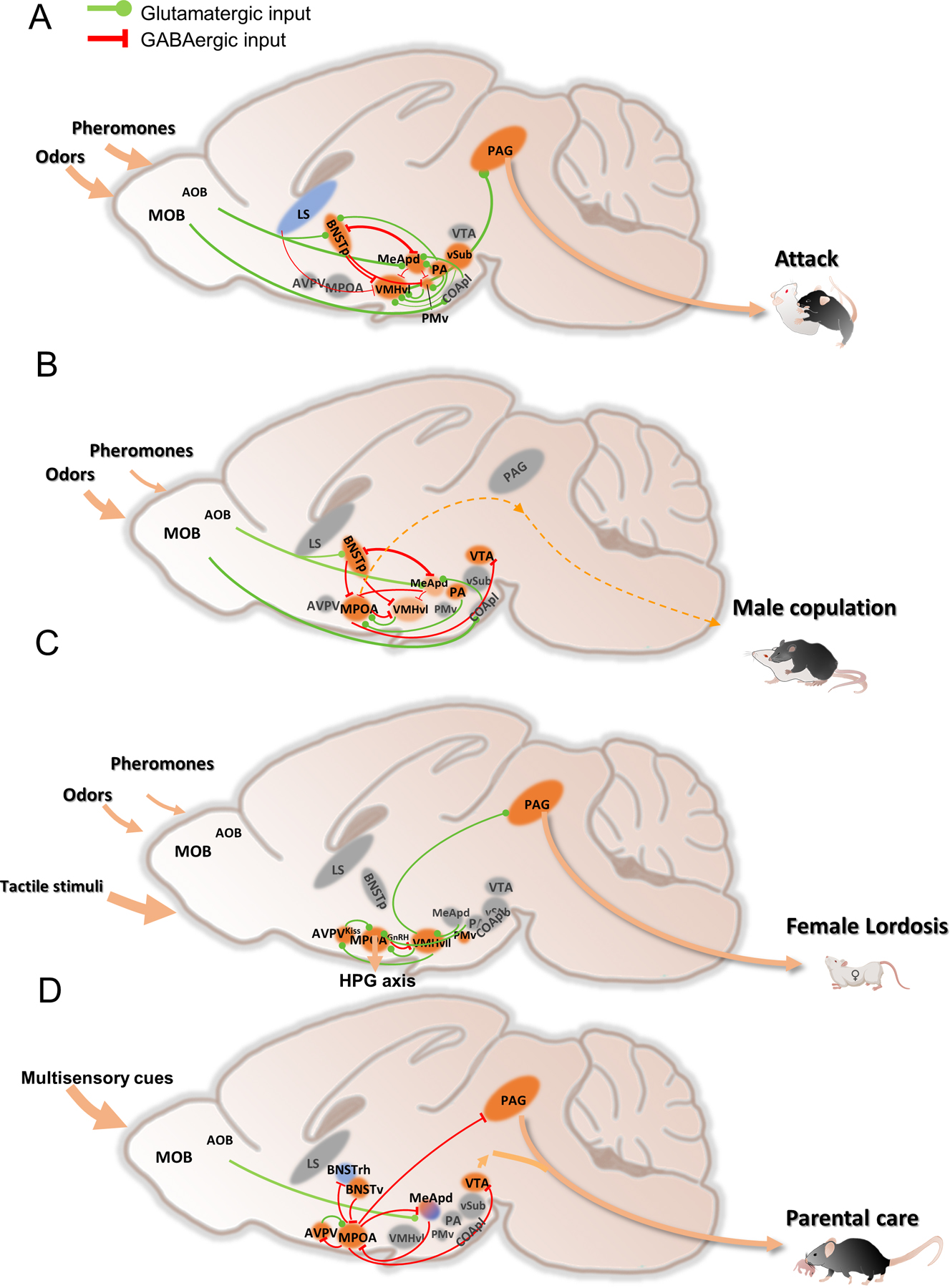
Figure 3.. Schematics showing neural circuits of social behaviors.
(A) aggression circuit; (B) male sexual behavior circuit; (C) female sexual behavior circuit; (D) parental care circuit. Solid lines denote known pathways that are involved in mediating the behaviors. Dashed lines denote potential pathways to be further explored. Blue colored regions suppress the behavior while orange colored regions promote the behaviors. Light orange marks regions that play minor roles in the behavior. Gray colored regions are not essential for the behaviors or not yet studied. Arrow size indicates importance of the sensory input. Line width indicates connection strength. Not all the known connections are shown. AOB: accessory olfactory bulb; AVPV: anteroventral periventricular nucleus; BNSTp: posterior part of the bed nucleus of stria terminalis; BNSTrh: rhomboid nucleus of the bed nucleus of stria terminalis; BNSTv: ventral part of the bed nucleus of stria terminalis; COApl: posterolateral cortical amygdala; LS: lateral septum; MeA: medial amygdala; MPOA: medial preoptic area; PA: posterior amygdala; PAG: periaqueductal gray; PMv: ventral premammillary nucleus; VMHvl: ventrolateral part of the ventromedial hypothalamus; VMHvll: lateral subdivision of the VMHvl; vSUB: ventral subiculum; VTA: ventral tegmental area.
Figure 4.
Figure 4.. An overview of the neural mechanisms underlying the plasticity of innate social behaviors.
Internal factors (e.g. reproductive state), external factors (e.g. population density), and social experience (e.g. winning) can all lead to changes in hormonal levels or Hebbian spike timing dependent plasticity. Hormones induce changes in the molecular composition of cells and subsequently lead to changes in cell morphology, excitability and synaptic strength. Hebbian mechanisms can lead to potentiation or depression of specific synapses. Together, these physiological changes alter the cell responses to conspecific sensory inputs and the readiness to express social behaviors.
Figure 5.
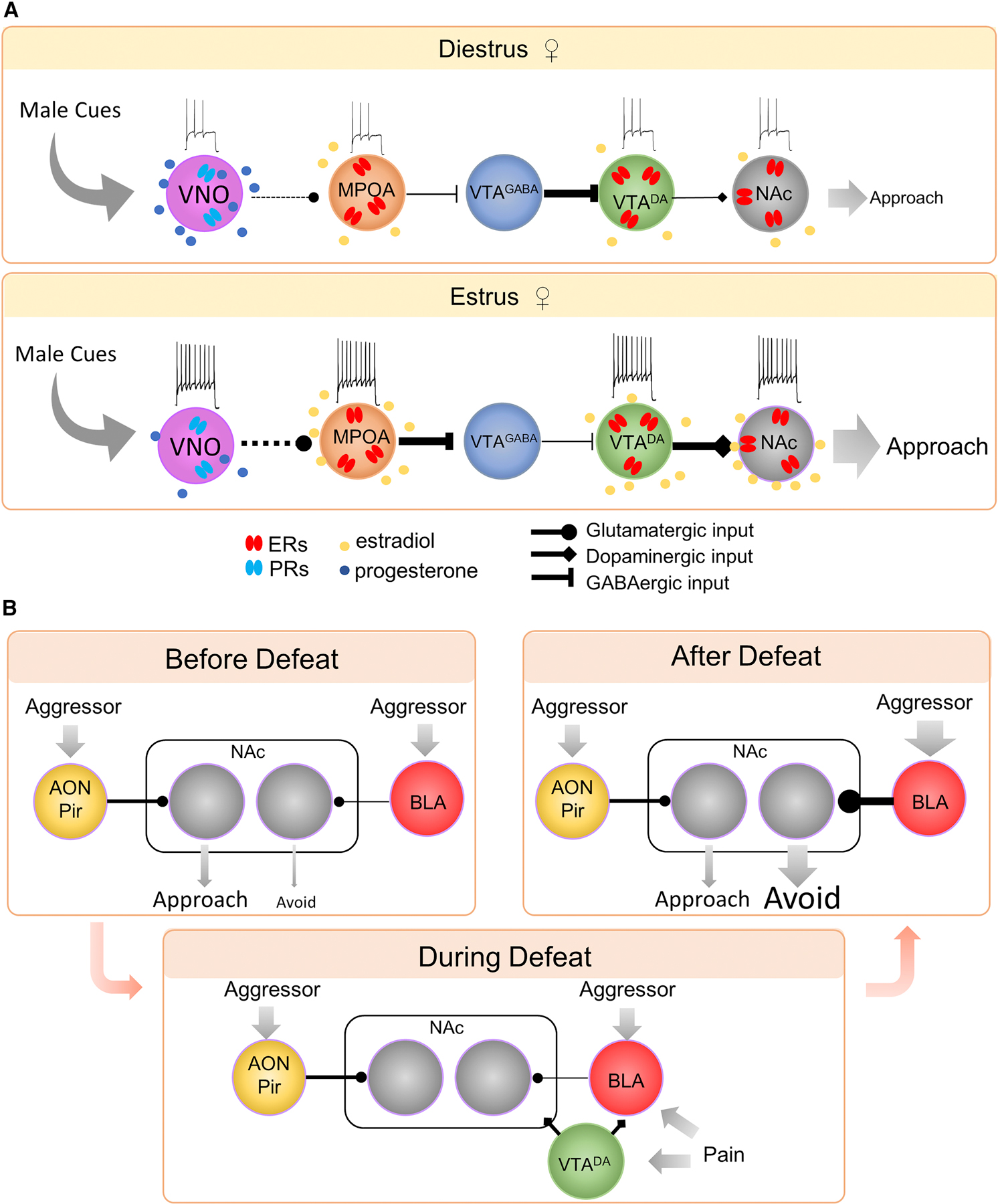
Figure 5.. Neural mechanisms underlying reproductive state and experience induced changes in social approach.
(A) Schematics showing how females’ readiness to approach males changes with the estrus cycle. Progesteone level during diestrus is high, causing a decrease in VNO cell responses to males cues. In contrast, during estrus, estrodial level is high, causing an increase in intrinsic excitability of MPNNts cells, which leads to decreased inhibitory tone within the VTA and increased DA transmission to the NAc. Estrodial also acts on VTA DA neurons and NAc MSNs cells to increase the dopamine release from the VTA and the overall responses of NAc MSNs. (B) A proposed circuit underlying the defeat induced social avoidance. Before defeat, male cues, including cues of the aggressor, dominantly activate the AON/Pir-NAc circuit and drive approach. During acute defeat, the pairing of the sensory cues of the aggressor and the pain causes a potentiation of the aggressor input to BLA. The pairing of the DA release in the NAc and BLA inputs causes a potentiation of BLA synaptic inputs to the NAc cells. Collectively, the aggressor cues activate the BLA-NAc circuit post-defeat to drive social avoidance while other male cues continue to primarily activate the AON/Pir-NAc circuit to drive approach. Size of the arrows and line width indicate the strength of the inputs and outputs while the font size indicates the readiness of approach. Dashed lines indicate multi-synaptic connections.
Figure 6.
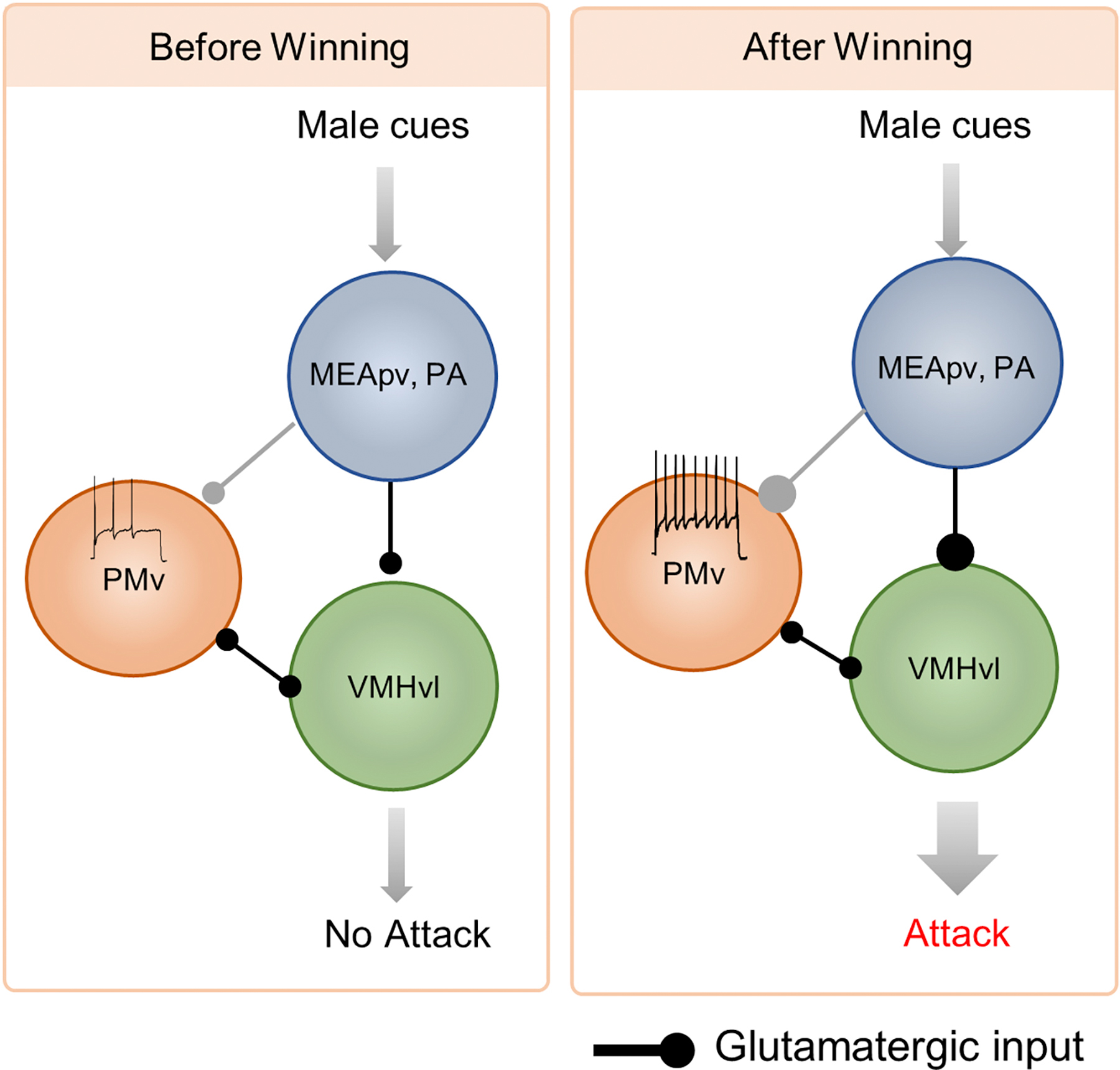
Figure 6.. Neural mechanisms underlying winning caused increase in the readiness to attack.
After winning, the synaptic connection between MEApv/PA and VMHvl increases while the PMv excitability also increases, causing an overall enhanced response of VMHvl cells to male cues and thus an increase in readiness to attack. The MEApv/PA to PMv pathway may also be potentiated after winning. Size of the lines and heads indicates the strength of the inputs and outputs.

References

    1. Agustín-Pavón C, Martínez-García F, and Lanuza E (2014). Focal lesions within the ventral striato pallidum abolish attraction for male chemosignals in female mice. Behavioural brain research 259, 292–296. - PubMed
    1. Akbari EM, Shams S, Belay HT, Kaiguo M, Razak Z, Kent CF, Westwood T, Sokolowski MB, and Fleming AS (2013). The effects of parity and maternal behavior on gene expression in the medial preoptic area and the medial amygdala in postpartum and virgin female rats: A microarray study. Behav Neurosci 127, 913–922. - PubMed
    1. Al-Hasani R, McCall JG, Shin G, Gomez AM, Schmitz GP, Bernardi JM, Pyo CO, Park SI, Marcinkiewcz CM, Crowley NA, et al. (2015). Distinct Subpopulations of Nucleus Accumbens Dynorphin Neurons Drive Aversion and Reward. Neuron 87, 1063–1077. - PMC - PubMed
    1. Albert DJ, and Chew GL (1980). The septal forebrain and the inhibitory modulation of attack and defense in the rat. A review. Behavioral and neural biology 30, 357–388. - PubMed
    1. Almey A, Milner TA, and Brake WG (2015). Estrogen receptors in the central nervous system and their implication for dopamine-dependent cognition in females. Horm Behav 74, 125–138. - PMC - PubMed

Publication types

LinkOut - more resources