


The cyanobacterium Prochlorococcus has divergent light-harvesting antennae and may have evolved in a low-oxygen ocean
- PMID: 33707213
- PMCID: PMC7980375
- DOI: 10.1073/pnas.2025638118
The cyanobacterium Prochlorococcus has divergent light-harvesting antennae and may have evolved in a low-oxygen ocean
Abstract
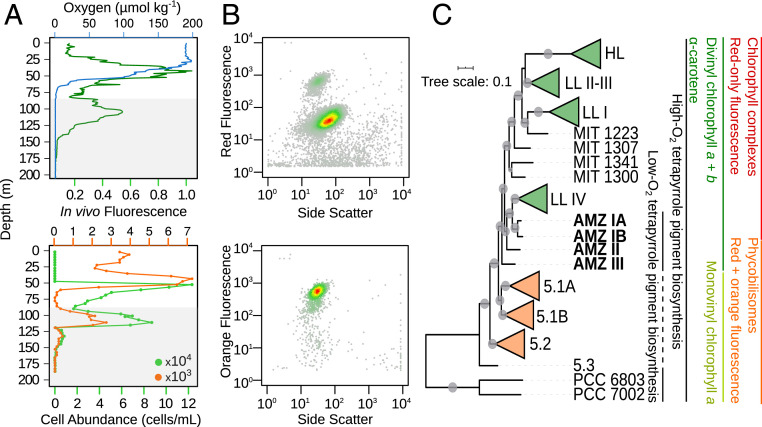
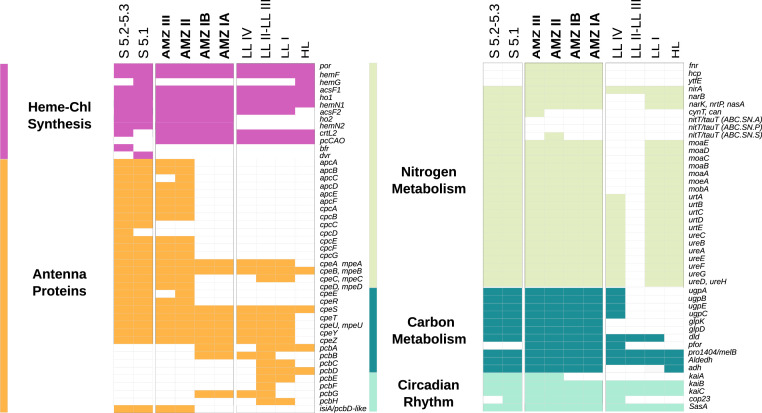
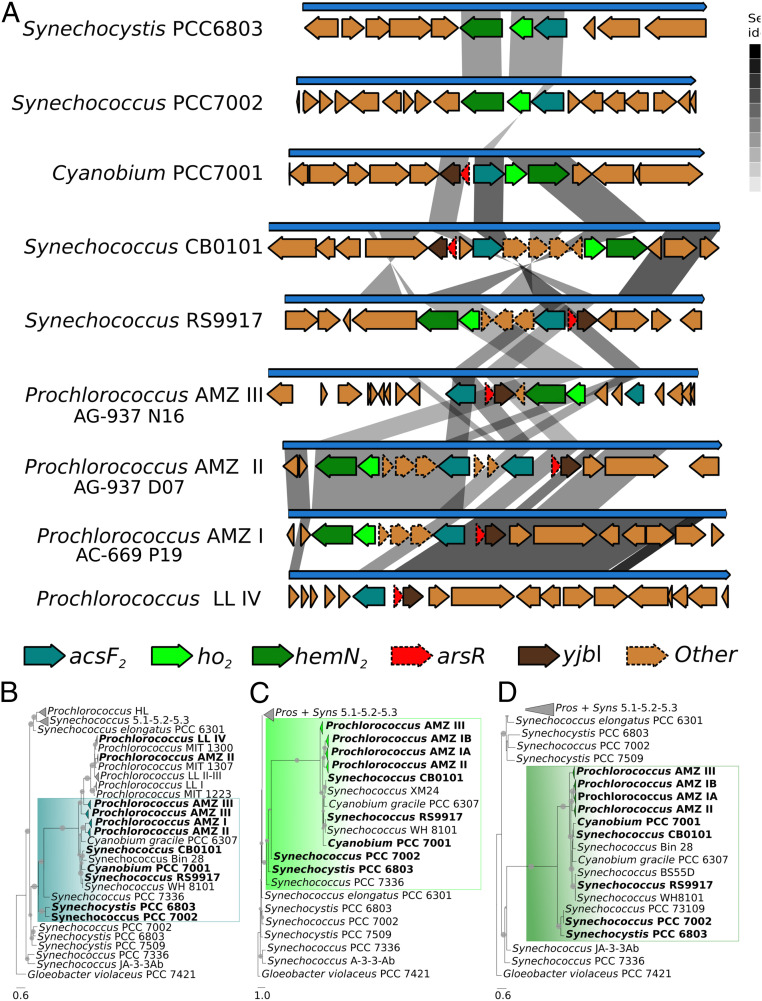
Marine picocyanobacteria of the genus Prochlorococcus are the most abundant photosynthetic organisms in the modern ocean, where they exert a profound influence on elemental cycling and energy flow. The use of transmembrane chlorophyll complexes instead of phycobilisomes as light-harvesting antennae is considered a defining attribute of Prochlorococcus Its ecology and evolution are understood in terms of light, temperature, and nutrients. Here, we report single-cell genomic information on previously uncharacterized phylogenetic lineages of this genus from nutrient-rich anoxic waters of the eastern tropical North and South Pacific Ocean. The most basal lineages exhibit optical and genotypic properties of phycobilisome-containing cyanobacteria, indicating that the characteristic light-harvesting antenna of the group is not an ancestral attribute. Additionally, we found that all the indigenous lineages analyzed encode genes for pigment biosynthesis under oxygen-limited conditions, a trait shared with other freshwater and coastal marine cyanobacteria. Our findings thus suggest that Prochlorococcus diverged from other cyanobacteria under low-oxygen conditions before transitioning from phycobilisomes to transmembrane chlorophyll complexes and may have contributed to the oxidation of the ancient ocean.
Keywords: anoxia; cyanobacteria; genomics; microbiology; oceanography.
Copyright © 2021 the Author(s). Published by PNAS.
Conflict of interest statement
The authors declare no competing interest.
Figures
References
-
- Chisholm S. W., et al. ., A novel free-living prochlorophyte abundant in the oceanic euphotic zone. Nature 334, 340–343 (1988).
-
- Chisholm S. W., et al. ., Prochlorococcus marinus nov. gen. nov. sp.: An oxyphototrophic marine prokaryote containing divinyl chlorophyll a and b. Arch. Microbiol. 157, 297–300 (1992).
-
- Moore L. R., Rocap G., Chisholm S. W., Physiology and molecular phylogeny of coexisting Prochlorococcus ecotypes. Nature 393, 464–467 (1998). - PubMed
Publication types
MeSH terms
Substances
LinkOut - more resources
Full Text Sources
Other Literature Sources
