Meta-Analysis
. 2021 Mar 11;11(1):5792.
doi: 10.1038/s41598-021-84973-5.

A meta-analysis of Watson for Oncology in clinical application

Affiliations
Meta-Analysis

A meta-analysis of Watson for Oncology in clinical application

Zhou Jie et al. Sci Rep. .

Abstract

Using the method of meta-analysis to systematically evaluate the consistency of treatment schemes between Watson for Oncology (WFO) and Multidisciplinary Team (MDT), and to provide references for the practical application of artificial intelligence clinical decision-support system in cancer treatment. We systematically searched articles about the clinical applications of Watson for Oncology in the databases and conducted meta-analysis using RevMan 5.3 software. A total of 9 studies were identified, including 2463 patients. When the MDT is consistent with WFO at the 'Recommended' or the 'For consideration' level, the overall concordance rate is 81.52%. Among them, breast cancer was the highest and gastric cancer was the lowest. The concordance rate in stage I-III cancer is higher than that in stage IV, but the result of lung cancer is opposite (P < 0.05).Similar results were obtained when MDT was only consistent with WFO at the "recommended" level. Moreover, the consistency of estrogen and progesterone receptor negative breast cancer patients, colorectal cancer patients under 70 years old or ECOG 0, and small cell lung cancer patients is higher than that of estrogen and progesterone positive breast cancer patients, colorectal cancer patients over 70 years old or ECOG 1-2, and non-small cell lung cancer patients, with statistical significance (P < 0.05). Treatment recommendations made by WFO and MDT were highly concordant for cancer cases examined, but this system still needs further improvement. Owing to relatively small sample size of the included studies, more well-designed, and large sample size studies are still needed.


Conflict of interest statement

The authors declare no competing interests.

Figures
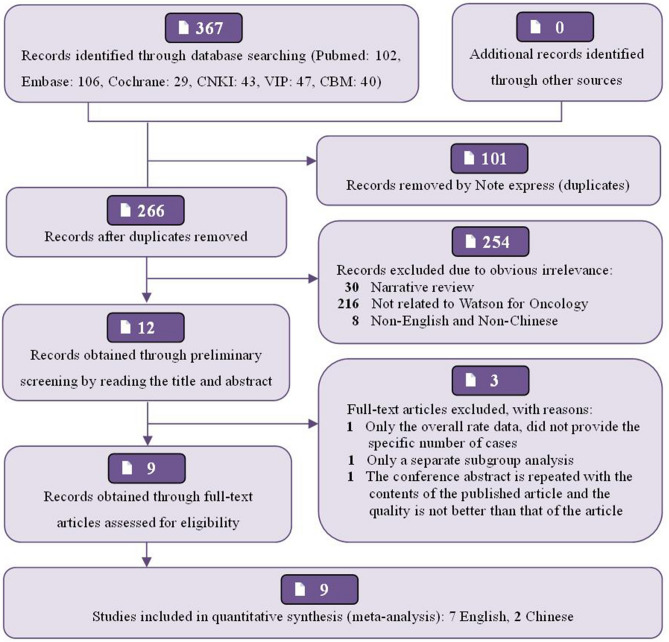
Figure 1
Figure 1
Flow diagram of the study selection process.
Figure 2
Figure 2
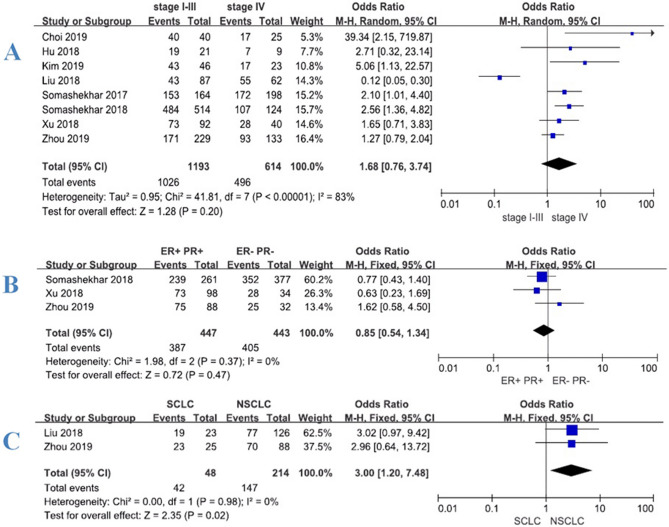
Forest plot of consistency between WFO (‘Recommended’ or ‘For consideration’) and MDT for patients with various cancers. Treatment was considered concordant if the delivered treatment was rated as either ‘Recommended’ or ‘For consideration’ by WFO and discordant if the delivered treatment was either ‘Not recommended’ by WFO or was physician’s choice (not included in WFO). Overall concordance of various cancers in stages I–III and IV (A). Concordance of various estrogen and progesterone receptors (ER+/PR+ vs. ER−, PR−) in breast cancer (B). Concordance of various pathological types (small cell vs. non-small cell) in lung cancer (C).
Figure 3
Figure 3
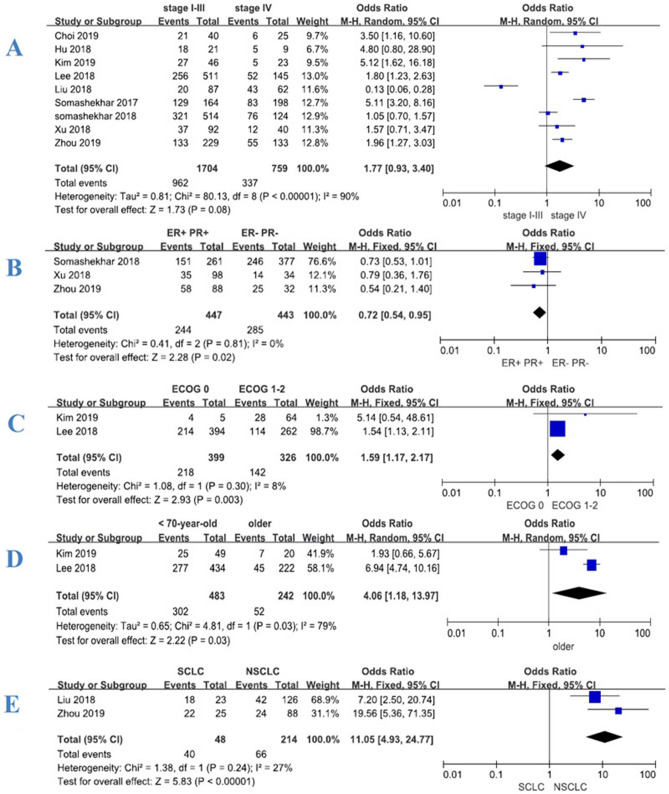
Forest plot of consistency between WFO (only ‘Recommended’) and MDT for patients with various cancers. Treatment was considered concordant if the delivered treatment was rated as ‘Recommended’ by WFO and discordant if the delivered treatment was rated as other options by WFO or was physician’s choice (not included in WFO). Overall concordance of various cancers in stages I–III and IV (A). Concordance of various estrogen and progesterone receptors (ER+/PR+vs. ER−, PR−) in breast cancer (B). Concordance of various performance status (ECOG 0 vs. ECOG 1–2) in colorectal cancer (C). Concordance of various age (< 70-year-old vs. older) in colorectal cancer (D). Concordance of various pathological types (small cell vs. non-small cell) in lung cancer (E).
Figure 4
Figure 4
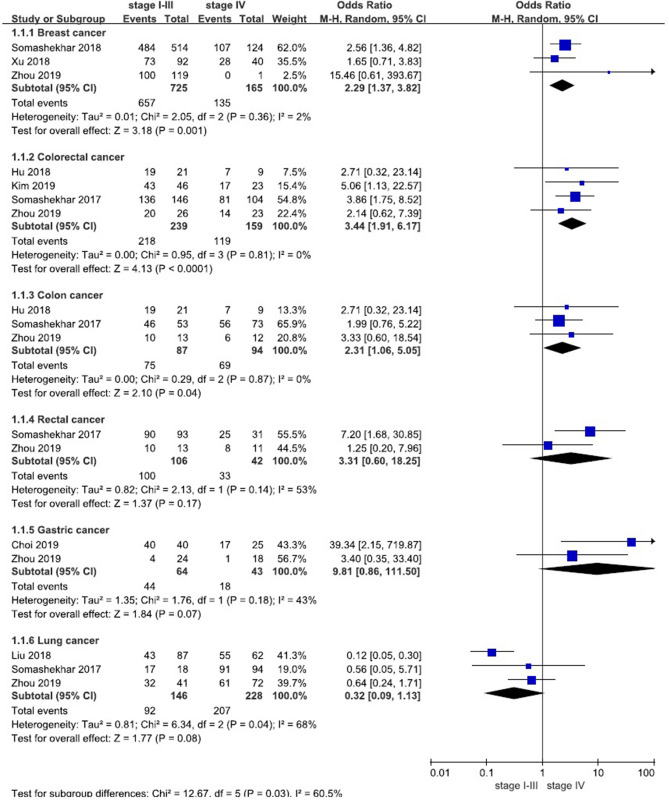
Forest plot of consistency between WFO (‘Recommended’ or ‘For consideration’) and MDT for patients (subgroup).
Figure 5
Figure 5
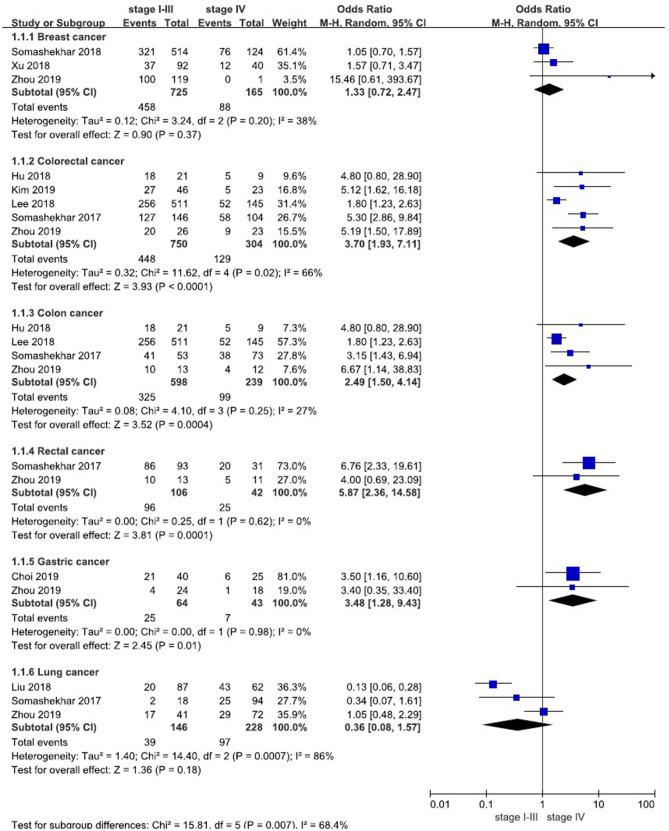
Forest plot of consistency between WFO (only ‘Recommended’) and MDT for patients with various cancers in stages I–III and IV (subgroup).

References

    1. Denu RA, et al. Influence of patient, physician, and hospital characteristics on the receipt of guideline-concordant care for inflammatory breast cancer. Cancer Epidemiol. 2016;40:7–14. doi: 10.1016/j.canep.2015.11.003. - DOI - PMC - PubMed
    1. Woolhandler S, Himmelstein DU. Administrative work consumes one-sixth of U.S. physicians' working hours and lowers their career satisfaction. Int. J. Health Serv. 2014;44(4):635–642. doi: 10.2190/HS.44.4.a. - DOI - PubMed
    1. American Society of Clinical Oncology The state of cancer care in America, 2016: A report by the American Society of Clinical Oncology. J. Oncol. Pract. 2016;12(4):339–383. doi: 10.1200/JOP.2015.010462. - DOI - PMC - PubMed
    1. Yu P, Artz D, Warner J. Electronic health records (EHRs): Supporting ASCO’s vision of cancer care. Am. Soc. Clin. Oncol. Educ. Book. 2014;2014:225–231. doi: 10.14694/EdBook_AM.2014.34.225. - DOI - PubMed
    1. Castaneda C, et al. Clinical decision support systems for improving diagnostic accuracy and achieving precision medicine. J. Clin. Bioinform. 2015;5:4. doi: 10.1186/s13336-015-0019-3. - DOI - PMC - PubMed

Publication types