


Clinical Utility of Arterial Blood Gas Test in an Intensive Care Unit: An Observational Study
- PMID: 33707895
- PMCID: PMC7922451
- DOI: 10.5005/jp-journals-10071-23719
Clinical Utility of Arterial Blood Gas Test in an Intensive Care Unit: An Observational Study
Abstract
Background: Arterial blood gas (ABG) analysis is a common test ordered in critically ill patients. Often, it is performed very frequently without influencing patient care. Hence, we decided to check the utility of the ABG test in our intensive care unit (ICU).
Materials and methods: The data of the previous day ABGs were captured by reviewing the chart in an online pro forma which was filled by the authors. Data relating to patient's details, who ordered ABGs, reason for ordering ABGs, and did the ABG influence patient's management were entered. A total of 985 ABGs were performed in 173 patients for 2 months which was analyzed.
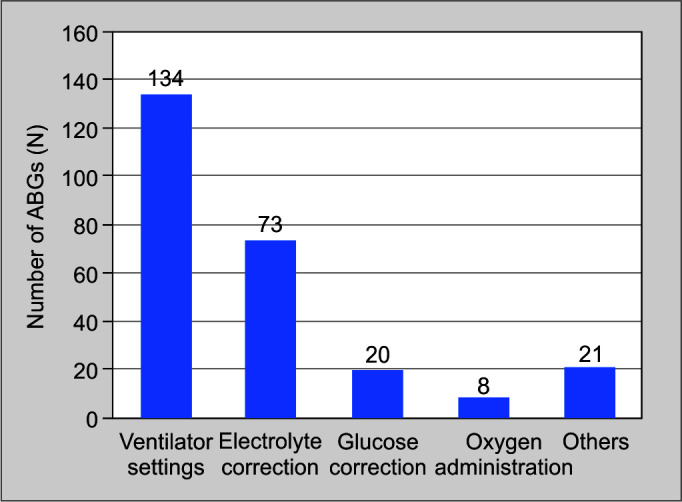
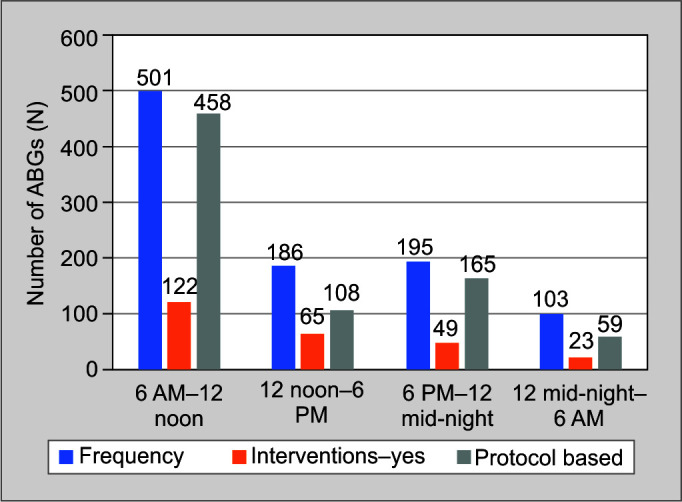
Results: Out of 985 ABGs, in 259 instances (26.29%), interventions were done after reviewing an ABG. The major interventions among these ABGs were ventilator settings adjustment in 134 ABGs (13.6%). A total of 790 ABGs were done routinely with no specific indication (80.20%), while doctors ordered one following an event for 195 ABGs (19.80%).
Conclusion: Our data suggest that 80% of ABG tests were ordered as part of a routine test.
How to cite this article: Chandran J, D'Silva C, Sriram S, Krishna B. Clinical Utility of Arterial Blood Gas Test in an Intensive Care Unit: An Observational Study. Indian J Crit Care Med 2021;25(2):172-175.
Keywords: Arterial blood gas; Arterial cannula; Clinical utility.
Copyright © 2021; Jaypee Brothers Medical Publishers (P) Ltd.
Conflict of interest statement
Source of support: Nil Conflict of interest: None
Figures
References
-
- AARC clinical practice guideline. Sampling for arterial blood gas analysis. American Association for Respiratory Care. Respir Care. 1992;37(8):913–917. - PubMed
-
- Merlani P, Garnerin P, Diby M, Ferring M, Ricou B. Quality improvement report: linking guideline to regular feedback to increase appropriate requests for clinical tests: blood gas analysis in intensive care [published correction appears in BMJ 2001 Oct 27;323(7319):993]. BMJ. 2001;323(7313):620–624. doi: 10.1136/bmj.323.7313.620. DOI: - DOI - PMC - PubMed
LinkOut - more resources
Full Text Sources
Other Literature Sources