


Pueraria tuberosa: A Review on Traditional Uses, Pharmacology, and Phytochemistry
- PMID: 33708108
- PMCID: PMC7941752
- DOI: 10.3389/fphar.2020.582506
Pueraria tuberosa: A Review on Traditional Uses, Pharmacology, and Phytochemistry
Abstract
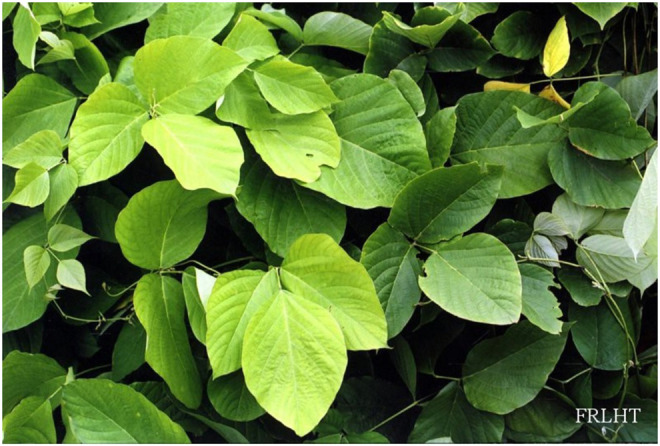
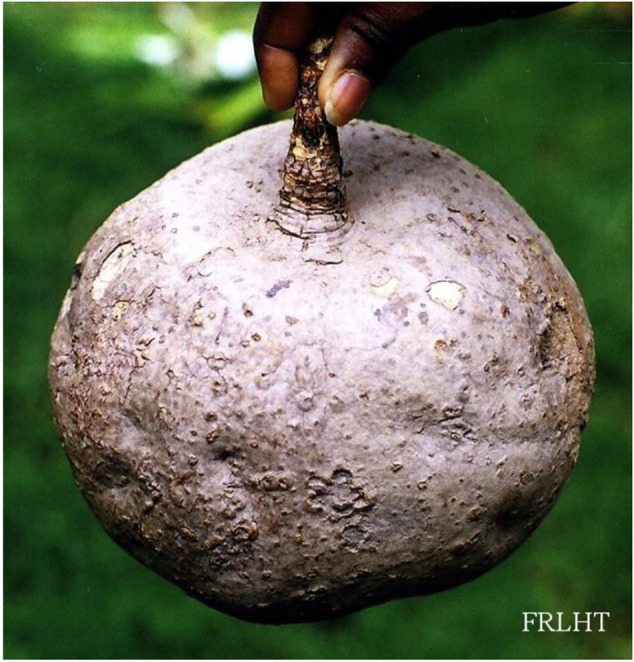
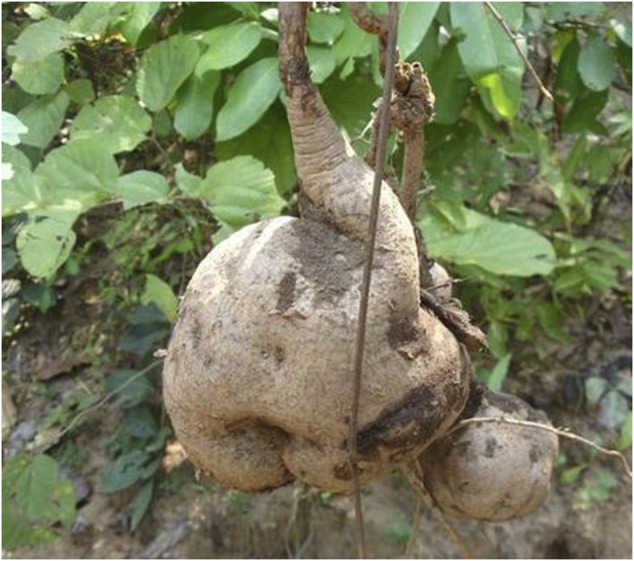
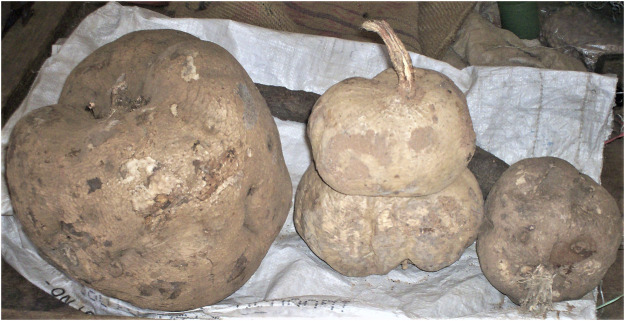
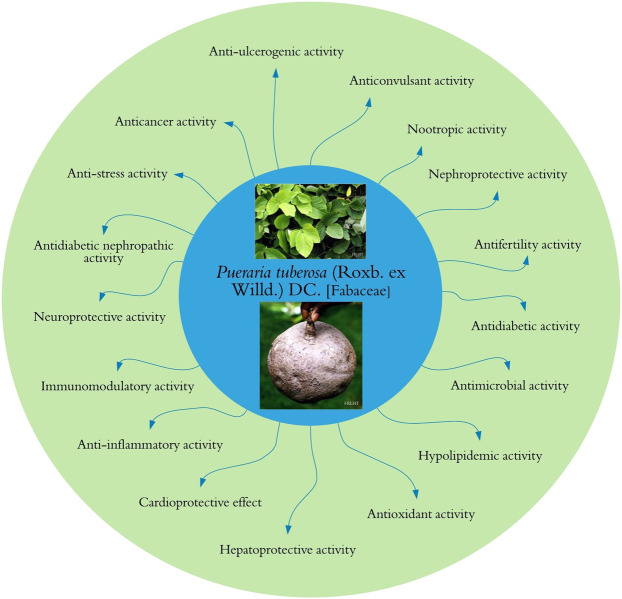
Pueraria tuberosa (Roxb. ex Willd.) DC. (Fabaceae), also known as Indian Kudzu (vidari kand), is a perennial herb distributed throughout India and other Asian countries. Traditionally, tuber and leaves of this plant have extensively been reported for nutritional and medicinal properties in Ayurveda as well as in Chinese traditional practices. The objective of the present review is to compile and update the published data on traditional uses, pharmacological potential, and phytochemistry of compounds isolated from the plant Pueraria tuberosa. P. tuberosa extracts and its purified compounds possess multiple activities such as anticancer, anticonvulsant, antidiabetic, antifertility, anti-inflammatory, antioxidant, anti-stress, antiulcerogenic, cardioprotective, hypolipidemic, hepatoprotective, immunomodulatory, nephroprotective, nootropic, neuroprotective, and wound healing. Tuber and leaf extracts of P. tuberosa contain several bioactive constituents such as puerarin, daidzein, genistein, quercetin, irisolidone, biochanin A, biochanin B, isoorientin, and mangiferin, which possess an extensive range of pharmacological activities. The extensive range of pharmacological properties of P. tuberosa provides opportunities for further investigation and presents a new approach for the treatment of ailments. Many phytochemicals have been identified and characterized from P. tuberosa; however, some of them are still unexplored, and there is no supporting data for their activities and exact mechanisms of action. Therefore, further investigations are warranted to unravel the mechanisms of action of individual constituents of this plant.
Keywords: Pueraria tuberosa; in vivo studies; pharmacological properties; phytochemical constituents; traditional uses.
Copyright © 2021 Bharti, Chopra, Raut and Khatri.
Conflict of interest statement
The authors declare that the research was conducted in the absence of any commercial or financial relationships that could be construed as a potential conflict of interest.
Figures
References
-
- Adedapo A. A., Fagbohun O. A., Dawurung C., Oyagbemi A. A., Omobowale T. O., Yakubu M. A. (2017). The aqueous tuber extract of Pueraria tuberosa (Willd.) D.C. caused cytotoxic effect on HT 29 cell lines with down regulation of nuclear factor-kappa B (NF-κB). J. Compl. Integr. Med. 16 (4), 1–8. 10.1515/jcim-2016-0119 - DOI - PubMed
-
- Aruna M. R., Kumar D. J. M., Senbagam D., Senthilkumar B. (2016). Investigation on phytochemical and antimicrobial properties of tuber extracts of pueraria tuberosa linn. J. Pure Appl. Microb. 10 (2), 1573–1578.
Publication types
LinkOut - more resources
Full Text Sources
Other Literature Sources
