


Effect of Fragrant Primula Flowers on Physiology and Psychology in Female College Students: An Empirical Study
- PMID: 33708159
- PMCID: PMC7940201
- DOI: 10.3389/fpsyg.2021.607876
Effect of Fragrant Primula Flowers on Physiology and Psychology in Female College Students: An Empirical Study
Abstract
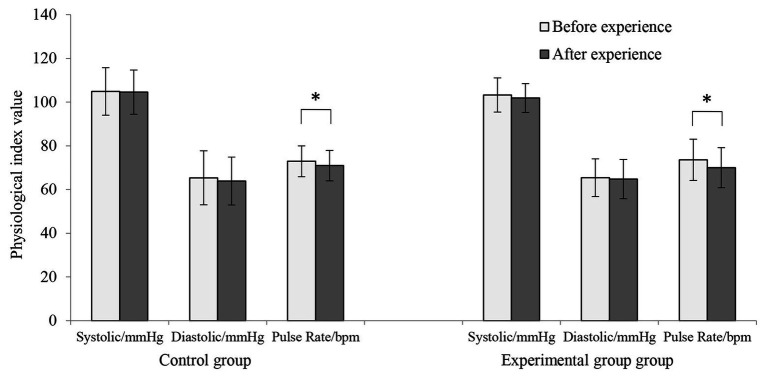
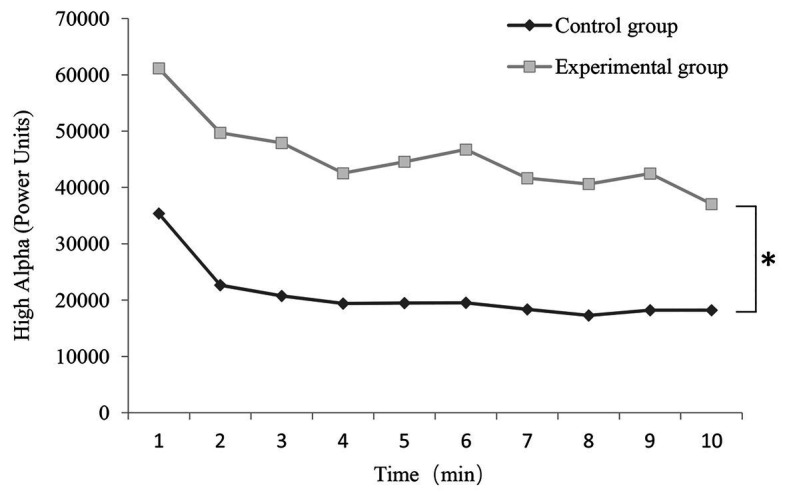
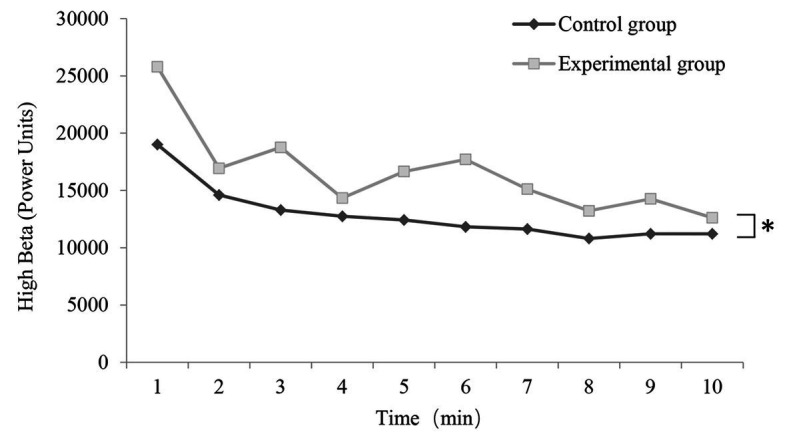
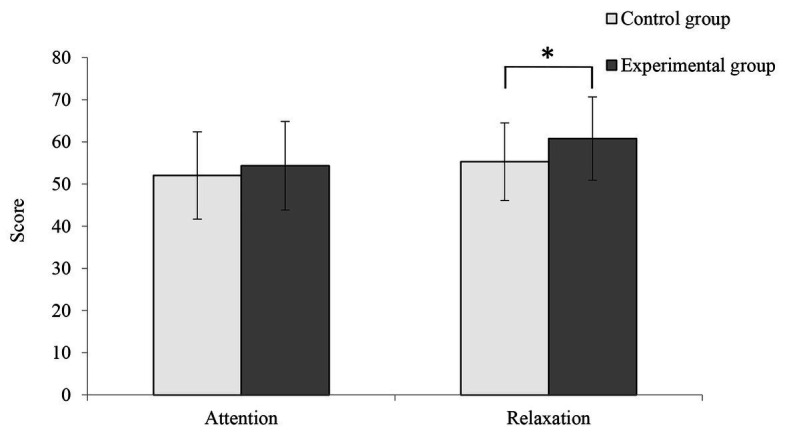
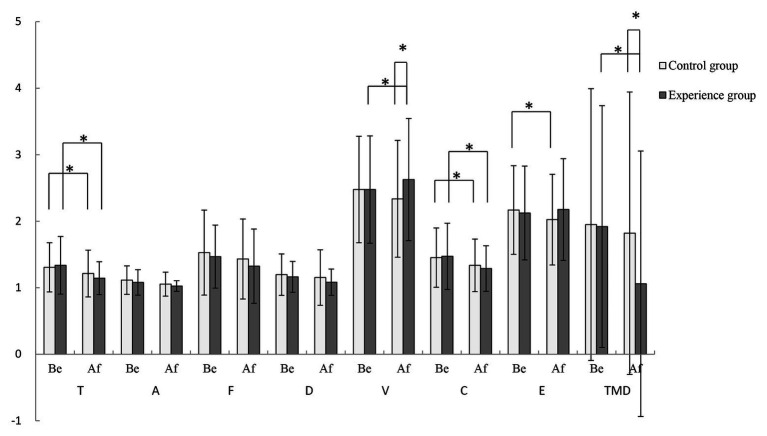
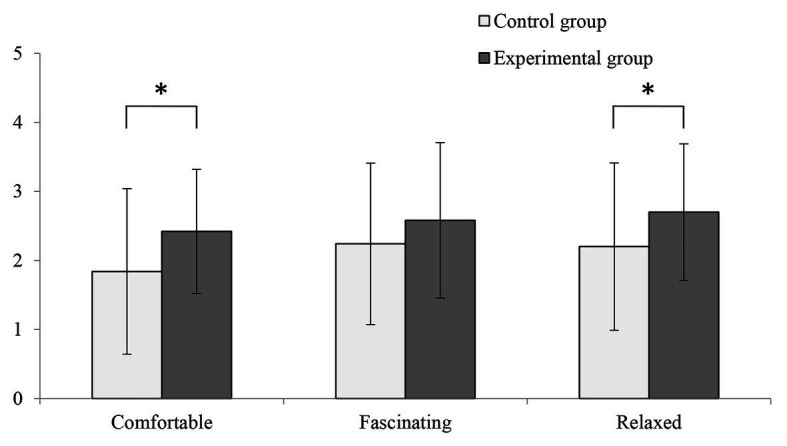
Indoor plants can positively impact physical and mental health in daily life. However, the benefits of viewing indoor plants may be enhanced if the plants emit a fragrant aroma. In this crossover-design study, we measured the physiological and psychological effects of fragrant and non-fragrant Primula plants on 50 female college students, and explored whether aroma stimulation had additive benefits for this group. Non-fragrant Primula malacoides Franch was used as a control stimulus, and Primula forbesii Franch, which has a floral fragrance, was used as an experimental stimulus. We measured blood pressure, pulse rate, and electroencephalogram (EEG) to evaluate physiological responses, and used a mood state profile and the semantic differential (SD) method to evaluate psychological responses. We found that mean blood pressure and pulse rate decreased significantly after the experiment in both conditions. EEGs showed that the mean values of high alpha waves, high beta waves, and relaxation scores were significantly higher in the experimental vs. control condition. The average scores on each subscale of the psychological questionnaire improved after the experiment in both conditions, and the vitality (V) subscale and total emotional state scores were significantly better in the experimental vs. control condition. The results of the SD method showed that the sense of relaxation and comfort were significantly higher in the experimental vs. control condition. Compared with the non-fragrant Primula, the fragrant Primula induced relatively better physiological and psychological effects.
Keywords: Primula; blood pressure; electroencephalogram; fragrance stimulation; psychological questionnaire; pulse rate.
Copyright © 2021 Jiang, Deng, Luo, Li, Guo, Jiang, Jia, Ma, Sun and Huang.
Conflict of interest statement
The authors declare that the research was conducted in the absence of any commercial or financial relationships that could be construed as a potential conflict of interest.
Figures
References
-
- Adachi M., Rohde C., Kendle A. (2000). Effects of floral and foliage displays on human emotions. HortTechnology 10, 142–155. 10.1017/S0022278X00001609 - DOI
-
- Alarcao S. M., Fonseca M. J. (2017). Emotions recognition using EEG signals: a survey. IEEE Trans. Affect. Comput. 10, 374–393. 10.1109/TAFFC.2017.2714671 - DOI
-
- Ali B., Al-Wabel N. A., Shams S., Ahamad A., Khan S. A., Anwar F. (2015). Essential oils used in aromatherapy: a systemic review. Asian Pac. J. Trop. Biomed. 5, 601–611. 10.1016/j.apjtb.2015.05.007 - DOI
-
- Bringslimark T., Hartig T., Patil G. G. (2009). The psychological benefits of indoor plants: a critical review of the experimental literature. J. Environ. Psychol. 29, 422–433. 10.1016/j.jenvp.2009.05.001 - DOI
LinkOut - more resources
Full Text Sources
Other Literature Sources
