


Bovine Abortions Revisited-Enhancing Abortion Diagnostics by 16S rDNA Amplicon Sequencing and Fluorescence in situ Hybridization
- PMID: 33708810
- PMCID: PMC7940352
- DOI: 10.3389/fvets.2021.623666
Bovine Abortions Revisited-Enhancing Abortion Diagnostics by 16S rDNA Amplicon Sequencing and Fluorescence in situ Hybridization
Abstract
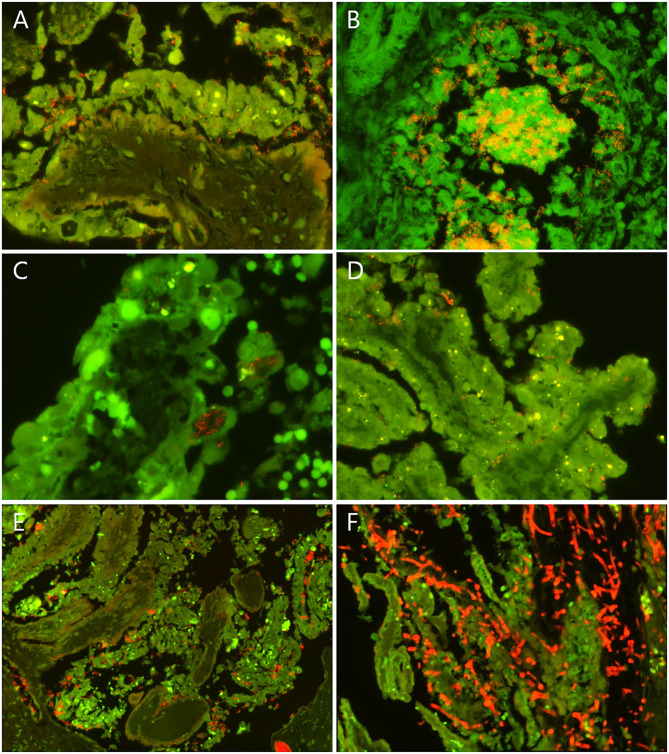
Abortion in cattle causes significant economic losses for cattle farmers worldwide. The diversity of abortifacients makes abortion diagnostics a complex and challenging discipline that additionally is restrained by time and economy. Microbial culture has traditionally been an important method for the identification of bacterial and mycotic abortifacients. However, it comes with the inherent bias of favoring the easy-to-culture species, e.g., those that do not require cell culture, pre-enrichment, a variety of selective growth media, or different oxygen levels for in vitro growth. Molecular methods such as polymerase chain reaction (PCR) and next-generation sequencing have been established as alternatives to traditional microbial culturing methods in several diagnostic fields including abortion diagnostics. Fluorescence in situ hybridization (FISH), a bridging microscopy technique that combines molecular accuracy with culture independence, and spatial resolution of the pathogen-lesion relation, is also gaining influence in several diagnostic fields. In this study, real-time quantitative PCR (qPCR), 16S rDNA amplicon sequencing, and FISH were applied separately and in combination in order to (i) identify potentially abortifacient bacteria without the bias of culturability, (ii) increase the diagnostic rate using combined molecular methods, (iii) investigate the presence of the difficult-to-culture zoonotic agents Coxiella burnetii, Chlamydia spp., and Leptospira spp. in bovine abortions in Denmark. Tissues from 162 aborted or stillborn bovine fetuses and placentas submitted for routine diagnostics were screened for pathogenic bacteria using 16S rDNA amplicon sequencing. Lesion association of fungal elements, as well as of selection of bacterial abortifacients, was assessed using specific FISH assays. The presence of Chlamydia spp. and chlamydia-like organisms was assessed using qPCR. The study focused on bacterial and fungal abortifacients, because Danish cattle is free from most viral abortifacients. The 16S rDNA amplicon sequencing-guided FISH approach was suitable for enhancing abortion diagnostics, i.e., the diagnostic rate for cases with tissue lesions (n = 115) was increased from 46 to 53% when compared to routine diagnostic methods. Identification of Bacillus licheniformis, Escherichia coli, and Trueperella pyogenes accounted for the majority of additional cases with an established etiology. No evidence for emerging or epizootic bacterial pathogens was found. The difficult-to-culture abortifacients were either not detected or not identified as abortifacients.
Keywords: Chlamydiaceae; chlamydia-like organisms (CLO); culture-independent; deep sequencing; diagnostics; fluorescence in situ hybridization (FISH); lesion association; zoonosis.
Copyright © 2021 Wolf-Jäckel, Strube, Schou, Schnee, Agerholm and Jensen.
Conflict of interest statement
The authors declare that the research was conducted in the absence of any commercial or financial relationships that could be construed as a potential conflict of interest.
Figures
References
-
- Van Borm S, Belák S, Freimanis G, Fusaro A, Granberg F, Höper D, et al. Next-generation sequencing in veterinary medicine: how can the massive amount of information arising from high-throughput technologies improve diagnosis, control, and management of infectious diseases? Methods Mol Biol. (2014) 1247:415–36. 10.1007/978-1-4939-2004-4_30 - DOI - PMC - PubMed
LinkOut - more resources
Full Text Sources
Other Literature Sources
Miscellaneous
