Y-chromosome loss is frequent in male renal tumors
- PMID: 33708836
- PMCID: PMC7940894
- DOI: 10.21037/atm-20-3061
Y-chromosome loss is frequent in male renal tumors
Abstract
Background: Loss of the Y-chromosome is a common event in different tumor types but its prevalence and clinical relevance in renal cell tumors is still not understood.
Methods: It was the aim of this study to estimate the frequency and clinical relevance of Y-loss in kidney neoplasms. A cohort of 1,252 male renal tumors was analyzed in a tissue microarray format by fluorescence in-situ hybridization (FISH).
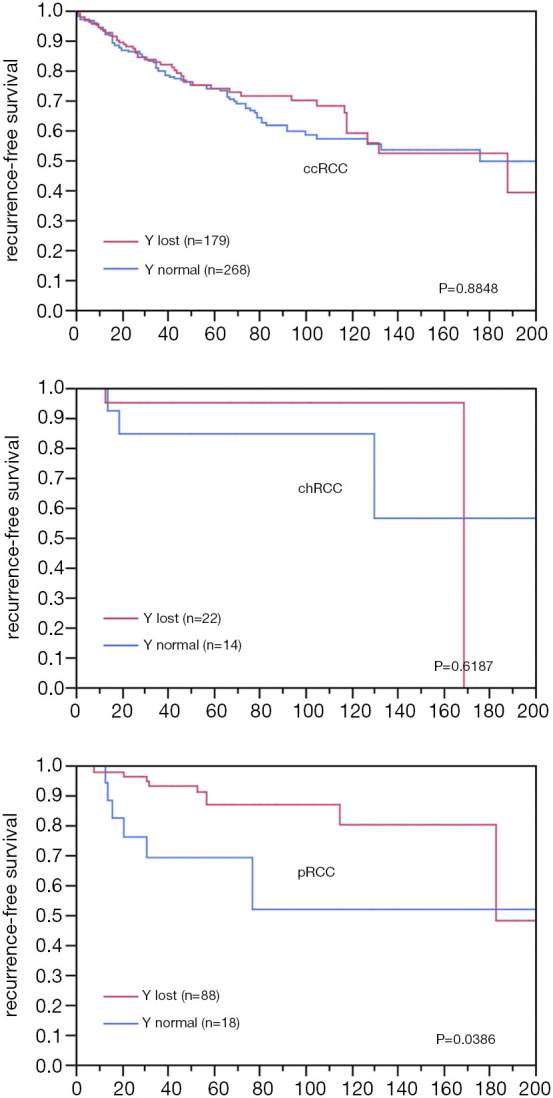
Results: Y-loss was found in 47% of tumors. The frequency of this alteration varied markedly between kidney tumor subtypes. Y-loss was most prevalent in papillary renal cell carcinoma (RCC) (77%) followed by chromophobe RCC (60%), oncocytoma (51%), clear cell RCC (39%) and clear cell (tubulo)papillary RCC (19%). Y-loss was linked to higher patient age and smaller tumor size at diagnosis. Mean age (95% CI) was 65 (64-66) years in patients with Y-loss in their tumor compared to 60 (58-61) years in patients without Y-loss (P<0.0001). Significant correlations between Y-loss and tumor phenotype were found only for papillary carcinomas (P=0.002), especially for type 1 (P=0.03).
Conclusions: Y-loss is present in different histologic subtypes of renal neoplasm. The highest frequency is in papillary RCC, where it may represent a potentially relevant prognostic biomarker suggesting favorable disease outcome.
Keywords: Y-loss; fluorescence in-situ hybridization (FISH); prognosis; renal cell neoplasm.
2021 Annals of Translational Medicine. All rights reserved.
Conflict of interest statement
Conflicts of Interest: All authors have completed the ICMJE uniform disclosure form (available at http://dx.doi.org/10.21037/atm-20-3061). The authors have no conflicts of interest to declare.
Figures

References
-
- Mertens F, Johansson B, Hoglund M, et al. Chromosomal imbalance maps of malignant solid tumors: a cytogenetic survey of 3185 neoplasms. Cancer Res 1997;57:2765-80. - PubMed
LinkOut - more resources
Full Text Sources
Other Literature Sources