The comparison of teaching efficiency between virtual reality and traditional education in medical education: a systematic review and meta-analysis
- PMID: 33708879
- PMCID: PMC7940910
- DOI: 10.21037/atm-20-2785
The comparison of teaching efficiency between virtual reality and traditional education in medical education: a systematic review and meta-analysis
Abstract
Background: Virtual reality (VR) technology has developed rapidly in recent years and has been applied in many fields, including medical education. A meta-analysis was performed to compare the examination pass rate of medical students educated using VR and those receiving traditional education to evaluate the teaching effect of VR in medical education.
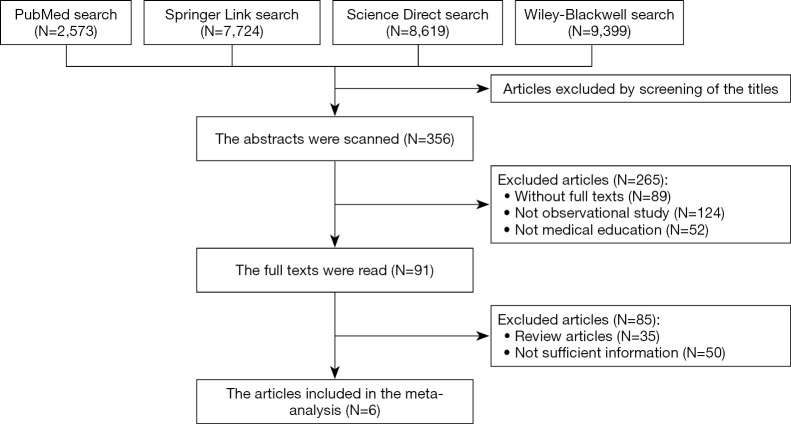
Methods: The PubMed, Springer Link, Science Direct, and Wiley Online Library were searched from inception to May 2020. Articles meeting the inclusion criteria were then evaluated, relevant information extracted and a meta-analysis conducted. Students were allocated to a VR group, those trained using VR technology, and a traditional education group, those who received a traditional medical education.
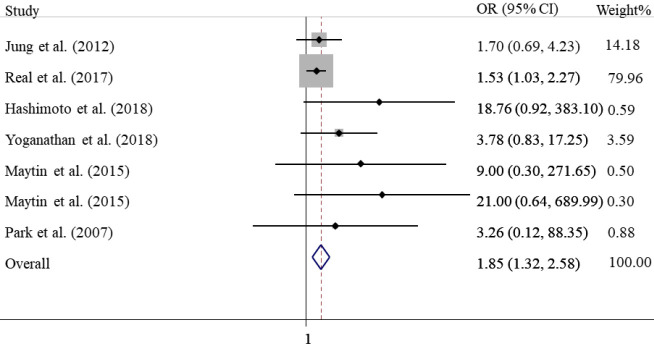
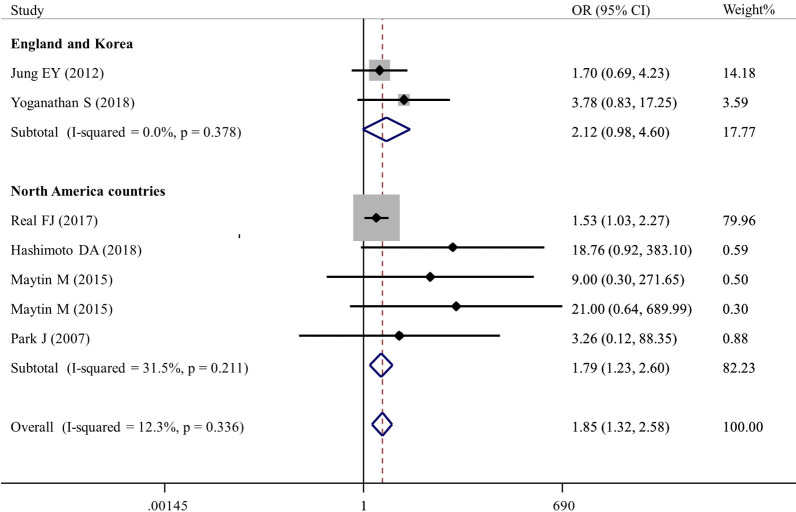
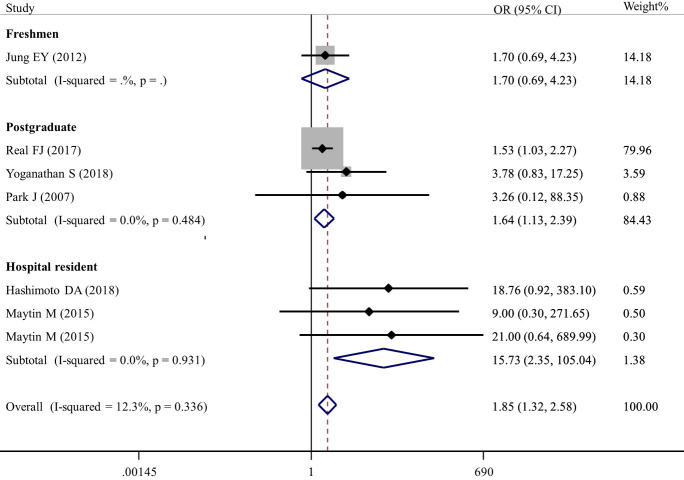
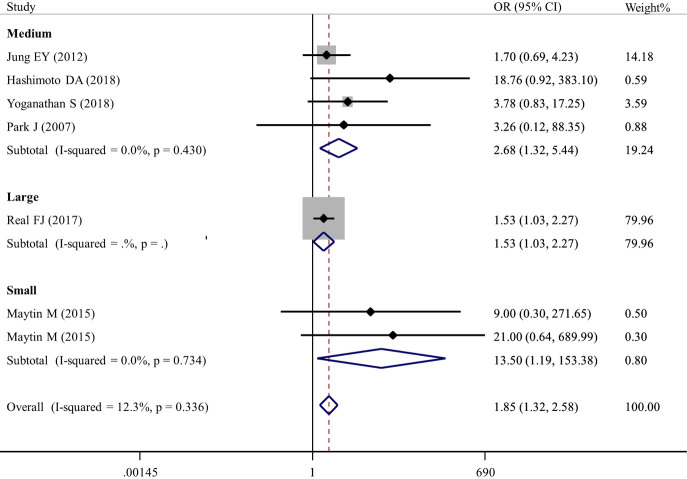
Results: Six studies were included in the meta-analysis. The results indicate a significant difference between the pass rate of students educated using VR and those receiving traditional medical education. The odds ratios and confidence intervals of individual studies and our meta-analysis are illustrated with a forest plot.
Conclusions: Students in the VR group performed better than those in the traditional education group. Teaching with VR may enhance student learning in medical education. Medical schools should consider making greater use of VR when educating students.
Keywords: Virtual reality (VR); medical education; meta-analysis; traditional education.
2021 Annals of Translational Medicine. All rights reserved.
Conflict of interest statement
Conflicts of Interest: All authors have completed the ICMJE uniform disclosure form (available at http://dx.doi.org/10.21037/atm-20-2785). All the authors report grants from the Government of Jiangsu Province, China, and from Nanjing Medical University during the study. The authors have no other conflicts of interest to declare.
Figures
References
-
- Kamei RK, Cook S, Puthucheary J, et al. 21st Century Learning in Medicine: Traditional Teaching versus Team-based Learning. Med Sci Educ 2014;22:57-64. 10.1007/BF03341758 - DOI
-
- Li Y, Huang J, Tian F, et al. Gesture interaction in virtual reality. Virtual Reality & Intelligent Hardware 2019;1:84-112. 10.3724/SP.J.2096-5796.2018.0006 - DOI
-
- Loureiro SMC, Sarmento EM, do Rosário JF. Managerial Challenges and Social Impacts of Virtual and Augmented Reality: IGI Global; 2020 [updated 2020. Available from: Available online: https://www.igi-global.com/chapter/incorporating-vr-ar-and-related-techn...
LinkOut - more resources
Full Text Sources
Other Literature Sources