Identification of key pathways and core genes involved in atherosclerotic plaque progression
- PMID: 33708894
- PMCID: PMC7940950
- DOI: 10.21037/atm-21-193
Identification of key pathways and core genes involved in atherosclerotic plaque progression
Abstract
Background: Atherosclerosis leads to the occurrence of cardiovascular diseases. However, the molecular mechanisms that contribute to atherosclerotic plaque rupture are incompletely characterized. We aimed to identify the genes related to atherosclerotic plaque progression that could serve as novel biomarkers and interventional targets for plaque progression.
Methods: The datasets of GSE28829 in early vs. advanced atherosclerotic plaques and those of GSE41571 in stable vs. ruptured plaques from Gene Expression Omnibus (GEO) were analyzed by using bioinformatics methods. In addition, we used quantitative reverse transcription polymerase chain reaction (qRT-PCR) to verify the expression level of core genes in a mouse atherosclerosis model.
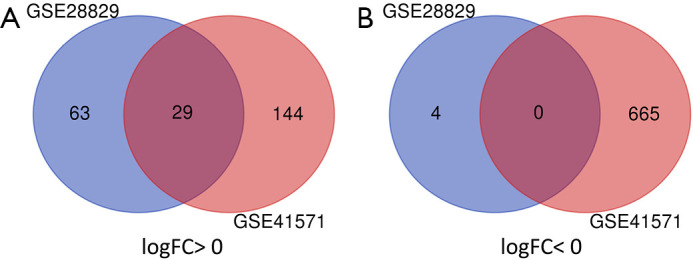
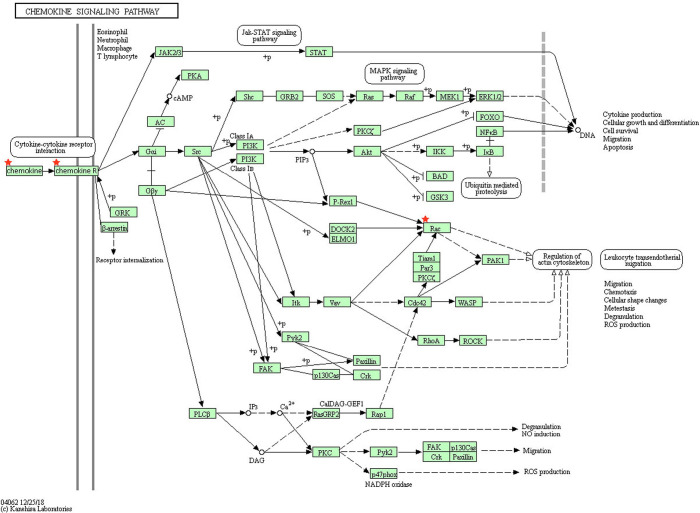
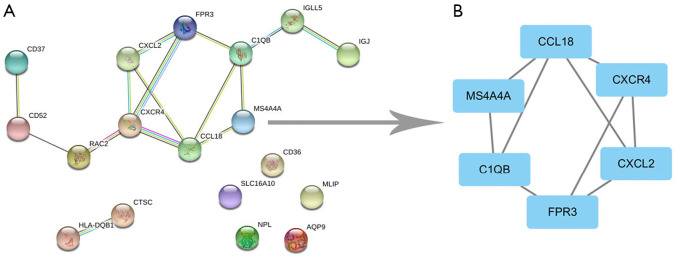
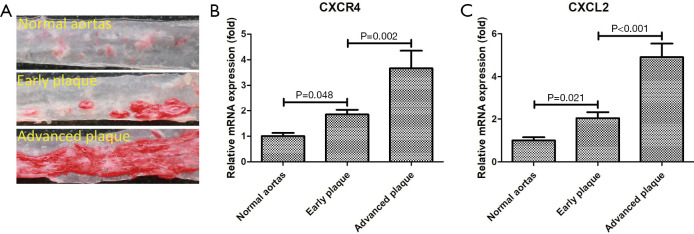
Results: There were 29 common differentially expressed genes (DEGs) between the GSE28829 and GSE41571 datasets, and the DEGs were mainly enriched in the chemokine signaling pathway and the Staphylococcus aureus infection pathway (P<0.05). We identified 6 core genes (FPR3, CCL18, MS4A4A, CXCR4, CXCL2, and C1QB) in the protein-protein interaction (PPI) network, 3 of which (CXCR4, CXCL2, and CCL18) were markedly enriched in the chemokine signaling pathway. qRT-PCR analysis showed that the messenger RNA levels of two core genes (CXCR4 and CXCL2) increased significantly during plaque progression in the mouse atherosclerosis model.
Conclusions: In summary, bioinformatics techniques proved useful for the screening and identification of novel biomarkers of disease. A total of 29 DEGs and 6 core genes were linked to atherosclerotic plaque progression, in particular the CXCR4 and CXCL2 genes.
Keywords: Atherosclerosis; bioinformatics; core genes; differentially expressed genes (DEGs); molecular mechanism.
2021 Annals of Translational Medicine. All rights reserved.
Conflict of interest statement
Conflicts of Interest: All authors have completed the ICMJE uniform disclosure form (available at http://dx.doi.org/10.21037/atm-21-193). The authors have no conflicts of interest to declare.
Figures
References
-
- Puca AA, Carrizzo A, Spinelli C, et al. Single systemic transfer of a human gene associated with exceptional longevity halts the progression of atherosclerosis and inflammation in ApoE knockout mice through a CXCR4-mediated mechanism. Eur Heart J 2020;41:2487-97. 10.1093/eurheartj/ehz459 - DOI - PMC - PubMed
LinkOut - more resources
Full Text Sources
Other Literature Sources
Miscellaneous