


Impact of age-selective vs non-selective physical-distancing measures against coronavirus disease 2019: a mathematical modelling study
- PMID: 33709095
- PMCID: PMC7989432
- DOI: 10.1093/ije/dyab043
Impact of age-selective vs non-selective physical-distancing measures against coronavirus disease 2019: a mathematical modelling study
Abstract
Background: There is a real possibility of successive COVID-19-epidemic waves with devastating consequences. In this context, it has become mandatory to design age-selective measures aimed at achieving an optimal balance between protecting public health and maintaining a viable economic activity.
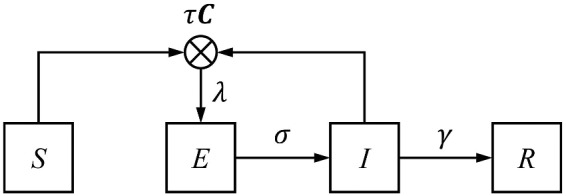
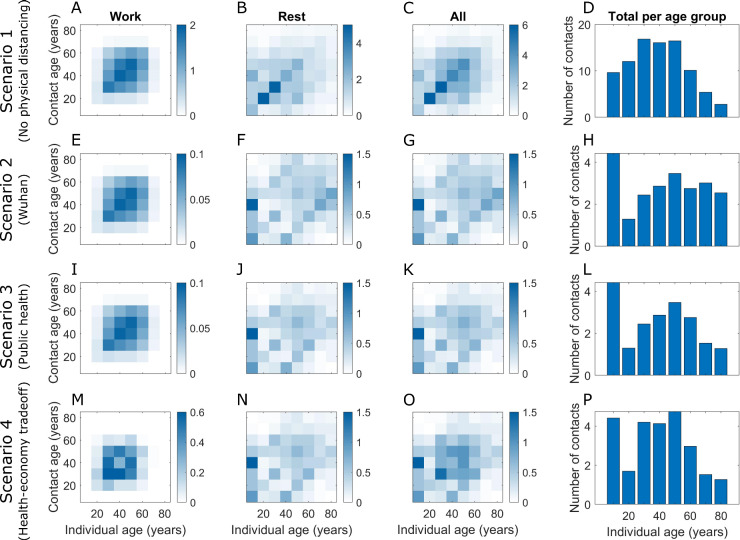
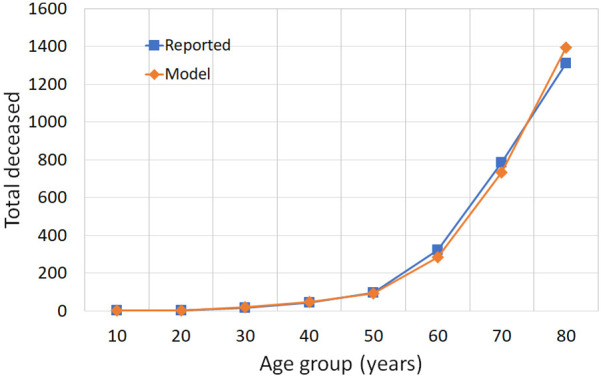
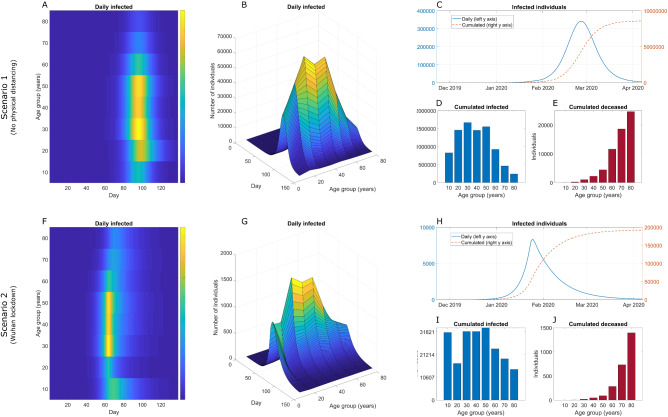
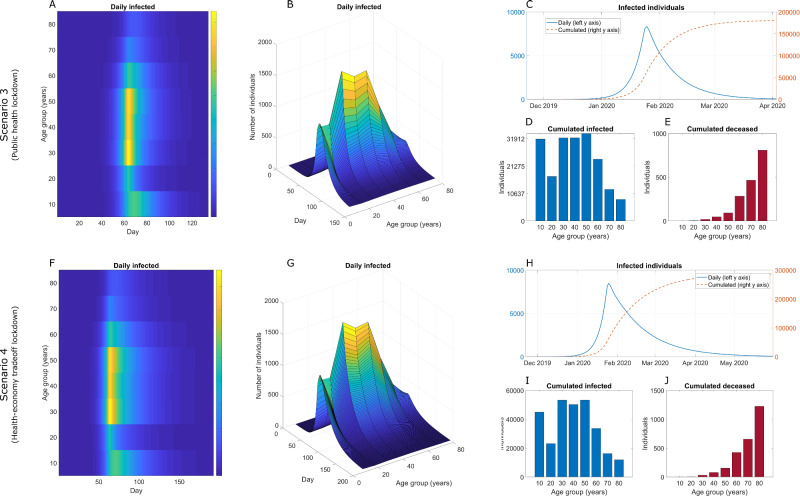
Methods: We programmed a Susceptible, Exposed, Infected, Removed (SEIR) model in order to introduce epidemiologically relevant age classes into the outbreak-dynamics analysis. The model was fitted to the official death toll and calculated age distribution of deaths in Wuhan using a constrained linear least-squares algorithm. Subsequently, we used synthetic location-specific and age-structured contact matrices to quantify the effect of age-selective interventions both on mortality and on economic activity in Wuhan. For this purpose, we simulated four different scenarios ranging from an absence of measures to age-selective interventions with stronger physical-distancing measures for older individuals.
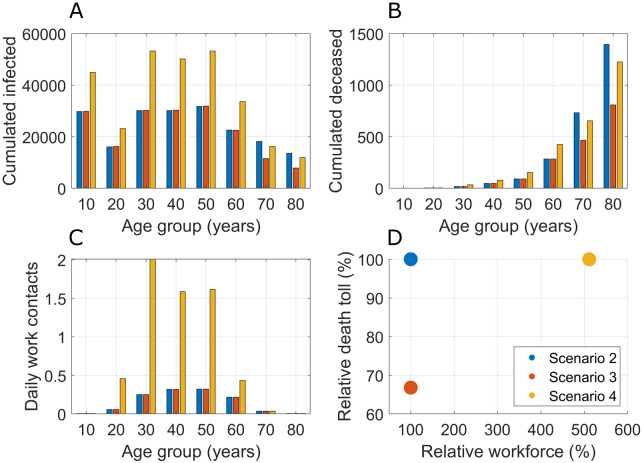
Results: An age-selective strategy could reduce the death toll by >30% compared with the non-selective measures applied during Wuhan's lockdown for the same workforce. Moreover, an alternative age-selective strategy could allow a 5-fold increase in the population working on site without a detrimental impact on the death toll compared with the Wuhan scenario.
Conclusion: Our results suggest that age-selective-distancing measures focused on the older population could have achieved a better balance between COVID-19 mortality and economic activity during the first COVID-19 outbreak in Wuhan. However, the implications of this need to be interpreted along with considerations of the practical feasibility and potential wider benefits and drawbacks of such a strategy.
Keywords: Covid-19; SEIR; age-selective; mathematical model; physical distancing; shielding.
© The Author(s) 2021; all rights reserved. Published by Oxford University Press on behalf of the International Epidemiological Association.
Figures
References
-
- National Health Commission of the People’s Republic of China. Updates on the Epidemic. 23 January 2020. http://www.nhc.gov.cn/xcs/yqtb/list_gzbd.shtml (16 June 2020, date last accessed) (in Chinese).
-
- The State Council of the People's Republic of China. The Announcement from Wuhan's Headquarter on the Novel Coronavirus Prevention and Control. 23 January 2020. http://www.gov.cn/xinwen/2020-01/23/content_5471751.htm (16 June 2020, date last accessed) (in Chinese).
-
- The State Council of the People's Republic of China. The State Council's announcement on extending the Lunar New Year Holiday in 2020. 27 January 2020. http://www.gov.cn/zhengce/content/2020-01/27/content_5472352.htm (16 June 2020, date last accessed) (in Chinese).
-
- The government of Wuhan. Wuhan reopens after 76-day lockdown. 8 April 2020. http://english.wh.gov.cn/H_1/WN_1/202004/t20200414_998708.shtml (16 June 2020, date last accessed).
-
- WHO Director-General's opening remarks at the media briefing on COVID19. 11 March 2020. https://www.who.int/director-general/speeches/detail/who-director-genera... (16 June 2020, date last accessed).
MeSH terms
LinkOut - more resources
Full Text Sources
Other Literature Sources
Medical
