


BCG-induced protection against Mycobacterium tuberculosis infection: Evidence, mechanisms, and implications for next-generation vaccines
- PMID: 33709421
- PMCID: PMC8252066
- DOI: 10.1111/imr.12965
BCG-induced protection against Mycobacterium tuberculosis infection: Evidence, mechanisms, and implications for next-generation vaccines
Abstract
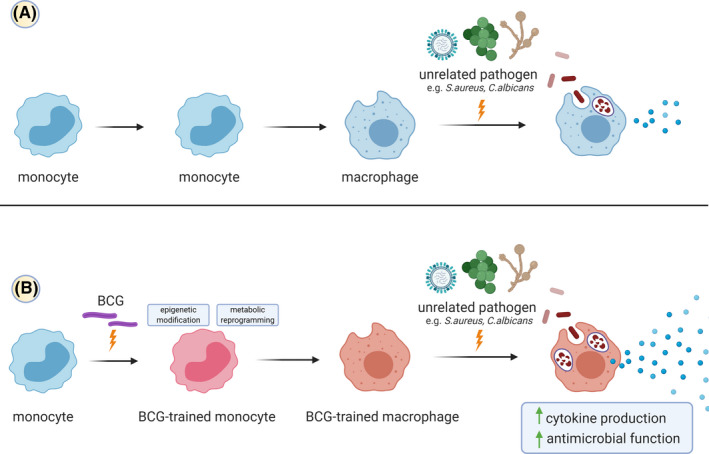
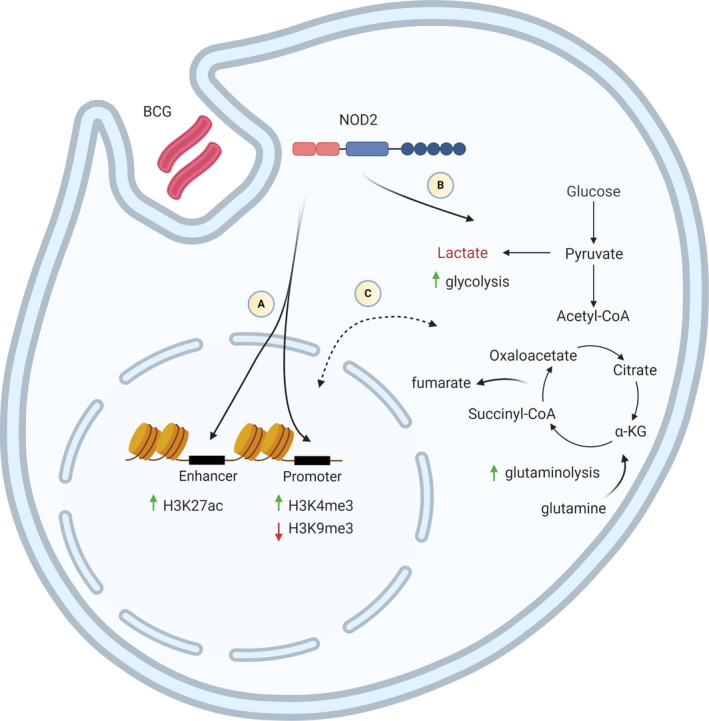
The tuberculosis (TB) vaccine Bacillus Calmette-Guérin (BCG) was introduced 100 years ago, but as it provides insufficient protection against TB disease, especially in adults, new vaccines are being developed and evaluated. The discovery that BCG protects humans from becoming infected with Mycobacterium tuberculosis (Mtb) and not just from progressing to TB disease provides justification for considering Mtb infection as an endpoint in vaccine trials. Such trials would require fewer participants than those with disease as an endpoint. In this review, we first define Mtb infection and disease phenotypes that can be used for mechanistic studies and/or endpoints for vaccine trials. Secondly, we review the evidence for BCG-induced protection against Mtb infection from observational and BCG re-vaccination studies, and discuss limitations and variation of this protection. Thirdly, we review possible underlying mechanisms for BCG efficacy against Mtb infection, including alternative T cell responses, antibody-mediated protection, and innate immune mechanisms, with a specific focus on BCG-induced trained immunity, which involves epigenetic and metabolic reprogramming of innate immune cells. Finally, we discuss the implications for further studies of BCG efficacy against Mtb infection, including for mechanistic research, and their relevance to the design and evaluation of new TB vaccines.
Keywords: BCG; epigenetics; innate immunity; phenotypes; tuberculosis; vaccine.
© 2021 The Authors. Immunological Reviews published by John Wiley & Sons Ltd.
Conflict of interest statement
We have no conflict of interest to declare.
Figures
References
-
- Fine PE. Variation in protection by BCG: implications of and for heterologous immunity. Lancet. 1995;346(8986):1339–1345. - PubMed
-
- Verrall AJ, Alisjahbana B, Apriani L, et al. Early clearance of Mycobacterium tuberculosis: the INFECT case contact cohort study in Indonesia. J Infect Dis. 2020;221(8):1351–1360. - PubMed
-
- Koeken V, Verrall AJ, Netea MG, Hill PC, van Crevel R. Trained innate immunity and resistance to Mycobacterium tuberculosis infection. Clin Microbiol Infect. 2019;25(12):1468–1472. - PubMed
Publication types
MeSH terms
Substances
LinkOut - more resources
Full Text Sources
Other Literature Sources
Medical
