


Live and Wet Markets: Food Access versus the Risk of Disease Emergence
- PMID: 33712334
- PMCID: PMC9189808
- DOI: 10.1016/j.tim.2021.02.007
Live and Wet Markets: Food Access versus the Risk of Disease Emergence
Abstract
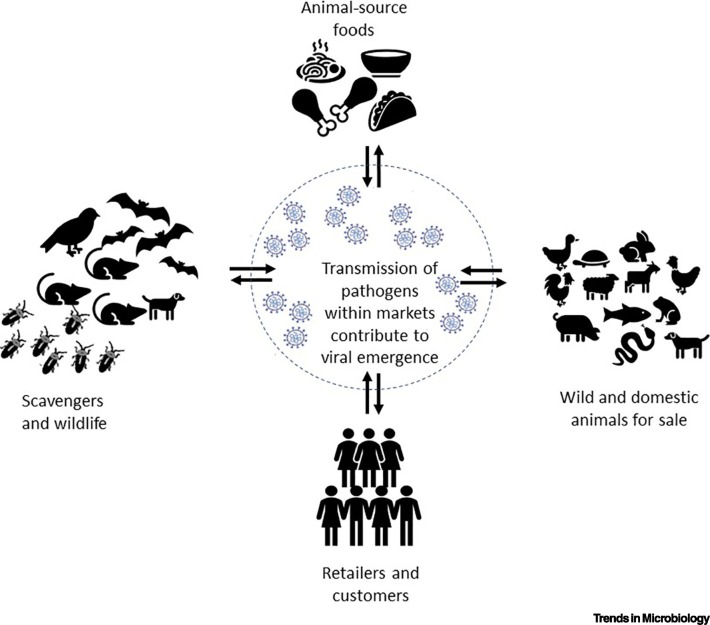
Emerging zoonotic diseases exert a significant burden on human health and have considerable socioeconomic impact worldwide. In Asia, live animals as well as animal products are commonly sold in informal markets. The interaction of humans, live domestic animals for sale, food products, and wild and scavenging animals, creates a risk for emerging infectious diseases. Such markets have been in the spotlight as sources of zoonotic viruses, for example, avian influenza viruses and coronaviruses, Here, we bring data together on the global impact of live and wet markets on the emergence of zoonotic diseases. We discuss how benefits can be maximized and risks minimized and conclude that current regulations should be implemented or revised, to mitigate the risk of new diseases emerging in the future.
Keywords: EcoHealth; One Health; food security; live animal market; pandemics; wet market; zoonoses.
Copyright © 2021 The Author(s). Published by Elsevier Ltd.. All rights reserved.
Conflict of interest statement
Declaration of Interests There are no interests to declare.
Figures
References
Publication types
MeSH terms
LinkOut - more resources
Full Text Sources
Other Literature Sources
Medical
