


A systematic scoping review of post-treatment lifestyle interventions for adult cancer survivors and family members
- PMID: 33713302
- PMCID: PMC8564800
- DOI: 10.1007/s11764-021-01013-x
A systematic scoping review of post-treatment lifestyle interventions for adult cancer survivors and family members
Abstract
Purpose: Supporting the health of cancer survivors and their families from diagnosis through survivorship is a recognized priority. However, the extent to which health promotion efforts after the completion of acute treatment attend to the needs of adult survivors and families is unclear. This systematic scoping review summarizes the key characteristics of post-treatment lifestyle interventions aiming to improve diet, physical activity, and/or weight-related outcomes for adult cancer survivors and family members.
Methods: We retrieved relevant studies from six databases using keywords. Studies were appraised for quality and limited to English-language, peer-reviewed journal articles published in or after 2005.
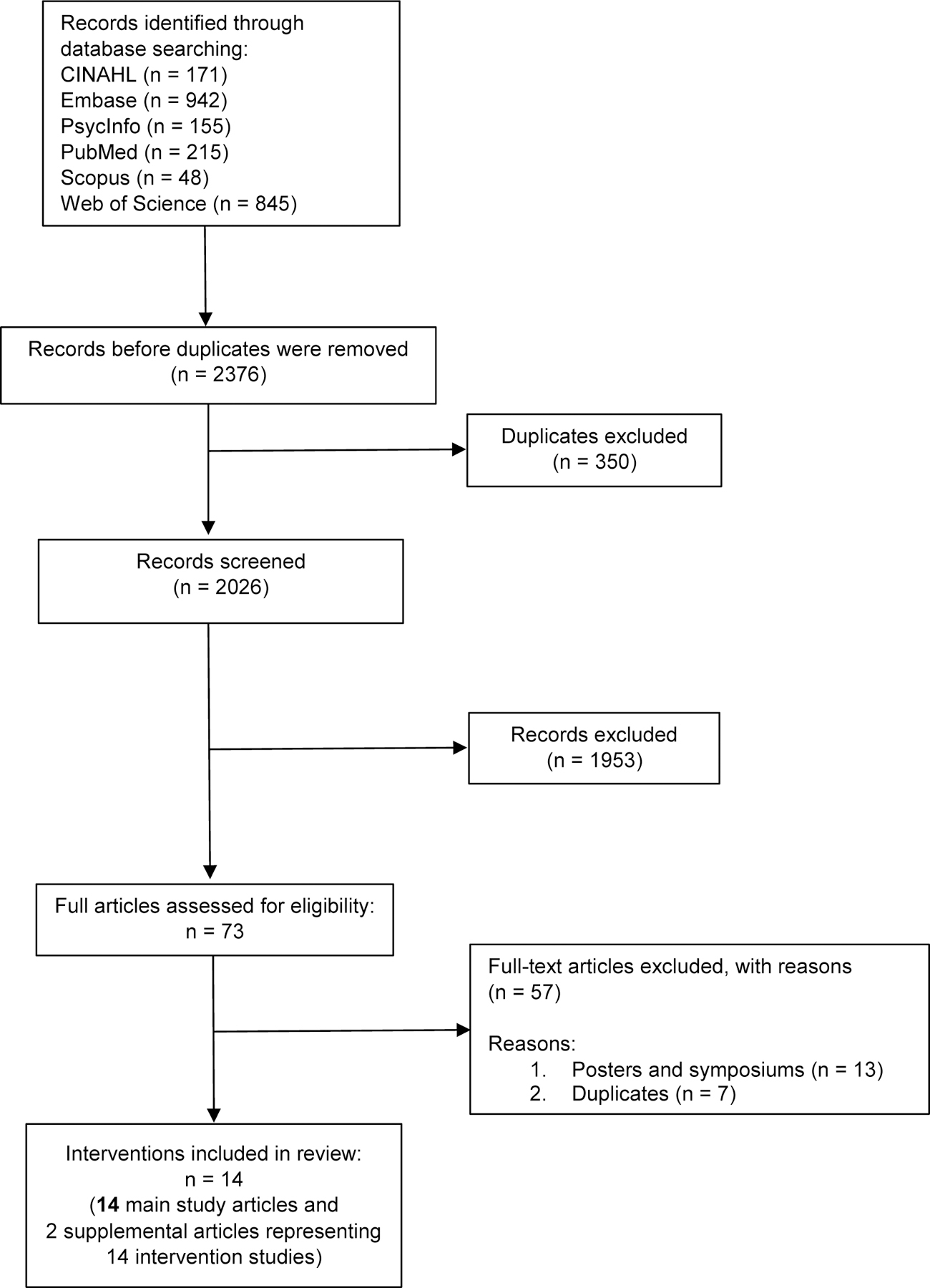
Results: A total of 2,376 articles were obtained from the databases; 14 main articles (and 2 supplemental articles) representing 14 unique interventions were retained for our analysis. Most interventions were designed to modify aspects of participant diet and physical activity (in combination) or physical activity alone; cited social cognitive theory as a guiding or interpretative framework; included survivors of multiple cancer types; and were limited to one type of familial relationship (e.g., spouse/partner, sister). Where reported, intervention samples were predominantly White.
Conclusions: Few post-treatment interventions concurrently target cancer survivor and family members' positive lifestyle behaviors. Positive findings highlight the potential for expanding this area of intervention research and increasing understanding of individual and familial factors that contribute to successful post-treatment family interventions.
Implications for cancer survivors: Promoting cancer survivors' healthy behaviors within the family context could capitalize on existing support networks and improve the health of family members in supportive roles.
Keywords: Cancer survivors; Diet; Family intervention; Physical activity; Post-treatment; Weight.
© 2021. The Author(s), under exclusive licence to Springer Science+Business Media, LLC, part of Springer Nature.
Figures
References
-
- Demark-Wahnefried W, Peterson B, McBride C, Lipkus I, Clipp E. Current health behaviors and readiness to pursue life-style changes among men and women diagnosed with early stage prostate and breast carcinomas. Cancer 2000;88(3):674–84. - PubMed
-
- Satia JA, Campbell MK, Galanko JA, James A, Carr C, Sandler RS. Longitudinal Changes in Lifestyle Behaviors and Health Status in Colon Cancer Survivors. Cancer Epidemiol Biomarkers Prev 2004;13(6):1022. - PubMed
Publication types
MeSH terms
Grants and funding
LinkOut - more resources
Full Text Sources
Other Literature Sources
Medical
