


Clinical course and outcome of patients with ACTH-dependent Cushing's syndrome infected with novel coronavirus disease-19 (COVID-19): case presentations
- PMID: 33713312
- PMCID: PMC7955209
- DOI: 10.1007/s12020-021-02674-5
Clinical course and outcome of patients with ACTH-dependent Cushing's syndrome infected with novel coronavirus disease-19 (COVID-19): case presentations
Abstract
Objective: To analyze the clinical presentations of patients with endogenous Cushing's syndrome (CS) affected by Coronavirus disease-19 (COVID-19).
Materials and methods: Patients who were referred to our clinic with active CS from 31st March to 15th May 2020 were screened for COVID-19 using real-time reverse transcriptase-polymerase chain reaction (RT-PCR). Late-night serum cortisol (64-327 nmol/L), late-night salivary cortisol (LNSC) (0.5-9.4 nmol/L), or 24-h urinary free cortisol (24 hUFC) (100-379 nmol/24 h) were measured by electrochemiluminescence immunoassay.
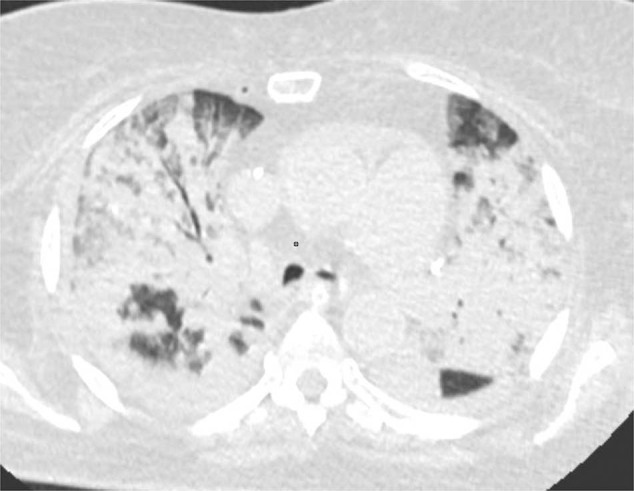
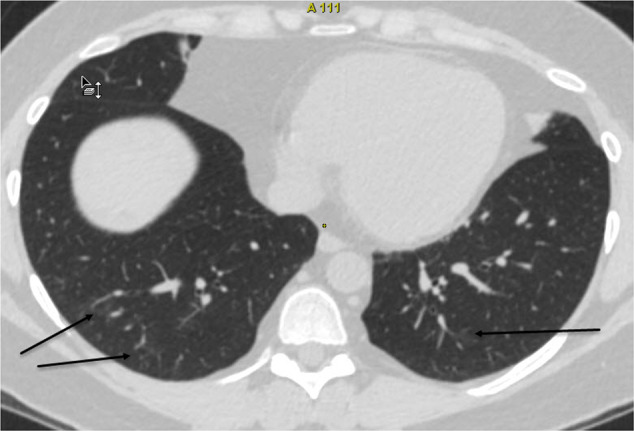
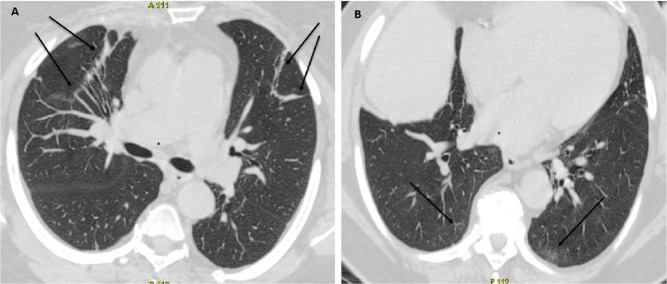
Results: Among 22 patients with active CS we found three cases affected by COVID-19. Nonspecific inflammation markers were within the reference range or slightly elevated in these patients. A 71-year-old woman with newly diagnosed CS (late-night serum cortisol >1750 nmol/L, LNSC 908.6 nmol/L) developed dyspnea as an only symptom and died from bilateral polysegmantal hemorrhagic pneumonia 7 days later. A 38-year-old woman with a 5-year medical history of active Cushing's disease (CD) (late-night serum cortisol 581.3 nmol/L, 24 hUFC 959.7 nmol/24-h) suffered from dyspnea, cough, fever (39.3 °C) and chest pain. Oxygen therapy, antibiotics and symptomatic treatments lead to full recovery 24 days later. A 66-year-old woman with a 4-year medical history of mild CD (late-night serum cortisol 603.4 nmol/L, LNSC 10.03 nmol/L) tested positive for COVID-19 in routine screening and remained asymptomatic.
Conclusions: The outcome of COVID-19 in patients with CS depends on the severity of hypercortisolism. Thus, severe hypercortisolism is a warning sign that CS affected by COVID-19 could require emergency care despite a lack of clinical presentations and low inflammation biomarkers.
Keywords: ACTH-dependent Cushing’s syndrome; COVID-19; Cushing’s disease; Pneumonia; SARS-CoV-2.
Conflict of interest statement
The authors declare no competing interests.
Figures
References
-
- W.J. Wiersinga, A. Rhodes, A.C. Cheng, S.J. Peacock, H.C Prescott. Pathophysiology, transmission, diagnosis, and treatment of coronavirus disease 2019 (COVID-19): a review. JAMA (2020). 10.1001/jama.2020.12839. - PubMed
-
- R. Mao, Y. Qiu, J.-S. He, J.-Y. Tan, X.-H. Li, J. Liang, J. Shen, L.-R. Zhu, Y. Chen, M. Iacucci, et al. Manifestations and prognosis of gastrointestinal and liver involvement in patients with COVID-19: a systematic review and meta-analysis. Lancet Gastroenterol Hepatol. (2020). 10.1016/S2468-1253(20)30126-6. - PMC - PubMed
-
- Maggo S, Dhull P, Dubey AP, Brashier D, Karan A, Singh NK, Joshi K. Cytokine storm syndrome in COVID-19: diagnosis and management strategies. Int. J. Health Sci. Res. 2020;10:140–149.
Publication types
MeSH terms
Substances
LinkOut - more resources
Full Text Sources
Other Literature Sources
Medical
Miscellaneous
