


Hamstring origin-anatomy, angle of origin and its possible clinical implications
- PMID: 33717874
- PMCID: PMC7920124
- DOI: 10.1016/j.jcot.2020.08.021
Hamstring origin-anatomy, angle of origin and its possible clinical implications
Erratum in
-
Erratum regarding previously published articles.J Clin Orthop Trauma. 2021 Oct;21:101561. doi: 10.1016/j.jcot.2021.101561. Epub 2021 Aug 5. J Clin Orthop Trauma. 2021. PMID: 34381302 Free PMC article.
Abstract
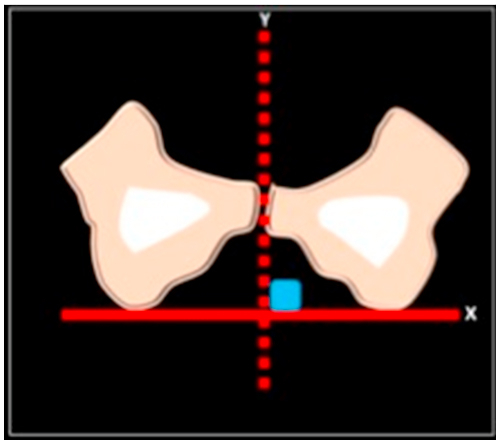
Introduction: The posterior compartment of the thigh is composed of three major muscles collectively known as the hamstring muscles. These consist of the biceps femoris short and long head, semimembranosus and semitendinosus. Excluding the short head of biceps femoris, the hamstrings contribute to the movement of the hip and the knee joints as they span across both joints. Our hypothesis is that the nature of the conjoint tendon -ischial angle predisposes to an increased risk of tearing in this hamstring component. We therefore aim to look at the anatomy of the hamstring origin at the ischial tuberosity and spatial relationship between the long head of biceps, semitendinosus and semimembranosus in the form of vector angles.
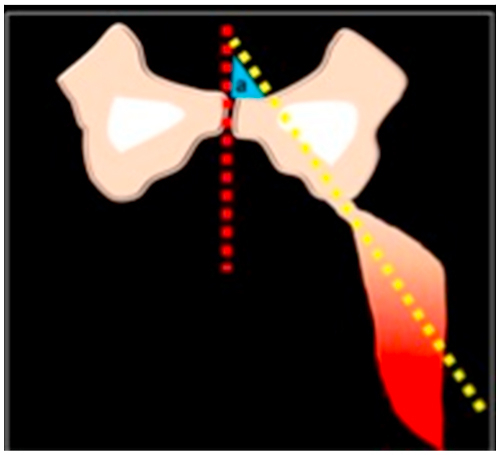
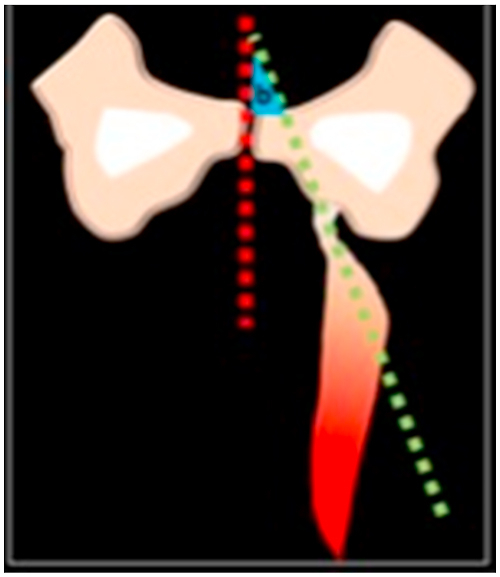
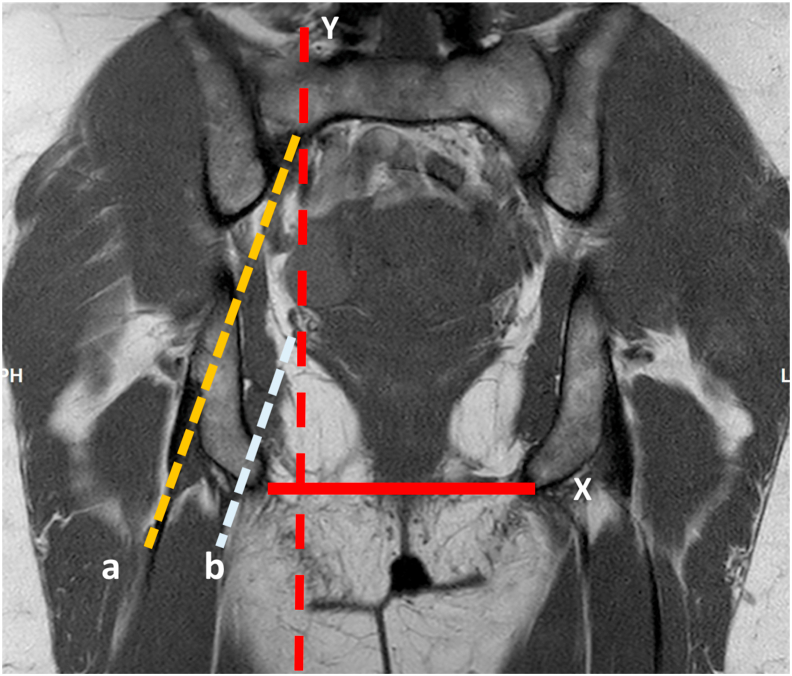
Material and methods: 100 consecutive pelvic MRIs in patients under the age of 40 years were reviewed by musculoskeletal radiology fellow and a consultant musculoskeletal radiologist with more than 10 years' experience in musculoskeletal radiology and measured the angle of origin of conjoined tendon and semimembranosus at its ischial origin. P value using a paired t-test was less than 0.0001 confirming that the difference in the vector angle of the different hamstring components was statistically significant.
Results: The median angle of origin of conjoined tendon was 12° and for semimembranosus was 6°. Applying the concept of Newton's second law to the angles calculated we demonstrated that an increase of 9% force applied to the conjoint tendon origin when compared to the semimembranosus tendon.
Conclusion: We hypothesis that the difference in the angle of origin of the components of hamstrings might be one of the reasons for the difference in the incidence and patterns of the injuries of the various muscles of the hamstrings.
Keywords: Conjoint tendon; Hamstrings; Semimembranosus; Vector angle.
© 2020 Delhi Orthopedic Association. All rights reserved.
Figures
References
-
- Vaughn J.E., Cohen-Levy W.B. Anatomy, bony pelvis and lower limb, posterior thigh muscles. StatPearls. 2019 Treasure Island (FL): StatPearls Publishing; May 20. - PubMed
-
- Battermann N., Appell H.J., Dargel J., Koebke J. An anatomical study of the proximal hamstring muscle complex to elucidate muscle strains in this region. Int J Sports Med. 2011;32(3):211–215. - PubMed
LinkOut - more resources
Full Text Sources
Other Literature Sources