


Fermentation, Purification, and Tumor Inhibition of a Disulfide-Stabilized Diabody Against Fibroblast Growth Factor-2
- PMID: 33718141
- PMCID: PMC7947002
- DOI: 10.3389/fonc.2021.585457
Fermentation, Purification, and Tumor Inhibition of a Disulfide-Stabilized Diabody Against Fibroblast Growth Factor-2
Abstract
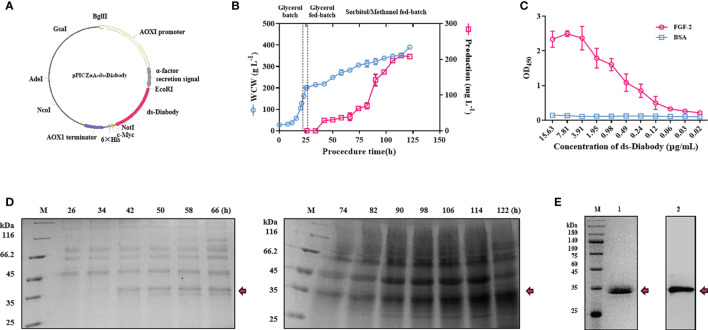
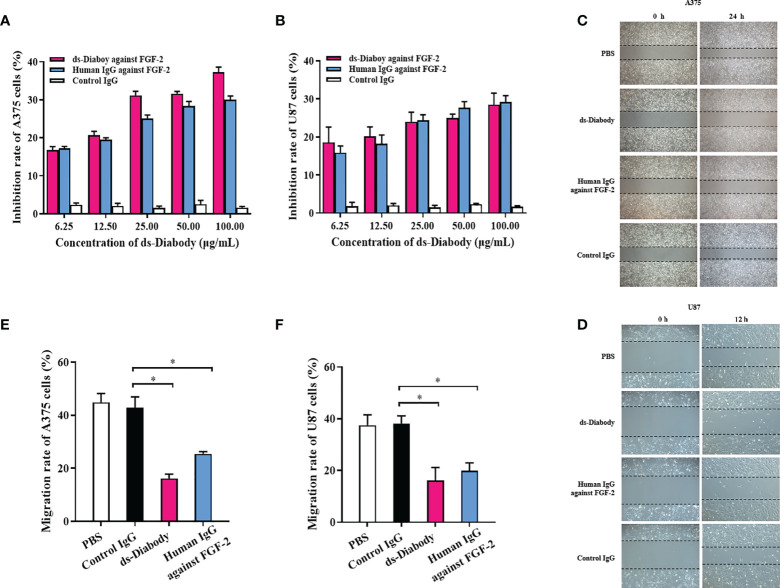
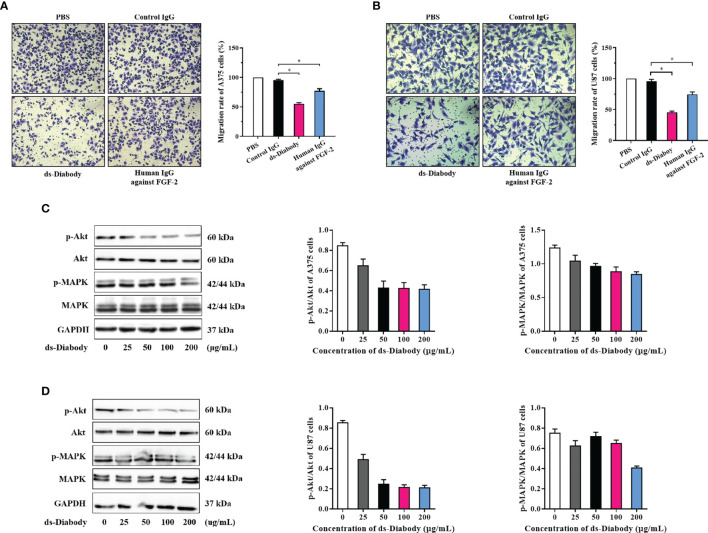
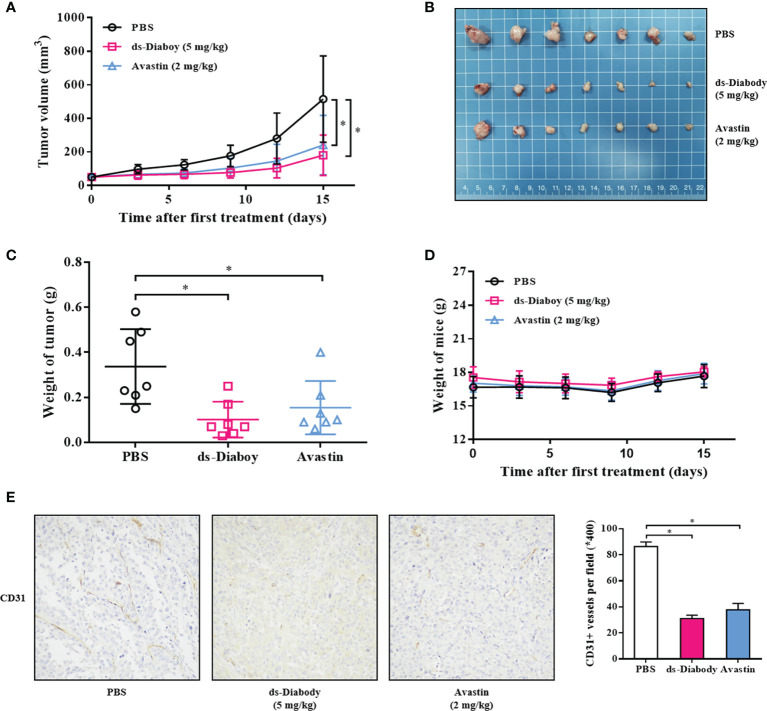
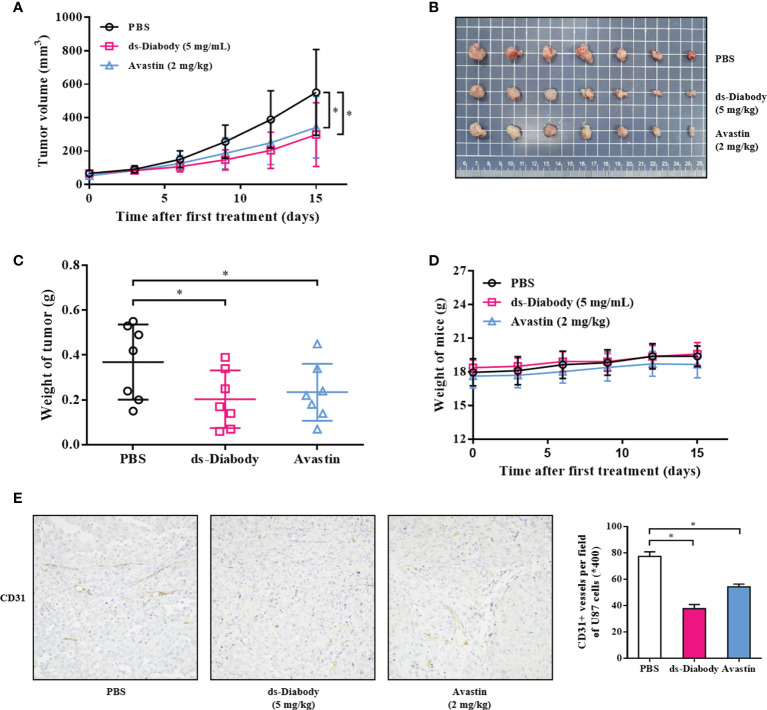
Angiogenesis is considered one of the hallmarks of cancer and plays a critical role in the development of tumor. Fibroblast growth factor 2 (FGF-2) is a member of the FGF family and participates in excessive cancer cell proliferation and tumor angiogenesis. Thus, targeting FGF-2 was considered to be a promising anti-tumor strategy. A disulfide-stabilized diabody (ds-Diabody) against FGF-2 was produced in Pichia pastoris (GS115) by fermentation and the anti-tumor activity was analyzed. The novel 10-L fed batch fermentation with newly designed media was established, and the maximum production of the ds-Diabody against FGF-2 reached 210.4 mg/L. The ds-Diabody against FGF-2 was purified by Ni2+ affinity chromatography and DEAE anion exchange chromatography. The recombinant ds-Diabody against FGF-2 could effectively inhibit proliferation, migration, and invasion of melanoma and glioma tumor cells stimulated by FGF-2. Furthermore, xenograft tumor model assays showed that the ds-Diabody against FGF-2 had potent antitumor activity in nude mice by inhibiting tumor growth and angiogenesis. The tumor growth inhibition rate of melanoma and glioma was about 70 and 45%, respectively. The tumor angiogenesis inhibition rate of melanoma and glioma was about 64 and 51%, respectively. The results revealed that the recombinant ds-Diabody against FGF-2 may be a promising anti-tumor drug for cancer therapy.
Keywords: angiogenesis; disulfide-stabilized diabody; fibroblast growth factor 2; glioma cancer; melanoma cancer.
Copyright © 2021 Zhang, Huang, Zhang, Gu, Song, Cai, Zhong, Zhong, Deng, Zhu, Zhao and Deng.
Conflict of interest statement
The authors declare that the research was conducted in the absence of any commercial or financial relationships that could be construed as a potential conflict of interest.
Figures
References
LinkOut - more resources
Full Text Sources
Other Literature Sources
