


Hyperglycemia and Chemoresistance in Breast Cancer: From Cellular Mechanisms to Treatment Response
- PMID: 33718202
- PMCID: PMC7947364
- DOI: 10.3389/fonc.2021.628359
Hyperglycemia and Chemoresistance in Breast Cancer: From Cellular Mechanisms to Treatment Response
Abstract
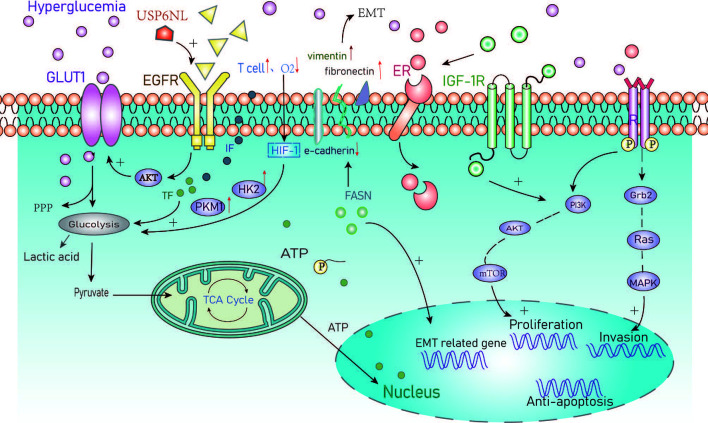
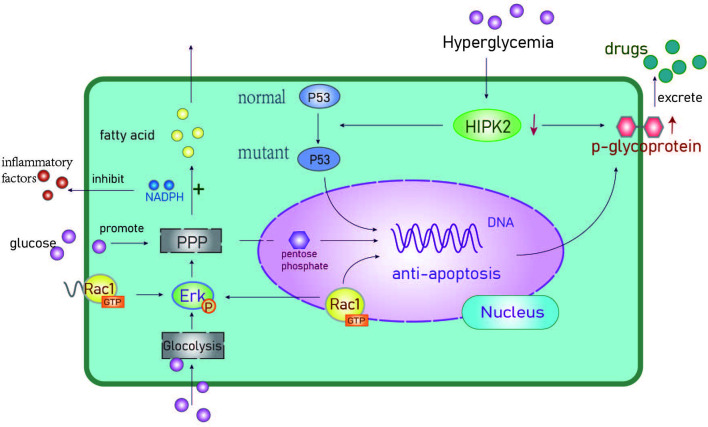
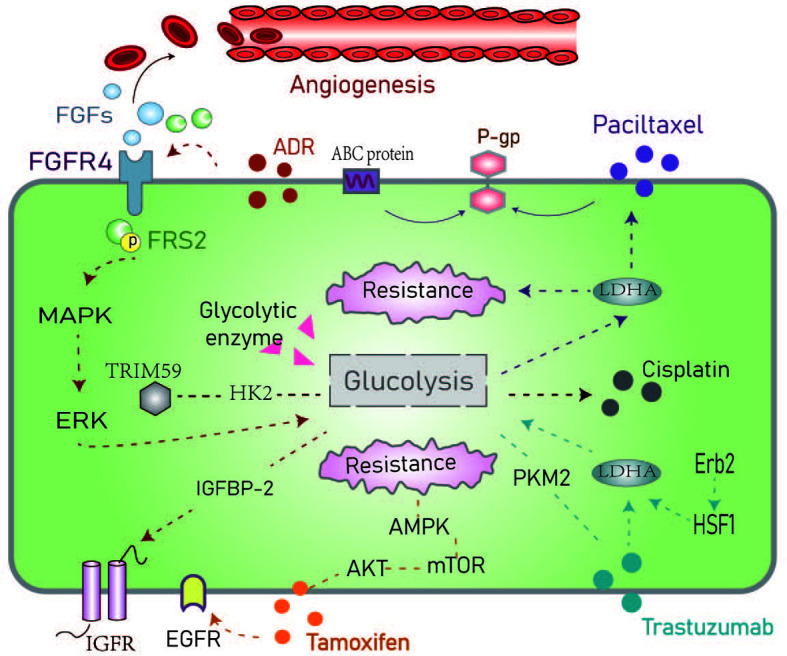
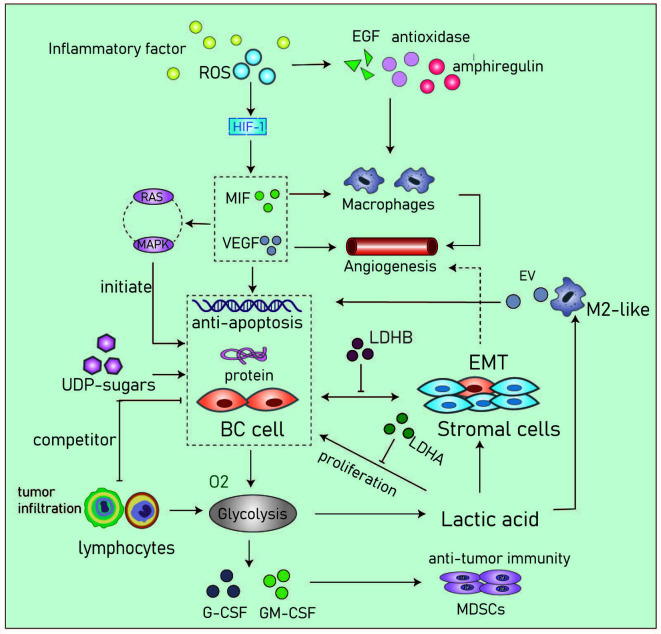
Female breast cancer is a complex, multifactorial disease. Studies have shown that hyperglycemia is one of the most important contributing factors to increasing the risk of breast cancer that also has a major impact on the efficacy of chemotherapy. At the cellular level, hyperglycemia can promote the proliferation, invasion, and migration of breast cancer cells and can also induce anti-apoptotic responses to enhance the chemoresistance of tumors via abnormal glucose metabolism. In this article, we focus on the latest progress in defining the mechanisms of chemotherapy resistance in hyperglycemic patients including the abnormal behaviors of cancer cells in the hyperglycemic microenvironment and the impact of abnormal glucose metabolism on key signaling pathways. To better understand the advantages and challenges of breast cancer treatments, we explore the causes of drug resistance in hyperglycemic patients that may help to better inform the development of effective treatments.
Keywords: breast cancer; chemoresistance; chemotherapy resistance; glucose metabolism; hyperglycemia.
Copyright © 2021 Qiu, Zheng and Meng.
Conflict of interest statement
The authors declare that the research was conducted in the absence of any commercial or financial relationships that could be construed as a potential conflict of interest.
Figures
References
Publication types
LinkOut - more resources
Full Text Sources
Other Literature Sources
