


Impact of Cryopreservation on Spermatozoa Freeze-Thawed Traits and Relevance OMICS to Assess Sperm Cryo-Tolerance in Farm Animals
- PMID: 33718466
- PMCID: PMC7947673
- DOI: 10.3389/fvets.2021.609180
Impact of Cryopreservation on Spermatozoa Freeze-Thawed Traits and Relevance OMICS to Assess Sperm Cryo-Tolerance in Farm Animals
Abstract
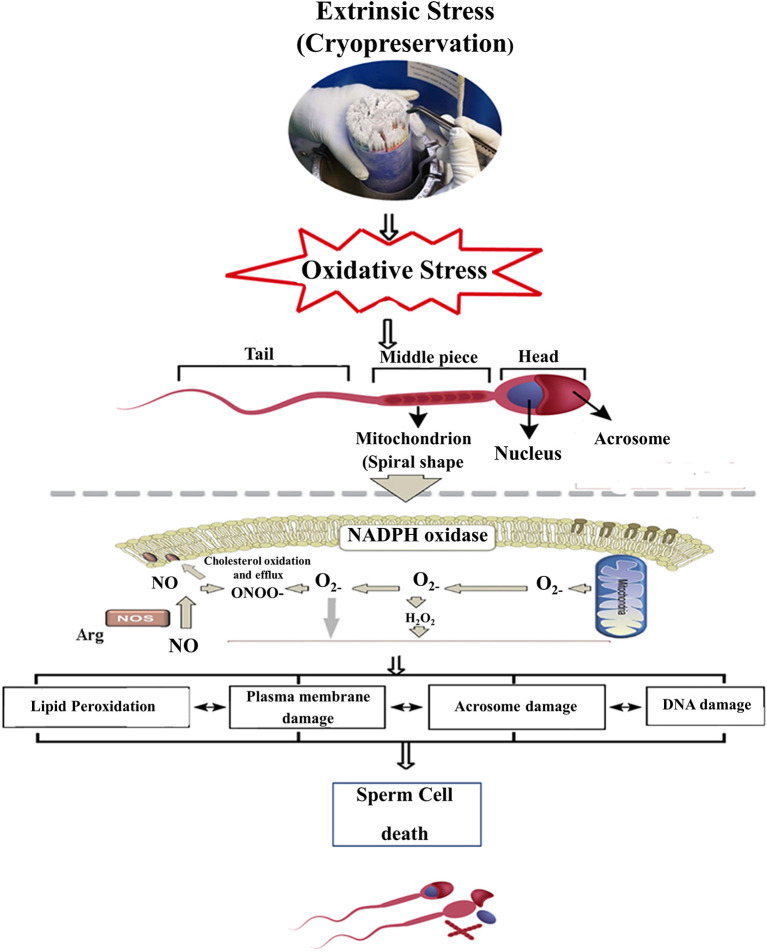
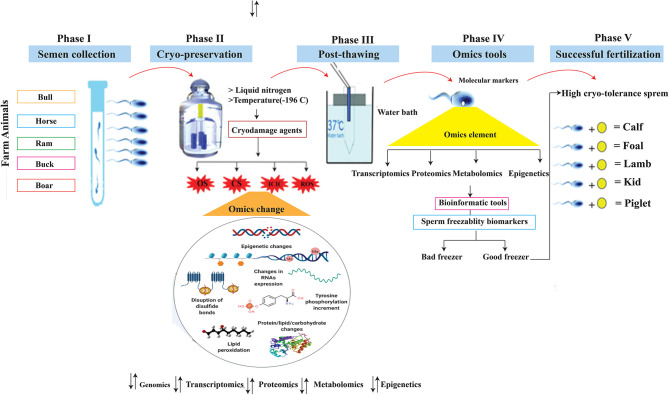
Sperm cryopreservation is a powerful tool for the livestock breeding program. Several technical attempts have been made to enhance the efficiency of spermatozoa cryopreservation in different farm animal species. However, it is well-recognized that mammalian spermatozoa are susceptible to cryo-injury caused by cryopreservation processes. Moreover, the factors leading to cryo-injuries are complicated, and the cryo-damage mechanism has not been methodically explained until now, which directly influences the quality of frozen-thawed spermatozoa. Currently, the various OMICS technologies in sperm cryo-biology have been conducted, particularly proteomics and transcriptomics studies. It has contributed while exploring the molecular alterations caused by cryopreservation, identification of various freezability markers and specific proteins that could be added to semen diluents before cryopreservation to improve sperm cryo-survival. Therefore, understanding the cryo-injury mechanism of spermatozoa is essential for the optimization of current cryopreservation processes. Recently, the application of newly-emerged proteomics and transcriptomics technologies to study the effects of cryopreservation on sperm is becoming a hotspot. This review detailed an updated overview of OMICS elements involved in sperm cryo-tolerance and freeze-thawed quality. While also detailed a mechanism of sperm cryo-injury and utilizing OMICS technology that assesses the sperm freezability potential biomarkers as well as the accurate classification between the excellent and poor freezer breeding candidate.
Keywords: cryo-injuries; cryo-tolerance fingerprints; functional traits; molecular tools; spermatozoa cryo-biology.
Copyright © 2021 Khan, Cao, Liu, Khan, Rahman, Khan, Sathanawongs and Zhang.
Conflict of interest statement
The authors declare that the research was conducted in the absence of any commercial or financial relationships that could be construed as a potential conflict of interest.
Figures
References
-
- Bailey J, Morrier A, Cormier N. Semen cryopreservation: successes and persistent problems in farm species. Can J Anim Sci. (2003) 83:393–401. 10.4141/A03-024 - DOI
Publication types
LinkOut - more resources
Full Text Sources
Other Literature Sources
