


Colchicine treatment can improve outcomes of coronavirus disease 2019 (COVID-19): A systematic review and meta-analysis
- PMID: 33719081
- PMCID: PMC8250626
- DOI: 10.1111/1440-1681.13488
Colchicine treatment can improve outcomes of coronavirus disease 2019 (COVID-19): A systematic review and meta-analysis
Abstract
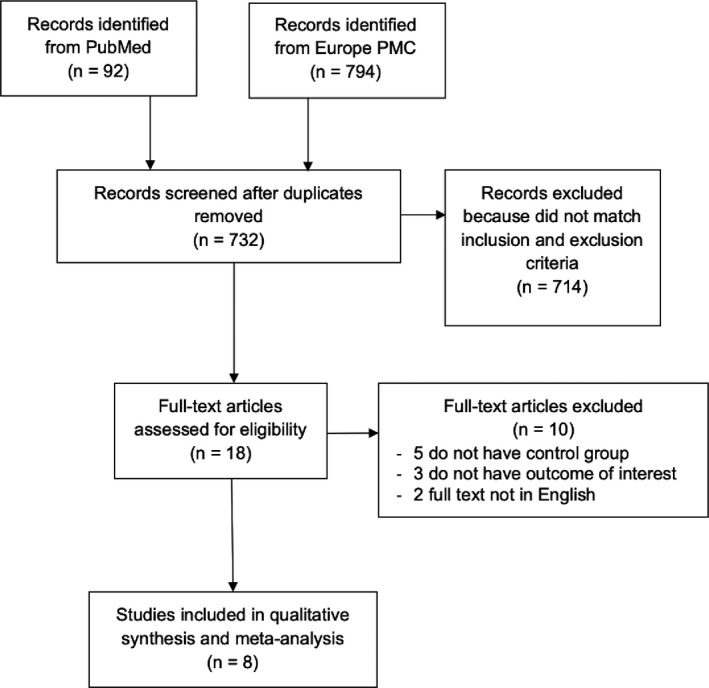
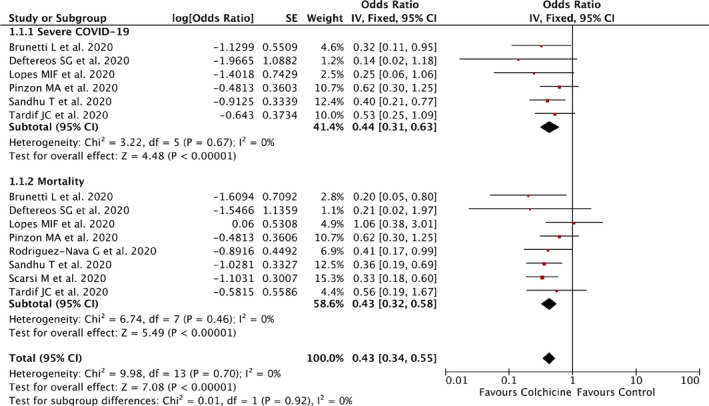
Currently, there is no widely acceptable and proven effective treatment for coronavirus disease 2019 (COVID-19). Colchicine has been shown to offer a benefit in reducing the inflammation in several inflammatory diseases. This study aims to analyze the efficacy of colchicine administration and outcomes of COVID-19. We systematically searched the PubMed and Europe PMC database using specific keywords related to our aims until January 29, 2021. All articles published on COVID-19 and colchicine treatment were retrieved. The quality of the study was assessed using the Newcastle-Ottawa Scale (NOS) tool for observational studies and Revised Cochrane risk-of-bias tool for randomized trials (RoB 2) for clinical trial studies. Statistical analysis was done using Review Manager 5.4 software. A total of eight studies with 5778 COVID-19 patients were included in this meta-analysis. This meta-analysis showed that the administration of colchicine was associated with improvement of outcomes of COVID-19 [OR 0.43 (95% CI 0.34-0.55), p < 0.00001, I2 = 0%, fixed-effect modelling] and its subgroup which comprised of reduction from severe COVID-19 [OR 0.44 (95% CI 0.31-0.63), p < 0.00001, I2 = 0%, fixed-effect modelling] and reduction of mortality rate from COVID-19 [OR 0.43 (95% CI 0.32-0.58), p < 0.00001, I2 = 0%, fixed-effect modelling]. Our study suggests the routine use of colchicine for treatment modalities of COVID-19 patients. More randomized clinical trial studies are still needed to confirm the results from this study.
Keywords: colchicine; coronavirus disease 2019; immune therapy; treatment.
© 2021 John Wiley & Sons Australia, Ltd.
Conflict of interest statement
None.
Figures
References
-
- World Health Organization . Coronavirus disease (COVID‐19): situation report. https://www.who.int/publications/m/item/weekly‐epidemiological‐update
Publication types
MeSH terms
Substances
LinkOut - more resources
Full Text Sources
Other Literature Sources
Medical
