


Relationships Between Chronic Pain Stage, Cognition, Temporal Lobe Cortex, and Sociodemographic Variables
- PMID: 33720889
- PMCID: PMC8170589
- DOI: 10.3233/JAD-201345
Relationships Between Chronic Pain Stage, Cognition, Temporal Lobe Cortex, and Sociodemographic Variables
Abstract
Background: Non-Hispanic black (NHB) individuals have increased risk of Alzheimer's disease (AD) relative to non-Hispanic whites (NHW). Ethnicity/race can serve as a proxy sociodemographic variable for a complex representation of sociocultural and environmental factors. Chronic pain is a form of stress with high prevalence and sociodemographic disparities. Chronic pain is linked to lower cognition and accelerated biological aging.
Objective: The purpose of this study is to seek understanding of potential cognitive and temporal lobe structural brain AD vulnerabilities based on chronic pain stage and ethnicity/race.
Methods: Participants included 147 community dwelling NHB and NHW adults without dementia between 45-85 years old who had or were at risk of knee osteoarthritis. All participants received an MRI (3T Philips), the Montreal Cognitive Assessment (MoCA), and assessment of clinical knee pain stage.
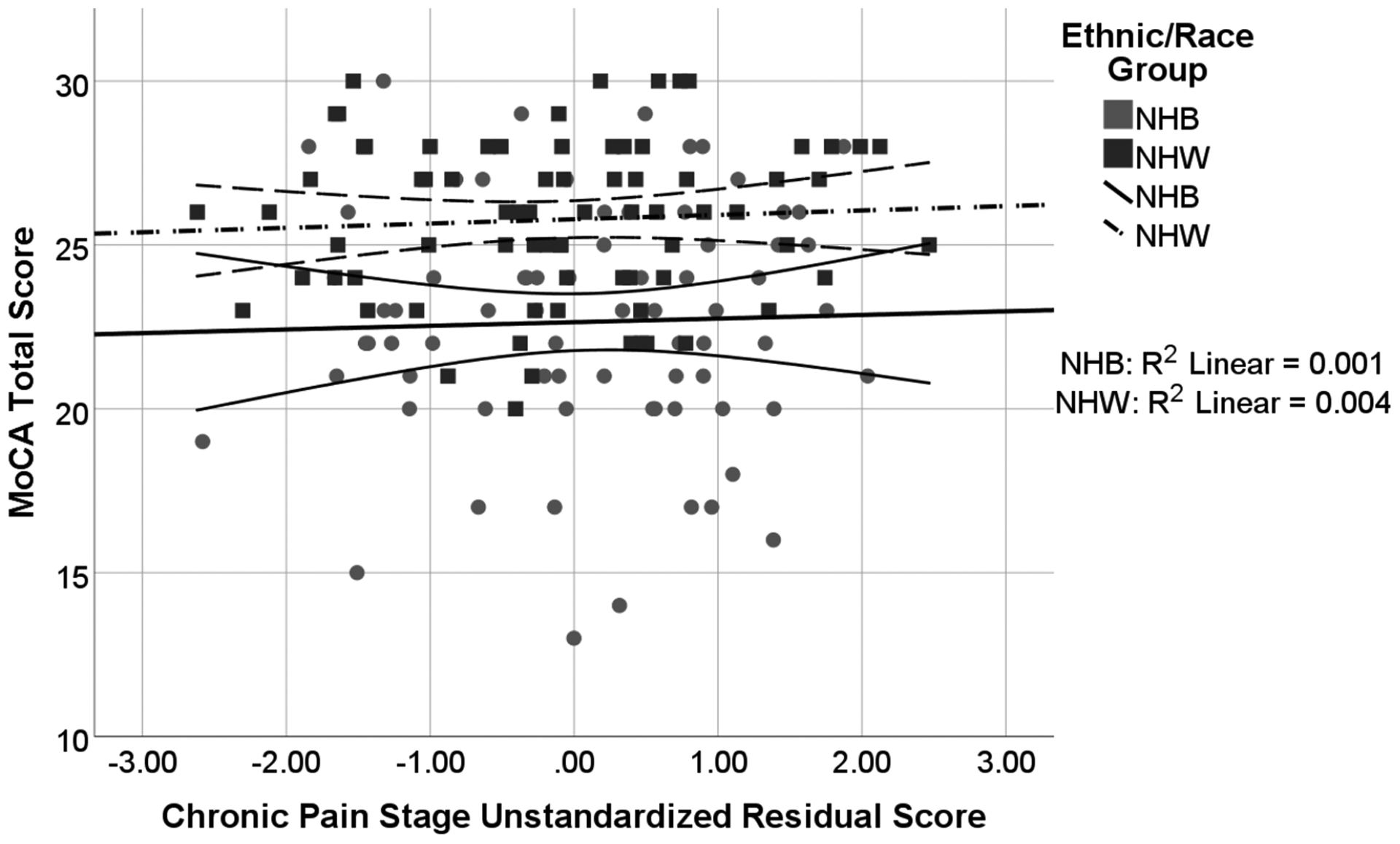
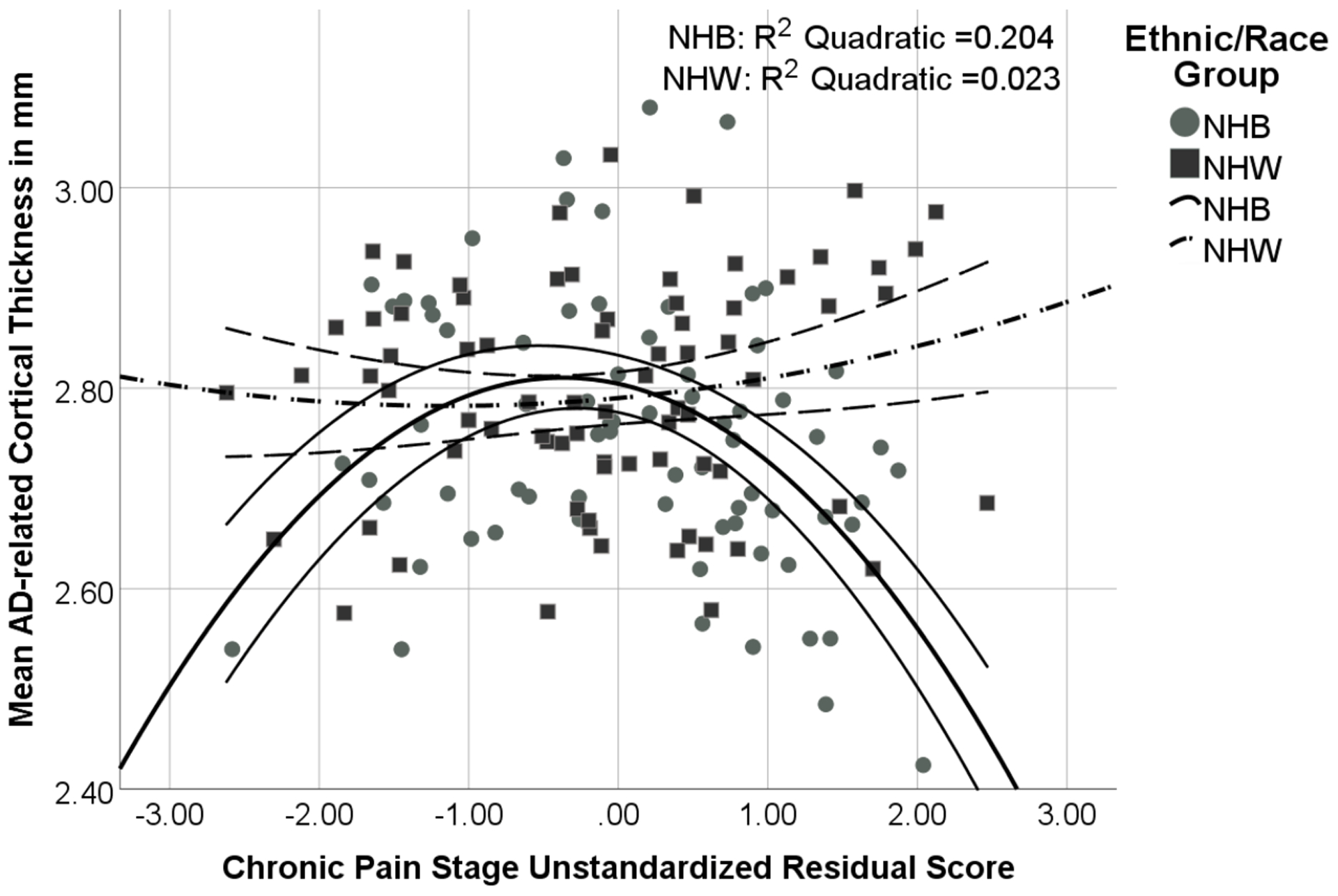
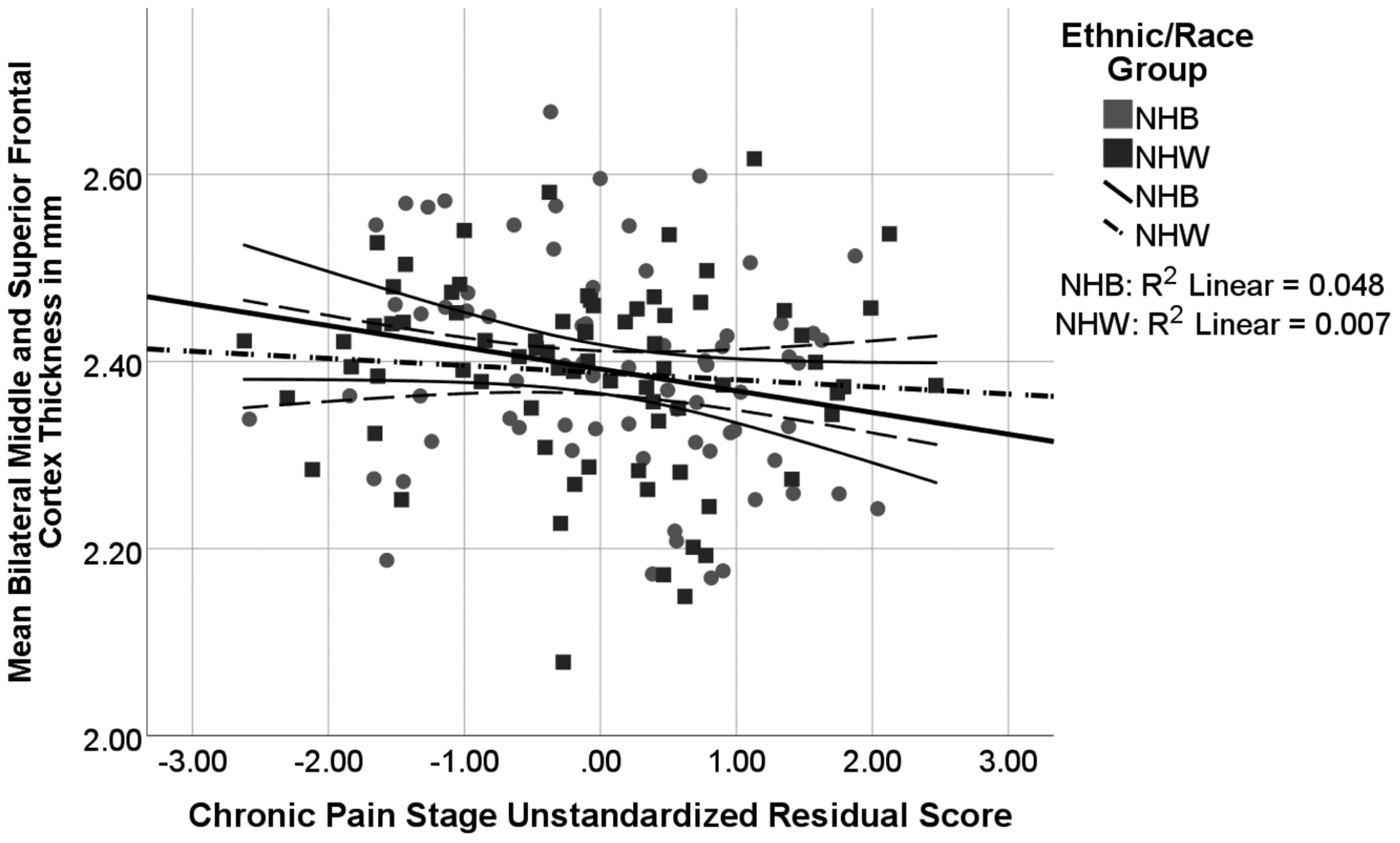
Results: There were ethnic/race group differences in MoCA scores but no relationships with chronic knee pain stage. Ethnicity/race moderated the relationship between AD-related temporal lobe thickness and chronic pain stage with quadratic patterns suggesting thinner cortex in high chronic pain stage NHB adults.
Conclusion: There appear to be complex relationships between chronic knee pain stage, temporal lobe cortex, and sociodemographic variables. Specifically, NHB participants without dementia but with high chronic knee pain stage appeared to have thinner temporal cortex in areas associated with AD. Understanding the effects of sociocultural and socioeconomic factors on health outcomes is the first step to challenging the disparities in healthcare that now appear to link disease conditions to neurodegenerative processes.
Keywords: Alzheimer’s disease; chronic pain; ethnic groups; magnetic resonance imaging; race factors; risk factors; socioeconomic factors; temporal lobe.
Conflict of interest statement
COMPETING INTERESTS
The authors have no conflicts of interest to report.
Figures
References
-
- Mehta KM, Yeo GW (2017) Systematic review of dementia prevalence and incidence in United States race/ethnic populations. Alzheimers Dement 13, 72–83. - PubMed
Publication types
MeSH terms
Grants and funding
LinkOut - more resources
Full Text Sources
Other Literature Sources
Medical
