


Trace mineral supplies for populations of little and large herbivores
- PMID: 33720946
- PMCID: PMC7959371
- DOI: 10.1371/journal.pone.0248204
Trace mineral supplies for populations of little and large herbivores
Abstract
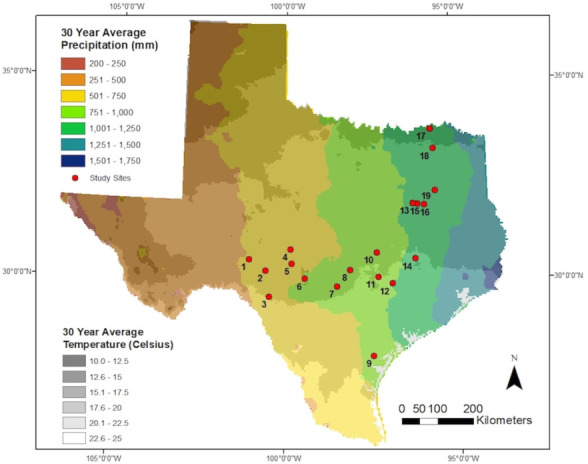
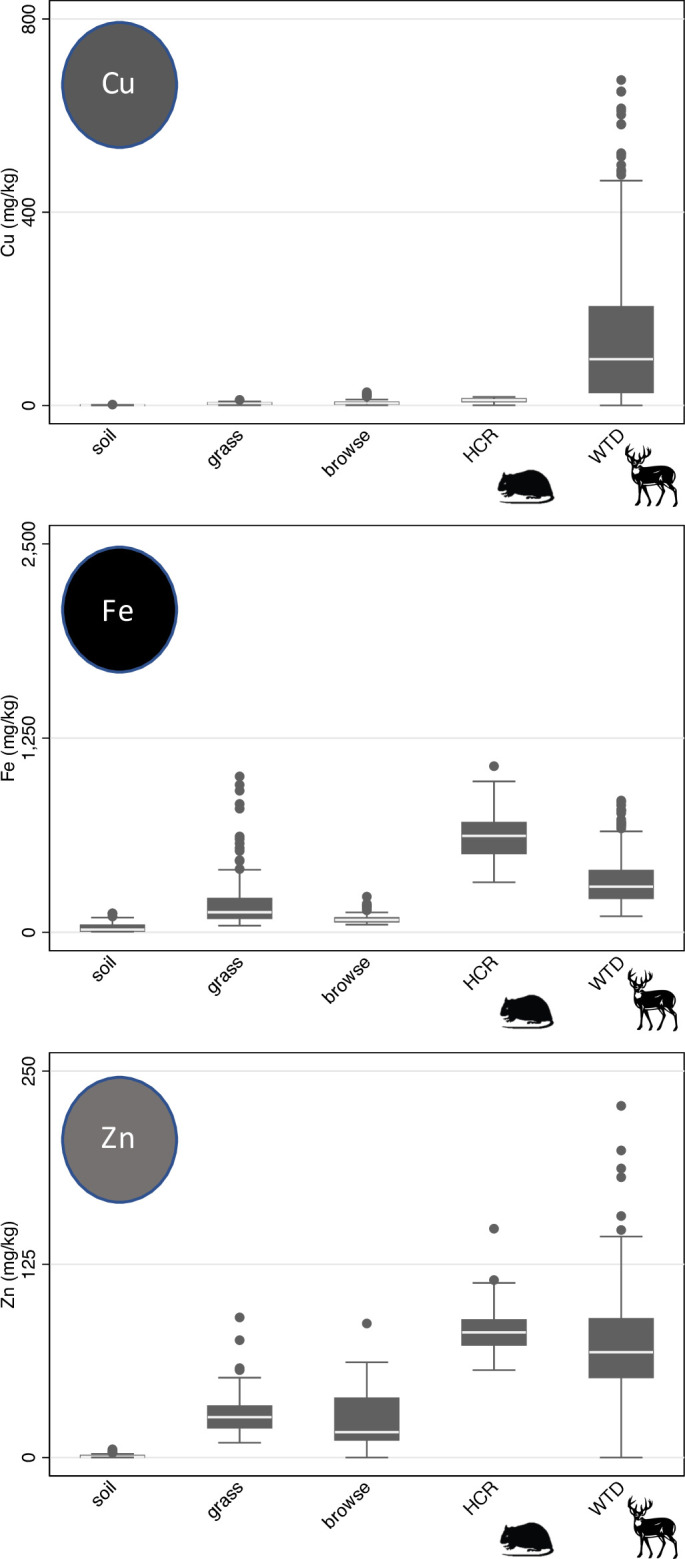
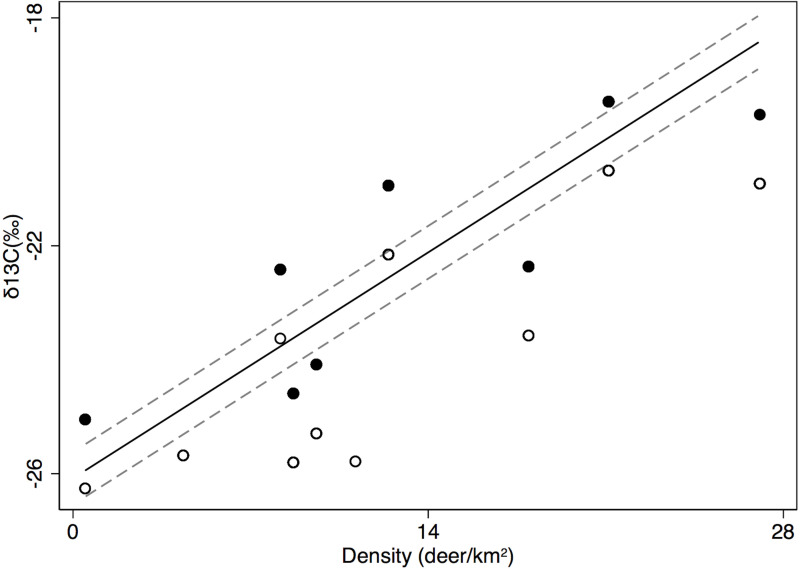
Copper (Cu), iron (Fe), and zinc (Zn) are essential trace minerals for the reproduction, growth, and immunity of mammalian herbivore populations. We examined the relationships between Cu, Fe, and Zn in soils, common plants, and hepatic stores of two wild herbivores to assess the effects of weather, sex, and population density on the transfer of trace minerals from soils to mammals during the growing season. Soils, grasses, woody browse, hispid cotton rats (Sigmodon hispidus), and white-tailed deer (Odocoileus virginianus) were sampled across 19 sites. Concentrations of Cu, Fe, and Zn in grasses and browse species were not correlated with concentrations of those minerals in soils sampled from the same areas. Leaves of woody browse were higher in Cu, lower in Fe, and similar in Zn when compared with grasses. Available concentrations of soils were positively related to liver Cu and Zn in hispid cotton rats, which was consistent with the short lives and high productivity of these small mammals that rely on grass seed heads. Interactions between soil concentrations and weather also affected liver Cu and Fe in deer, which reflected the greater complexity of trophic transfers in large, long-lived, browsing herbivores. Population density was correlated with liver concentrations of Cu, Fe, and Zn in hispid cotton rats, and concentrations of Cu and Fe in deer. Liver Cu was < 5 mg/kg wet weight in at least 5% of animals at two of eight sites for hispid cotton rats and < 3.8 mg/kg wet weight in at least 5% of animals at three of 12 sites for deer, which could indicate regional limitation of Cu for populations of mammalian herbivores. Our data indicate that supplies of trace minerals may contribute to density dependence of herbivore populations. Local population density may therefore influence the prevalence of deficiency states and disease outbreak that exacerbate population cycles in wild mammals.
Conflict of interest statement
The authors have declared that no competing interests exist.
Figures
References
-
- Barboza PS, Parker KL, Hume ID. Integrative wildlife nutrition. Germany: Springer-Verlag Berlin Heidelberg; 2008.
-
- Chandra RK, Dayton DH. Trace element regulation of immunity and infection. Nutr Res. 1982;2(6): 721–733.
-
- Fraser CM. The Merck veterinary manual: a handbook of diagnosis, therapy, and disease prevention and control for the veterinarian. 9th ed. Whitehouse Station (NJ): Merck & Co Inc; 1991.
-
- Hnilicka P, Mionczynski J, Mincher B, Hinschberger M, Oberlie S, Thompson C, et al. Bighorn sheep lamb survival, trace minerals, rainfall and air pollution: are there any connections. In: Brundige GC, editor. Proceedings of the Thirteenth Biennial Symposium of the Northern Wild Sheep and Goat Council; 2002 Apr 23–27; Rapid City, South Dakota. 2003. p. 69–94.
Publication types
MeSH terms
Substances
LinkOut - more resources
Full Text Sources
Other Literature Sources
Medical
