


Clinical and immunological effects of mRNA vaccines in malignant diseases
- PMID: 33722265
- PMCID: PMC7957288
- DOI: 10.1186/s12943-021-01339-1
Clinical and immunological effects of mRNA vaccines in malignant diseases
Abstract
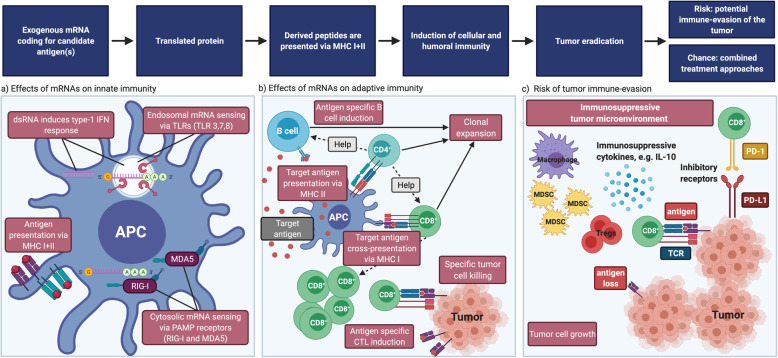
In vitro-transcribed messenger RNA-based therapeutics represent a relatively novel and highly efficient class of drugs. Several recently published studies emphasize the potential efficacy of mRNA vaccines in treating different types of malignant and infectious diseases where conventional vaccine strategies and platforms fail to elicit protective immune responses. mRNA vaccines have lately raised high interest as potent vaccines against SARS-CoV2. Direct application of mRNA or its electroporation into dendritic cells was shown to induce polyclonal CD4+ and CD8+ mediated antigen-specific T cell responses as well as the production of protective antibodies with the ability to eliminate transformed or infected cells. More importantly, the vaccine composition may include two or more mRNAs coding for different proteins or long peptides. This enables the induction of polyclonal immune responses against a broad variety of epitopes within the encoded antigens that are presented on various MHC complexes, thus avoiding the restriction to a certain HLA molecule or possible immune escape due to antigen-loss. The development and design of mRNA therapies was recently boosted by several critical innovations including the development of technologies for the production and delivery of high quality and stable mRNA. Several technical obstacles such as stability, delivery and immunogenicity were addressed in the past and gradually solved in the recent years.This review will summarize the most recent technological developments and application of mRNA vaccines in clinical trials and discusses the results, challenges and future directions with a special focus on the induced innate and adaptive immune responses.
Keywords: B cells; COVID19; Cancer; Immune response; T cells; Tumor-associated antigen; mRNA vaccine.
Conflict of interest statement
The authors declare that they have no competing interests.
Figures
References
-
- Hannah Ritchie and Max Roser. Causes of Death - Our World in Data. . Available from: https://ourworldindata.org/causes-of-death. [cited 2020 Dec 1].
Publication types
MeSH terms
Substances
LinkOut - more resources
Full Text Sources
Other Literature Sources
Medical
Research Materials
Miscellaneous
