Variation in Calculating and Reporting Antimalarial Efficacy against Plasmodium falciparum in Sub-Saharan Africa: A Systematic Review of Published Reports
- PMID: 33724925
- PMCID: PMC8103451
- DOI: 10.4269/ajtmh.20-1481
Variation in Calculating and Reporting Antimalarial Efficacy against Plasmodium falciparum in Sub-Saharan Africa: A Systematic Review of Published Reports
Abstract
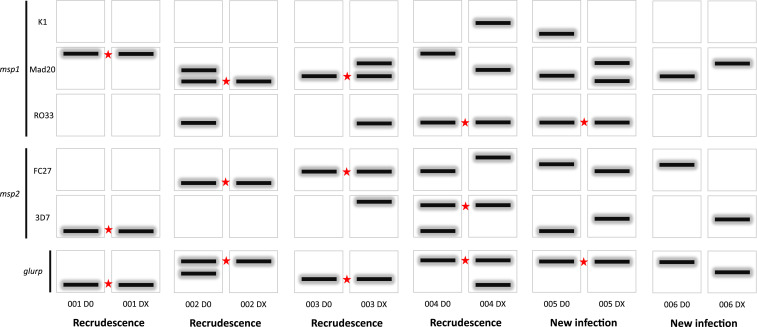
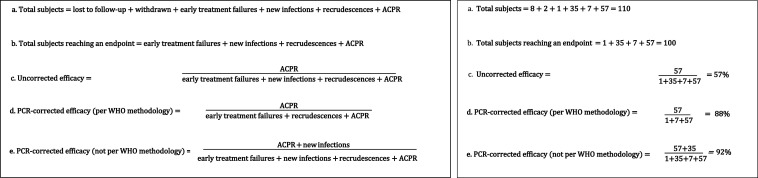
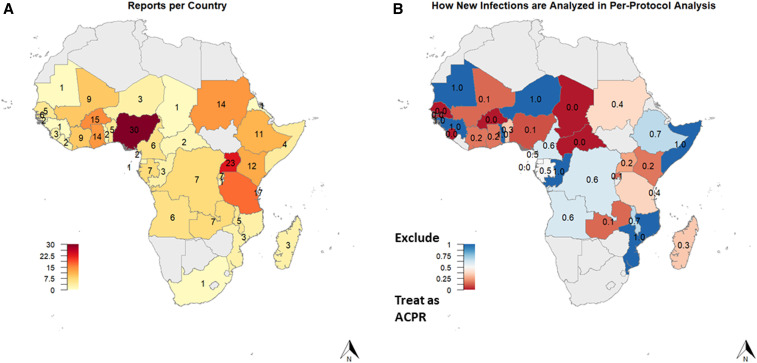
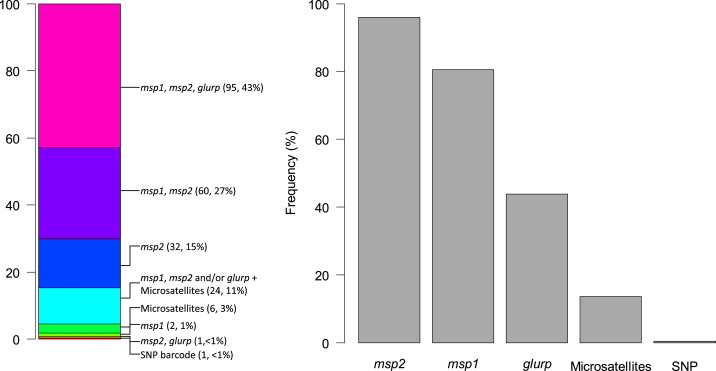
Antimalarials, in particular artemisinin-based combination therapies (ACTs), are critical tools in reducing the global burden of malaria, which is concentrated in sub-Saharan Africa. Performing and reporting antimalarial efficacy studies in a transparent and standardized fashion permit comparison of efficacy outcomes across countries and time periods. This systematic review summarizes study compliance with WHO laboratory and reporting guidance pertaining to antimalarial therapeutic efficacy studies and evaluates how well studies from sub-Saharan Africa adhered to these guidelines. We included all published studies (January 2020 or before) performed in sub-Saharan Africa where ACT efficacy for treatment of uncomplicated Plasmodium falciparum infection was reported. The primary outcome was a composite indicator for study methodology consistent with WHO guidelines for statistical analysis of corrected efficacy, defined as an article presenting a Kaplan-Meier survival analysis of corrected efficacy or reporting a per-protocol analysis where new infections were excluded from the numerator and denominator. Of 581 articles screened, we identified 279 for the review. Molecular correction was used in 83% (232/279) to distinguish new infections from recrudescences in subjects experiencing recurrent parasitemia. Only 45% (99/221) of articles with therapeutic efficacy as a primary outcome and performing molecular correction reported corrected efficacy outcomes calculated in a way consistent with WHO recommendations. These results indicate a widespread lack of compliance with WHO-recommended methods of analysis, which may result in biases in how antimalarial effectiveness is being measured and reported from sub-Saharan Africa.
Conflict of interest statement
Disclaimer: The findings and conclusions in this report are those of the authors and do not necessarily represent the official position of the Centers for Disease Control and Prevention or the U.S. Agency for International Development.
Disclosure: M. M. P., L. F. M., M. V., and E. S. H. were supported by the U.S. President’s Malaria Initiative.
Figures
References
-
- WHO , 2003. Assessment and Monitoring of Antimalarial Drug Efficacy for the Treatment of Uncomplicated Falciparum Malaria. Geneva, Switzerland: World Health Organization.
-
- WHO , 2009. Methods for Surveillance of Antimalarial Drug Efficacy. Geneva, Switzerland: World Health Organization.
-
- Abukari Z, Okonu R, Nyarko SB, Lo AC, Dieng CC, Salifu SP, Gyan BA, Lo E, Amoah LE, 2019. The diversity, multiplicity of infection and population structure of P. falciparum parasites circulating in asymptomatic carriers living in high and low malaria transmission settings of Ghana. Genes 10: 434. - PMC - PubMed
Publication types
MeSH terms
Substances
LinkOut - more resources
Full Text Sources
Other Literature Sources