


Adolescent intermittent ethanol exposure induces sex-dependent divergent changes in ethanol drinking and motor activity in adulthood in C57BL/6J mice
- PMID: 33725399
- PMCID: PMC8957701
- DOI: 10.1002/jnr.24814
Adolescent intermittent ethanol exposure induces sex-dependent divergent changes in ethanol drinking and motor activity in adulthood in C57BL/6J mice
Abstract
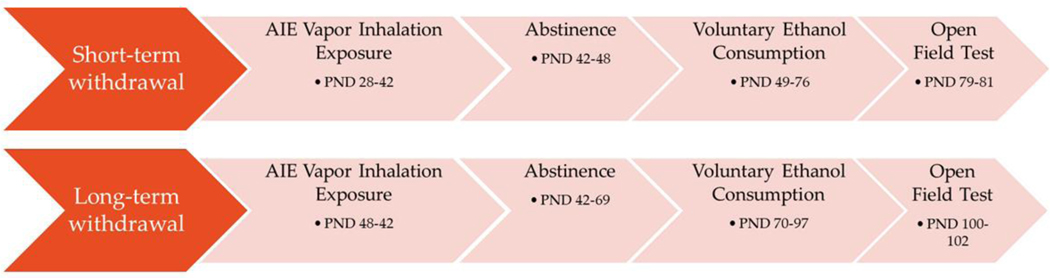
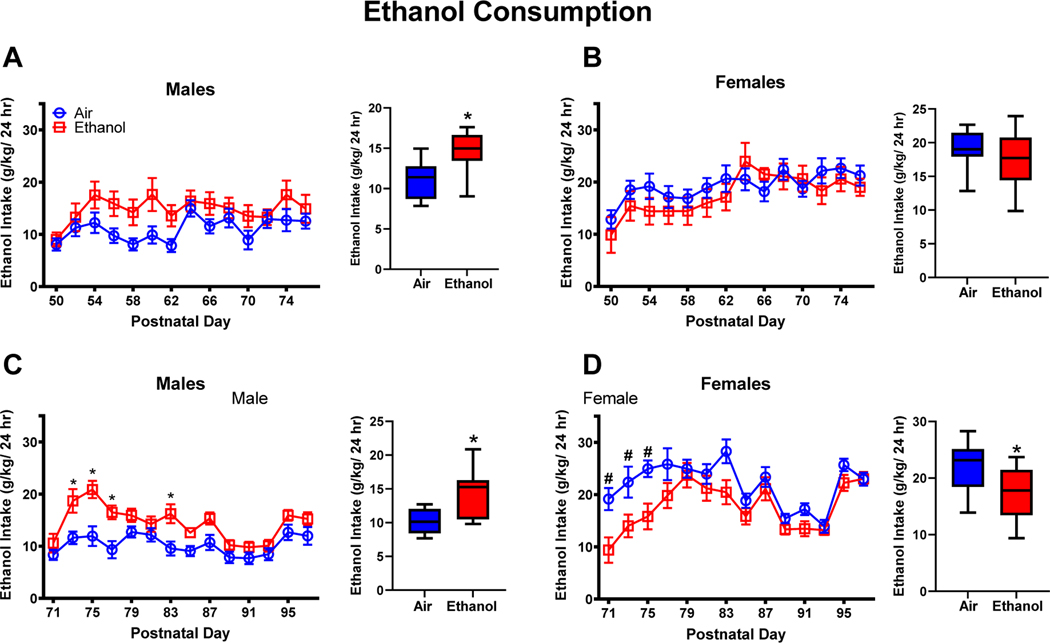
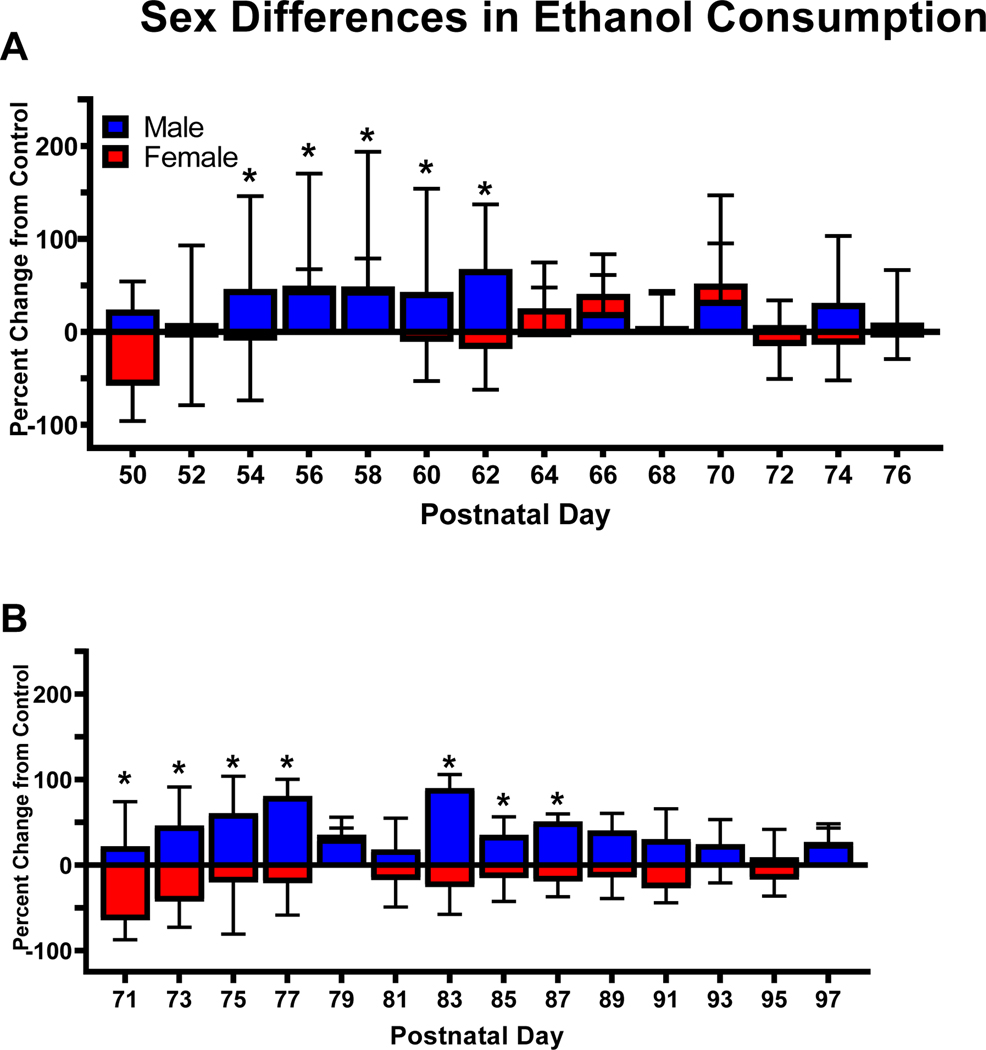
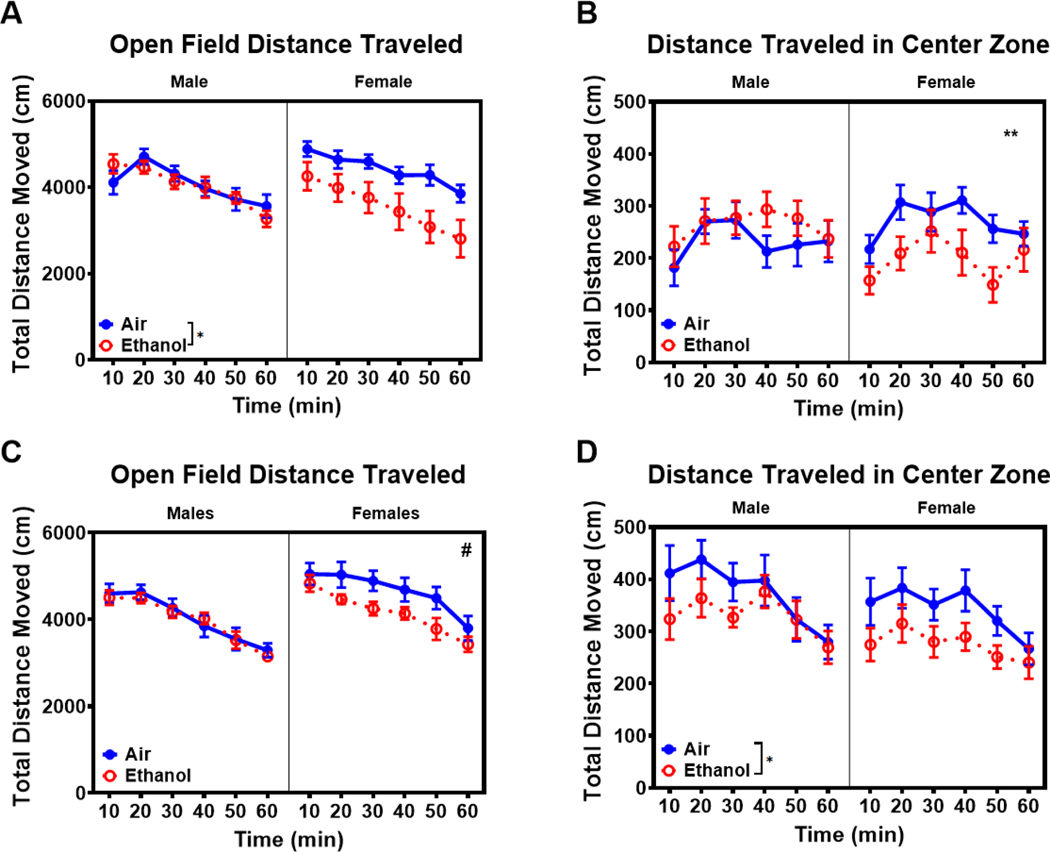
With alcohol readily accessible to adolescents, its consumption leads to many adverse effects, including impaired learning, attention, and behavior. Adolescents report higher rates of binge drinking compared to adults. They are also more prone to substance use disorder in adulthood due to physiological changes during the adolescent developmental period. We used C57BL/6J male and female mice to investigate the long-lasting impact of binge ethanol exposure during adolescence on voluntary ethanol intake and open field behavior during later adolescence (Experiment 1) and during emerging adulthood (Experiment 2). The present set of experiments were divided into four stages: (1) adolescent intermittent vapor inhalation exposure, (2) abstinence, (3) voluntary ethanol intake, and (4) open field behavioral testing. During adolescence, male and female mice were exposed to air or ethanol using intermittent vapor inhalation from postnatal day (PND) 28-42. Following this, mice underwent short-term abstinence from PND 43-49 (Experiment 1) or protracted abstinence from PND 43-69 (Experiment 2). Beginning on PND 50-76 or PND 70-97, mice were assessed for intermittent voluntary ethanol consumption using a two-bottle choice drinking procedure over 28 days. Male adolescent ethanol-exposed mice showed increased ethanol consumption following short-term abstinence and following protracted abstinence. In contrast, female mice showed no changes in ethanol consumption following short-term abstinence and decreased ethanol consumption following protracted abstinence. There were modest changes in open field behavior following voluntary ethanol consumption in both experiments. These data demonstrate a sexually divergent shift in ethanol consumption following binge ethanol exposure during adolescence and differences in open field behavior. These results highlight sex-dependent vulnerability to developing substance use disorders in adulthood.
Keywords: AIE; adolescence; alcohol; dependence; development; mouse; sex differences.
© 2021 Wiley Periodicals LLC.
Conflict of interest statement
Conflict of Interest Statement: The authors declare no conflict of interest.
Figures
References
-
- Alaux-Cantin S, Warnault V, Legastelois R, Botia B, Pierrefiche O, Vilpoux C, Naassila M, 2013. Alcohol intoxications during adolescence increase motivation for alcohol in adult rats and induce neuroadaptations in the nucleus accumbens. Neuropharmacology 67, 521–531. 10.1016/j.neuropharm.2012.12.007 - DOI - PubMed
-
- Amodeo LR, Wills DN, Sanchez-Alavez M, Nguyen W, Conti B, Ehlers CL, 2018. Intermittent voluntary ethanol consumption combined with ethanol vapor exposure during adolescence increases drinking and alters other behaviors in adulthood in female and male rats. Alcohol 73, 57–66. 10.1016/j.alcohol.2018.04.003 - DOI - PMC - PubMed
Publication types
MeSH terms
Substances
Grants and funding
LinkOut - more resources
Full Text Sources
Other Literature Sources
Medical
