


Low excretor glutaric aciduria type 1 of insidious onset with dystonia and atypical clinical features, a diagnostic dilemma
- PMID: 33728242
- PMCID: PMC7932869
- DOI: 10.1002/jmd2.12187
Low excretor glutaric aciduria type 1 of insidious onset with dystonia and atypical clinical features, a diagnostic dilemma
Abstract
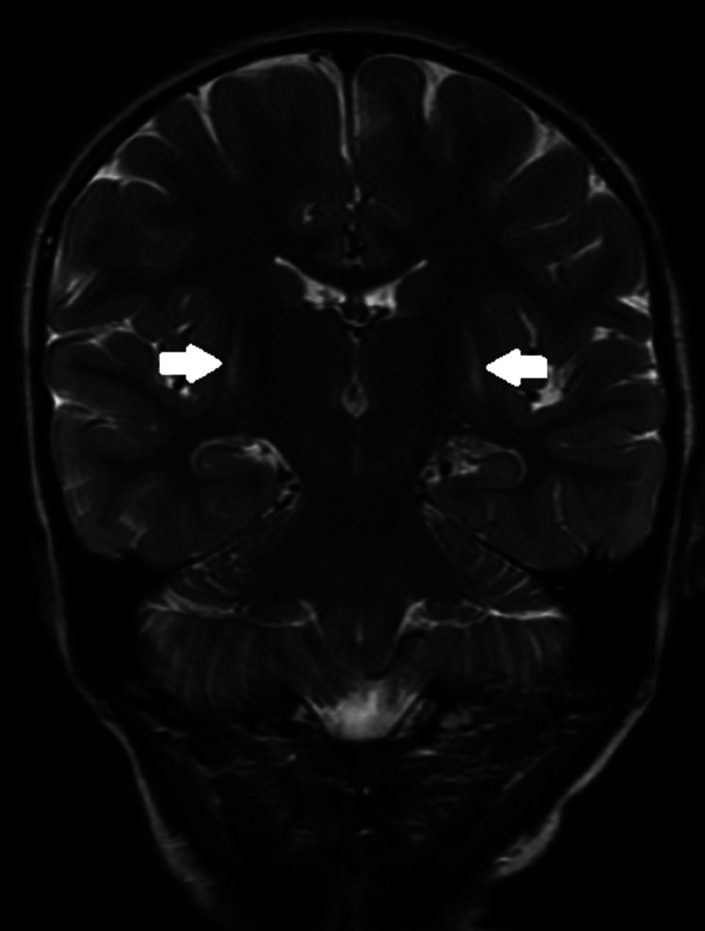
A 4-year-old girl was referred for reassessment of dyskinetic cerebral palsy. Initial investigations in her country of birth, India, had not yielded a diagnosis. MRI brain in infancy revealed bilateral putamen hyperintensity. She had generalized dyskinesia predominantly bulbar and limbs. Motor and speech development were most affected with preservation of cognitive development. There was no history of acute encephalopathic crisis or status dystonicus. Initial urine organic acids and amino acids and acylcarnitine profile (ACP) were normal. A dystonia genetic panel showed compound heterozygosity with a pathogenic variant and a variant of uncertain significance in the GCDH gene. The latter is hitherto undescribed and is indicative of a potential diagnosis of glutaric aciduria type 1 (alternatively glutaric acidemia type 1) (GA-1), an autosomal recessive disorder of mitochondrial lysine/hydroxylysine and tryptophan metabolism. Repeat urine organic acids showed isolated slightly increased 3-hydroxy glutarate excretion consistent with GA-1 and characterizing the patient as a "low excretor," a diagnostic sub-group where diagnosis is more challenging but prognosis is similar. Repeat MRI Brain at age 4 showed volume loss and symmetric T2 hyperintensity in the posterior putamina bilaterally. This case highlights the diagnostic dilemma of GA-1 where differing clinical courses, genetic variants, neuroradiological findings, and biochemical excretion patterns may lead to a later diagnosis. The presence of newborn screening for GA-1 should not dull the clinician's suspicion of the possibility that GA-1 may present with a complex movement disorder. Timely diagnosis and treatment is essential, as neurological sequelae are largely irreversible.
Keywords: dystonia; glutaric aciduria type 1; low excretor; organic acidurias.
© 2020 The Authors. JIMD Reports published by John Wiley & Sons Ltd on behalf of SSIEM.
Conflict of interest statement
The authors declare no conflict of interest.
Figures

References
-
- Schmiesing J, Lohmöller B, Schweizer M, et al. Disease‐causing mutations affecting surface residues of mitochondrial glutaryl‐CoA dehydrogenase impair stability, heteromeric complex formation and mitochondria architecture. Hum Mol Genet. 2017;26(3):538‐551. ddw411. 10.1093/hmg/ddw411. - DOI - PubMed
-
- Heringer J, Boy N, Burgard P, Okun JG, Kölker S. Newborn screening for glutaric aciduria type I: benefits and limitations. Int J Neonatal Screen. 2015;1:57‐68. 10.3390/ijns1020057. - DOI
Publication types
LinkOut - more resources
Full Text Sources
