


Self-assembled polymeric nanocarrier-mediated co-delivery of metformin and doxorubicin for melanoma therapy
- PMID: 33729072
- PMCID: PMC7996084
- DOI: 10.1080/10717544.2021.1898703
Self-assembled polymeric nanocarrier-mediated co-delivery of metformin and doxorubicin for melanoma therapy
Abstract
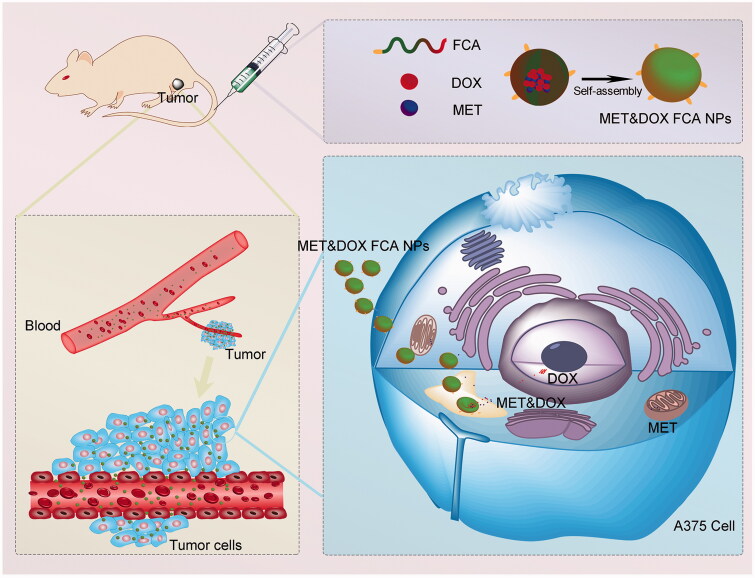
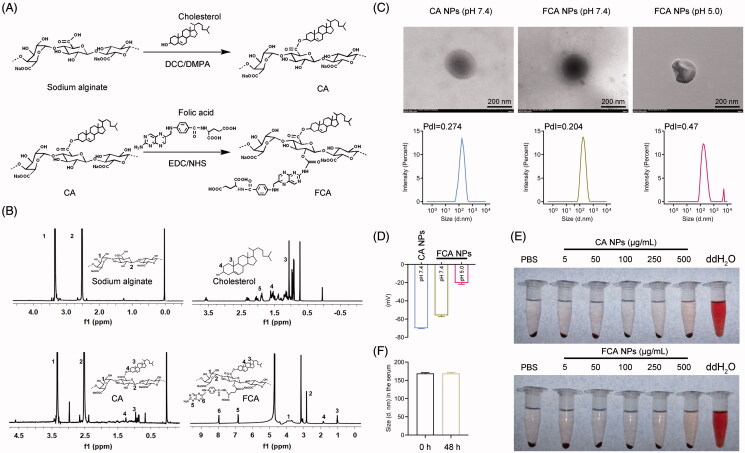
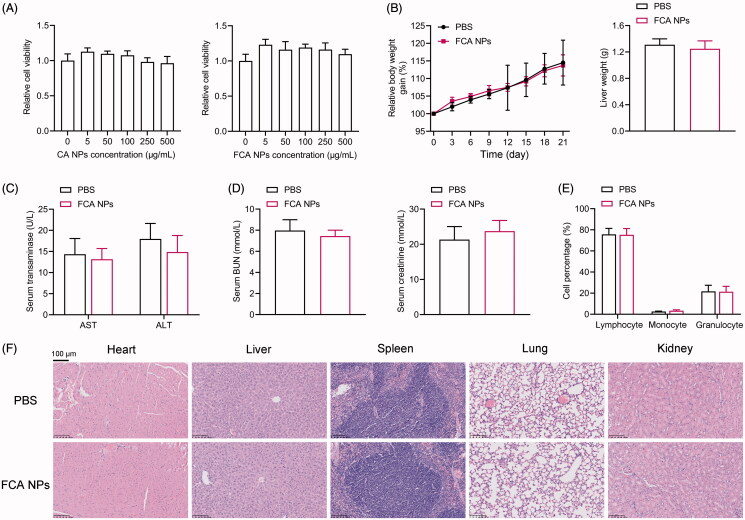
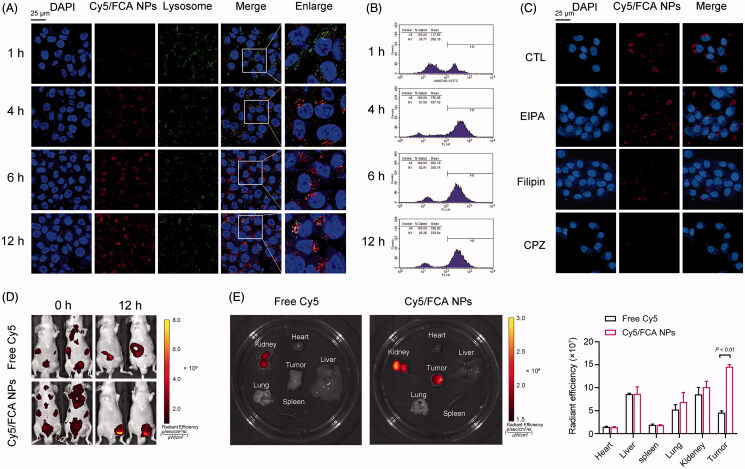
Malignant melanoma is a life-threatening form of skin cancer with a low response rate to single-agent chemotherapy. Although combined therapies of metformin (MET) and doxorubicin (DOX) are effective in treating a variety of cancers, including breast cancer, their different physicochemical properties and administration routines reduce the effective co-accumulation of both drugs in tumors. Nanoparticles (NPs) have been demonstrated to potentially improve drug delivery efficiency in cancer therapy of, for example, liver and lung cancers. Hence, in this study, we prepared pH-sensitive, biocompatible, tumor-targeting NPs based on the conjugation of biomaterials, including sodium alginate, cholesterol, and folic acid (FCA). As expected, since cholesterol and folic acid are two essentials, but insufficient, substrates for melanoma growth, we observed that the FCA NPs specifically and highly effectively accumulated in xenograft melanoma tumors. Taking advantage of the FCA NP system, we successfully co-delivered a combination of MET and DOX into melanoma tumors to trigger pyroptosis, apoptosis, and necroptosis (PANoptosis) of the melanoma cells, thus blocking melanoma progression. Combined, the establishment of such an FCA NP system provides a promising vector for effective drug delivery into melanoma and increases the possibility and efficiency of drug combinations for cancer treatment.
Keywords: Drug delivery; PANoptosis; combination therapy; doxorubicin; melanoma; metformin; nanoparticles.
Conflict of interest statement
The authors declare no conflict of interest regarding the publication of this paper.
Figures
References
-
- Bagheri S, Yasemi M, Safaie-Qamsari E, et al. (2018). Using gold nanoparticles in diagnosis and treatment of melanoma cancer, Artificial cells, nanomedicine. Artif Cells Nanomed Biotechnol 46:462–71. - PubMed
-
- Benyettou F, Das G, Nair A, et al. (2020). Covalent organic framework embedded with magnetic nanoparticles for MRI and chemo-thermotherapy. J Am Chem Soc 142:18782–94. - PubMed
-
- Cheng X, Li D, Sun M, et al. (2019). Co-delivery of DOX and PDTC by pH-sensitive nanoparticles to overcome multidrug resistance in breast cancer. Colloids Surf B Biointerfaces 181:185–97. - PubMed
MeSH terms
Substances
LinkOut - more resources
Full Text Sources
Other Literature Sources
Medical
Research Materials
Miscellaneous
