


Stakeholder perspectives on the implementation and impact of Indigenous health interventions: A systematic review of qualitative studies
- PMID: 33729648
- PMCID: PMC8235882
- DOI: 10.1111/hex.13230
Stakeholder perspectives on the implementation and impact of Indigenous health interventions: A systematic review of qualitative studies
Abstract
Background: Evaluations of health interventions for Indigenous peoples rarely report outcomes that reflect participant and community perspectives of their experiences. Inclusion of such data may provide a fuller picture of the impact of health programmes and improve the usefulness of evaluation assessments.
Aim: To describe stakeholder perspectives and experiences of the implementation and impact of Indigenous health programmes.
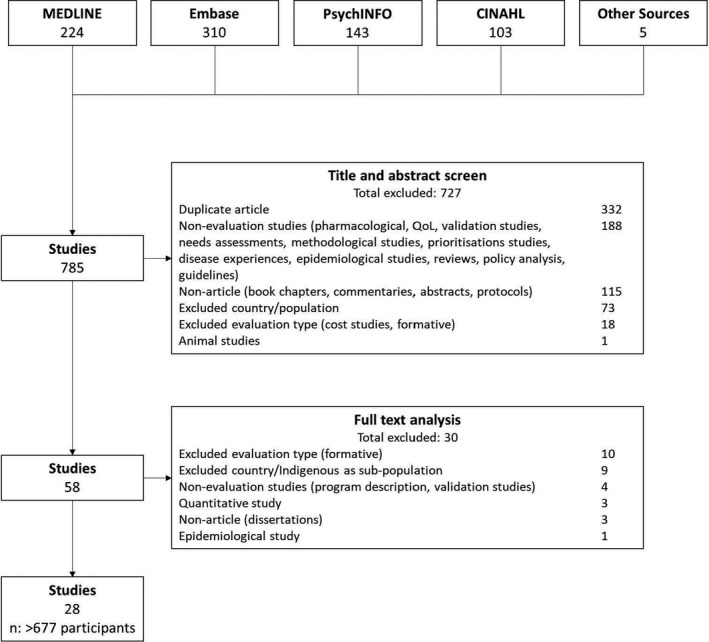
Methods: We conducted a systematic review of qualitative studies evaluating complex health interventions designed for Indigenous communities in high-income countries. We searched 6 electronic databases (through to January 2020): MEDLINE, PreMEDLINE, Embase, PsycINFO, EconLit and CINAHL and hand-searched reference lists of relevant articles.
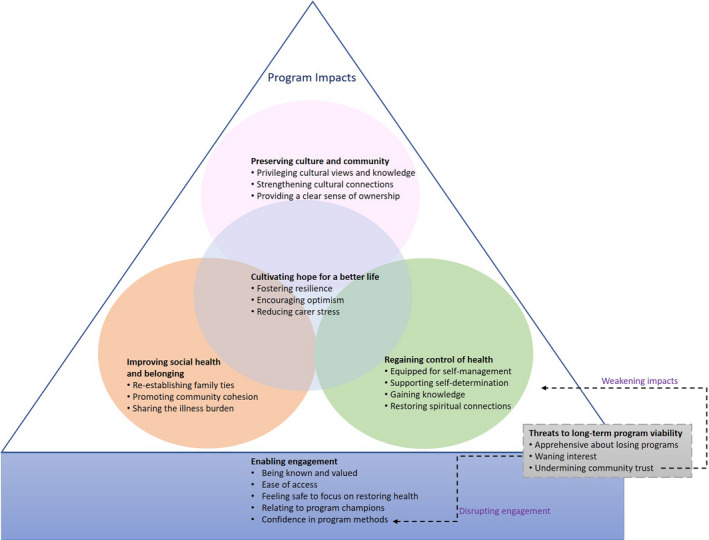
Results: From 28 studies involving 677 stakeholders (mostly clinical staff and participants), six main themes were identified: enabling engagement, regaining control of health, improving social health and belonging, preserving community and culture, cultivating hope for a better life, and threats to long-term programme viability.
Conclusion: The prominence of social, emotional and spiritual well-being as important aspects of the health journey for participants in this review highlights the need to reframe evaluations of health programmes implemented in Indigenous communities away from assessments that focus on commonly used biomedical measures. Evaluators, in consultation with the community, should consistently assess the capacity of health professionals to meet community needs and expectations throughout the life of the programme. Evaluations that include qualitative data on participant and community-level outcomes can improve decision-makers' understanding of the impact that health programmes have on communities.
Patient or public contribution: This paper is a review of evaluation studies and did not involve patients or the public.
Keywords: Indigenous health; health policy; health services; impact evaluation; outcomes.
© 2021 The Authors. Health Expectations published by John Wiley & Sons Ltd.
Conflict of interest statement
None to declare.
Figures
References
-
- Hudson S, Salvatierra CAM, Andres C. Evaluating Indigenous programs: A toolkit for change: Centre for Independent Studies Sydney; Australia, NSW; 2017.
-
- Muir S, Dean A. Evaluating the outcomes of programs for Indigenous families and communities. Family Matters. 2017;99:56.
-
- Kawakami AJ, Aton K, Cram F, Lai M, Porima L. Improving the practice of evaluation through Indigenous values and methods. Fund Issues Eval. New York and London: Guilford Press; 2008;219‐242.
-
- Kelaher M, Luke J, Ferdinand A, Chamravi D, Ewen S, Paradies Y. An evaluation framework to improve aboriginal and Torres Strait Islander health. Report Carlton: Lowitja Institute; 2018.
Publication types
MeSH terms
LinkOut - more resources
Full Text Sources
Other Literature Sources
