Dose intensity for conditioning in allogeneic hematopoietic cell transplantation: can we recommend "when and for whom" in 2021?
- PMID: 33730842
- PMCID: PMC8252938
- DOI: 10.3324/haematol.2020.268839
Dose intensity for conditioning in allogeneic hematopoietic cell transplantation: can we recommend "when and for whom" in 2021?
Abstract
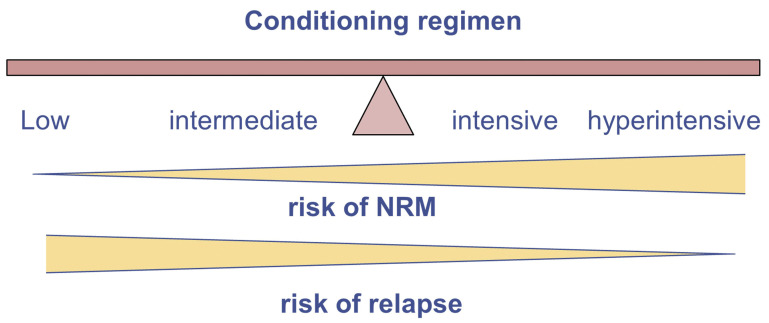
Allogeneic hematopoietic stem-cell transplantation is a potentially curative therapy for various hematologic diseases. An essential component of this procedure is the pre-transplant conditioning regimen, which should facilitate engraftment and reduce or eliminate tumor cells. The recognition of the substantial association of a graft-versus- tumor effect and the high toxicity of the commonly used conditioning regimen led to the introduction of more differentiated intensity strategies, with the aim of making hematopoietic stem-cell transplantation less toxic and safer, and thus more applicable to broader populations such as older or unfit patients. In general, prospective and retrospective studies suggest a correlation between increasing intensity and nonrelapse mortality and an inverse correlation with relapse incidence. In this review, we will summarize traditional and updated definitions for conditioning intensity strategies and the landscape of comparative prospective and retrospective studies, which may help to find the balance between the risk of non-relapse mortality and relapse. We will try to underscore the caveats regarding these definitions and analyses, by missing complex differences between intensity and toxicity as well as the broad influences of other factors in the transplantation procedure. We will summarize evidence regarding several confounders which may influence decisions when selecting the intensity of the conditioning regimen for any given patient, according to the individual risk of relapse and non-relapse mortality.
Figures
References
-
- Champlin R, Khouri I, Kornblau S, Molldrem J, Giralt S. Reinventing bone marrow transplantation: reducing toxicity using nonmyeloablative, preparative regimens and induction of graft-versus-malignancy. Curr Opin Oncol. 1999;11(2):87-95. - PubMed
-
- Bacigalupo A. Third EBMT/AMGEN Workshop on reduced-intensity conditioning allogeneic haemopoietic stem cell transplants (RIC-HSCT), and panel consensus. Bone Marrow Transplant. 2004;33(7):691-696. - PubMed
Publication types
MeSH terms
LinkOut - more resources
Full Text Sources
Other Literature Sources
Medical